Vfe3: Expert Guide for Supplier and Pricing Decisions
This guide explains how to evaluate Vfe3 using practical supplier and pricing criteria. It provides objective background on what Vfe3 typically refers to in industrial sourcing contexts, why specifications and documentation matter, and how to reduce procurement risk through validation steps, comparison requirements, and clear decision conditions for buyers.
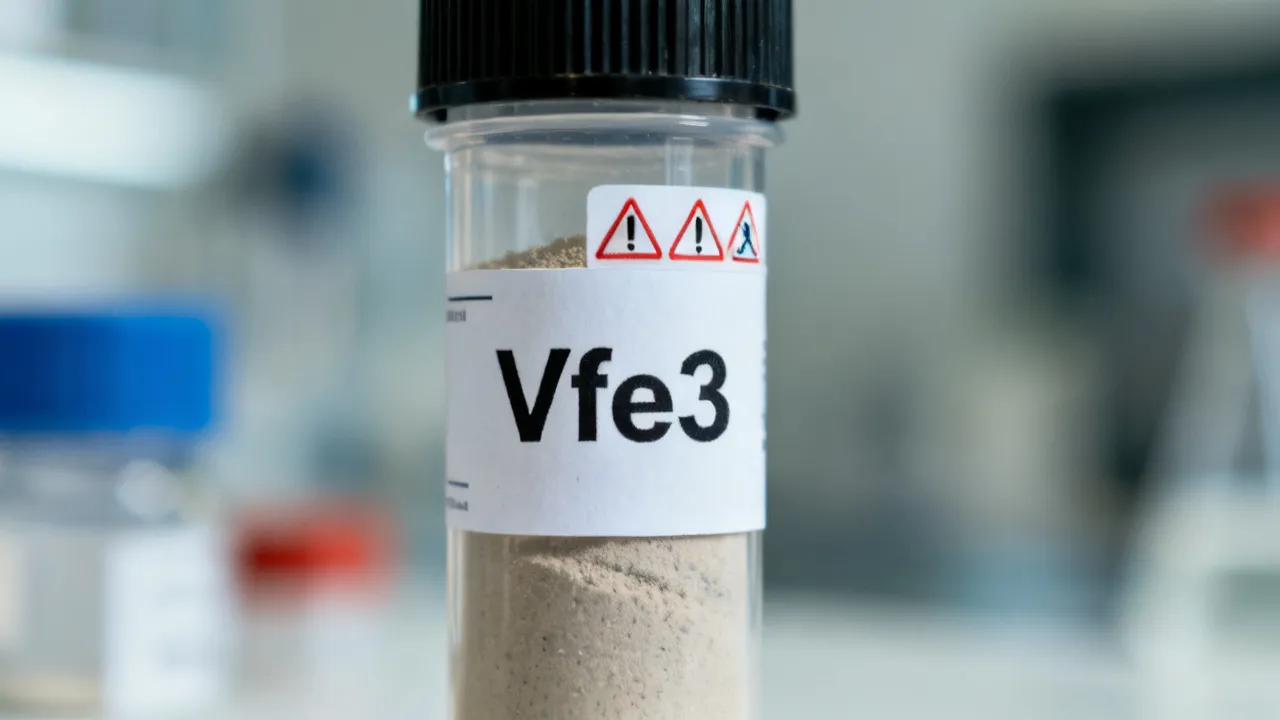
Executive overview: how to choose Vfe3 with confidence
When procuring Vfe3, the most important decisions usually come down to specification alignment, supplier reliability, and price transparency. This expert guide frames Vfe3 selection in an objective procurement workflow—so you can compare offers consistently, verify documentation before payment, and reduce the likelihood of mismatched materials, inconsistent performance, or avoidable delays.
In day-to-day industrial purchasing, “Vfe3” often appears in product lines, technical documentation, or internal part numbering systems. Because naming conventions can vary by manufacturer, the safest approach is to treat the term as an identifier that must be cross-checked against technical datasheets, test reports, and traceability records supplied by the vendor.
Beyond the basics, buyers often run into a second, more subtle problem: even when the label matches, the meaning behind the label may not. Different suppliers can use a short code to refer to a family of formulations, a production site, a revision level, or a packaging/grade variant. Therefore, “choosing with confidence” is less about collecting more paperwork and more about building a procurement logic chain: specification → documentation → verification → acceptance → traceability. When that chain is coherent and repeatable, procurement becomes defensible—even if you later need to investigate a nonconformance, handle a warranty claim, or justify a sourcing decision to internal stakeholders.
Throughout this guide, the focus stays practical: what to request, what to verify, how to compare quotes without distortion, and how to reduce both technical and commercial procurement risk. You can use the steps and checklists whether you are buying as a one-off trial lot or scaling into a sustained supply arrangement.
Understanding Vfe3 in procurement terms (not marketing terms)
From an industry perspective, buyers should focus less on how a supplier describes Vfe3 and more on what can be verified. For any industrial material or component labeled as Vfe3, objective evaluation typically requires:
- Clear scope: what exactly is being supplied (material grade, form factor, dimensions, or functional configuration).
- Measurable requirements: measurable properties such as purity/chemistry ranges, allowable tolerances, or functional performance criteria.
- Evidence: test methods, sampling plans, and supporting documents (e.g., certificates, inspection reports, or compliance statements).
- Traceability: batch/lot identification, production dates, and the ability to match incoming goods to documentation.
Even when two suppliers both reference “Vfe3,” the practical reality can differ—especially if vendors use the label to represent a broad family rather than a single narrowly defined specification. Your procurement process should therefore anchor on the spec, not only the label. A helpful mindset is to treat “Vfe3” like a key in a database: the key must map to the correct record (the correct grade definition, revision, and acceptance framework), and the record must correspond to the physical product you will receive.
Another procurement reality is that buyers often encounter incomplete or inconsistent documentation during the early stages of sourcing. Common examples include certificates that do not state the relevant properties, lab reports that show results but omit the test method reference, or traceability records that identify a production lot but cannot reliably be linked to the shipment carton/quantity. Each of these issues creates uncertainty. Instead of accepting uncertainty as a cost of doing business, the better approach is to define uncertainty limits: what documentation gaps you will tolerate, what documentation gaps trigger hold/reject decisions, and what minimum receiving verification is required when evidence is missing or weak.
It also helps to distinguish between conformance documentation and conformance proof. Documentation is what the supplier provides; proof is what your receiving/QA team can confirm. In critical applications, you may need targeted verification even when certificates look complete. The goal is not to doubt the supplier, but to ensure the supplier’s documentation and your operational requirements align.
Pricing for Vfe3: what actually drives cost
Price for Vfe3 is rarely a simple “one number.” It is usually shaped by at least four cost drivers:
- Specification complexity: tighter tolerances and additional testing raise production and verification costs.
- Supply chain constraints: raw material availability, logistics, and lead-time risk influence quotes.
- Quality assurance level: higher QA burden (more tests, stricter acceptance criteria) can increase per-unit pricing.
- Order structure: quantity breaks, packaging format, and shipping terms often change the effective unit cost.
Because you asked for “price information” and “supplier details,” the most professional way to handle it—without relying on unverified figures—is to treat price as a negotiable, conditions-based offer. In other words, you should compare quotes using the same commercial terms: Incoterms, delivery schedule, acceptance criteria, warranty/returns conditions, and documentation included.
Many procurement teams make the same mistake when they compare Vfe3 quotes: they compare unit cost without normalizing the commercial package. For example, one supplier may include full test reporting aligned to your spec, while another offers a lower price but provides only a generic certificate or a partial dataset. Even if the receiving team could accept the material, the cost may shift into your operations as extra inspection time, slowed production, or rework if the material fails functional checks later.
To make price comparisons defensible, define a “quoted cost basis” that includes at least:
- Price basis (per unit vs. per pack vs. per lot)
- Quantity and any minimum order quantities
- Packaging and handling requirements
- Shipping/Incoterms (who bears transport risk and when)
- Delivery schedule (date window, lead-time guarantee, expediting options)
- Documentation set (what you will receive with the shipment)
- Acceptance criteria and inspection approach (what tests are actually performed)
- Nonconformance handling (replacement, credit, scrap policy)
Once the above is normalized, cost becomes a meaningful comparison. If you want to go further, you can apply a risk-weighted cost model: compare the supplier’s unit price plus an estimated cost of receiving verification, potential delays, and expected rework risk. While you may not be able to estimate those risks precisely, even a qualitative risk rating helps prevent false “savings” from looking attractive.
Finally, beware of “price transparency” that is incomplete. A supplier might offer a low base price but charge extra for:
- special packaging or labeling for traceability
- retesting upon request
- lab method alignment or ISO test method references
- documentation reissue if files are late or incomplete
- expedited shipping or delivery window changes
In many cases, these charges appear later as commercial exceptions. To avoid surprises, include a commercial clause in your procurement process: confirm what is included in the quoted price and what is billed as an extra service.
Supplier details: reliability signals to look for
Supplier selection for Vfe3 should prioritize operational reliability and documentation discipline. Consider the following due-diligence signals:
- Document maturity: Do they provide datasheets, certificates, and test results that match the exact grade/lot you order?
- Quality system evidence: Are there references to recognized management systems (for example, those aligned with ISO/IEC quality practices)?
- Consistency of lead times: Can they meet delivery schedules without frequent rescheduling?
- Responsiveness: Do they answer specification questions clearly and quickly?
- Change control: Can they notify buyers of formulation/process changes that may affect performance?
When internal procurement teams use a label like Vfe3, they typically want predictable incoming material. That predictability comes from a supplier’s ability to maintain traceability and control variations—not from a broad catalog description. Put differently: documentation is not the only proof, but it is often the clearest signal that a supplier runs a controlled process.
Reliability is also visible in how suppliers behave under “light pressure.” For instance, ask each supplier a structured set of questions early in the sourcing process:
- Can they provide the datasheet or spec sheet for the exact Vfe3 grade they propose?
- Can they confirm test methods and acceptance limits?
- Can they provide sample documentation for a typical shipment (anonymized if needed)?
- Can they describe their lot/traceability approach and how it links to shipment identity?
Suppliers that respond with clarity, consistent wording, and complete attachments tend to be easier partners during production. Suppliers that respond with generic statements or incomplete documentation require heavier receiving verification. That may still be acceptable if your application can tolerate it, but it must be accounted for in cost and schedule.
Another reliability signal is change notification. Even a small process change at the vendor can shift measurable properties. If the supplier cannot explain how they manage revisions and how they communicate changes to customers, you may face “silent drift”—where delivered Vfe3 gradually changes while paperwork still uses the same label.
Also consider whether suppliers maintain archival traceability. For many procurements, issues do not surface immediately. They may only appear after a batch has been used and a customer complaint occurs weeks later. A reliable supplier should be able to retrieve the relevant lot data and test reports and show which physical production batch corresponds to which shipment.
Key comparison criteria: how to evaluate competing Vfe3 offers
To compare suppliers fairly, request the same set of inputs from each vendor. This allows you to evaluate Vfe3 offers on objective dimensions rather than subjective impressions. A strong comparison process typically includes:
- Technical alignment: confirm grade/specification, tolerances, and test methods.
- Lot traceability: verify batch numbering and the ability to link each shipment to documentation.
- Acceptance criteria: understand inspection standards, sampling frequency, and rejection procedures.
- Commercial terms: shipping terms (Incoterms), lead time, pricing structure (per unit vs. batch), and payment terms.
- Risk coverage: returns process, rework policies, and responsibility boundaries if performance requirements fail.
By keeping the comparison consistent, you reduce the chance of “apples-to-oranges” quotes—one of the most common causes of procurement disputes in industrial sourcing. To make consistency real, build a standardized vendor response template so each supplier must fill out the same fields. When documents arrive, check the template for missing items rather than relying on emails or attachments you may misplace.
In addition to the major categories above, add two “hidden” comparison criteria that frequently determine whether a purchase succeeds:
- Revision level: confirm whether “Vfe3” corresponds to a current revision and whether the revision is included in paperwork (and on labeling, if applicable).
- Reconciliation process: confirm what happens if the delivered lot differs from what the supplier expected to ship (e.g., substitution controls, deviations approvals, and documentation updates).
These items matter because the practical procurement workflow is not a perfect pipeline. Mistakes happen: transcription errors, labeling issues, delayed documentation, or internal supplier switching due to stock constraints. A mature supplier will have controls and a clear reconciliation path.
Structured supplementation: comparison table and decision conditions
Below is a practical supplement presented as a comparison table and procurement checklist (no external links included). Use it to standardize how your team evaluates Vfe3 supplier quotes.
| Category | What to request for Vfe3 | Acceptable conditions/requirements | Decision impact |
|---|---|---|---|
| Specification alignment | Official datasheet, grade definition, tolerances, and test standards tied to Vfe3 | Documents explicitly match the requested grade; tolerances are measurable and documented | Highest—prevents mismatch and downstream performance issues |
| Traceability | Lot/batch identification scheme and sample-to-lot trace mapping | Each shipment’s lot is identifiable; paperwork correlates to the delivered unit(s) | High—supports quality investigations and audits |
| Quality evidence | Certificates/inspection reports showing results for the requested properties | Reports include test method references; values fall within required ranges | High—reduces receiving-room uncertainty |
| Price transparency | Breakdown of unit price basis, quantity breaks, packaging, and shipping terms | Same Incoterms and delivery schedule across quotes; no hidden fees implied | Medium/High—enables fair cost-per-spec comparison |
| Lead time reliability | Production schedule window and stated delivery lead time range | Lead time aligns with your production plan; vendor provides change notification process | Medium—reduces line stoppage risk |
| Acceptance & returns | Inspection plan, sampling approach, rejection criteria, and rework/returns policies | Defined acceptance criteria; documented responsibility if performance fails | High—clarifies remediation path |
To strengthen the checklist further, you can convert it into a scoring rubric for internal decision meetings. For example, assign:
- Must-have items that are pass/fail (spec alignment, traceability, acceptance criteria clarity).
- Should-have items that strongly influence selection (responsiveness, change control maturity).
- May-have items that differentiate best-in-class suppliers (extra certificates, documented risk assessments, proactive packaging verification).
This approach prevents “lowest price wins” behavior and ensures the decision criteria remain visible and consistent across procurement cycles.
Step-by-step guide: validating Vfe3 before scaling procurement
Because the name “Vfe3” can function as a label rather than a universally standardized commodity, the safest workflow is staged—starting with validation and only then scaling. Here is a step-by-step approach used in many quality-driven procurement environments:
-
Lock the specification first.
Request the Vfe3 datasheet and explicitly list the properties that matter for your use case (e.g., chemical/physical parameters, tolerance levels, relevant test methods). If a supplier cannot clearly document the grade definition, pause the process.
To make this step more robust, define a “spec-to-requirement mapping.” For each property you care about, include: property name, required range/limit, test method, sampling/measurement approach, and acceptance criterion. This mapping becomes the standard your receiving inspection team uses later. When you later detect nonconformance, you can point to the specific property and requirement that failed rather than debating the general label.
-
Ask for traceability documentation upfront.
Require information about how the supplier assigns lot/batch identifiers and how shipments map to quality records. For buyers, this is critical for any investigation after receipt.
In practice, traceability should not stop at “we have lot numbers.” You want clarity on how lot numbers appear on packaging (if applicable), which documents contain the same lot reference, and how the supplier handles cases where a physical lot is split across shipments. If splitting occurs, require instructions and mapping so you can match received quantities to the correct report sets.
-
Compare offers using the same acceptance criteria.
Have all vendors quote under identical conditions: order quantity, delivery schedule, packaging, and documentation included. This prevents “price savings” from masking reduced testing or weaker acceptance standards.
During this comparison, also ask each supplier to confirm how they determine acceptance of their own production. For example, do they perform 100% testing on critical properties, or do they rely on sampling plans? If their internal QC differs from your required acceptance strategy, you may need receiving verification adjustments.
-
Run receiving checks on the first lots.
Even if a certificate is provided, perform verification checks relevant to your process. Use your own critical criteria to confirm performance consistency before bulk orders.
Consider a “first-lot verification protocol” with defined intensity: test only the critical properties initially, but define what triggers expanded testing (e.g., if a single key property fails, or if results show a trend toward limits). This makes the process efficient while still controlling risk.
-
Assess nonconformance handling.
If the first batch fails to meet requirements, document the supplier’s remediation path—replacement, rework, cost responsibility, and timeline.
Make nonconformance handling operational, not just contractual. Request details such as: how quickly the supplier will respond to a claim, whether they will provide corrective action reports, what happens if they propose rework, and how you will confirm the reworked material meets specification. Where applicable, define responsibilities for quarantine, disposal, and documentation updates.
-
Only then scale procurement.
After successful verification, extend purchasing volume while maintaining periodic review of documentation and variation trends. Scaling without monitoring is how “quiet” defects become expensive.
When scaling, introduce ongoing controls. For example, keep traceability checks active, require scheduled documentation audits, and maintain a periodic receiving verification frequency based on observed supplier performance. If incoming results remain stable, you can optimize verification effort; if results drift or document quality degrades, increase verification again.
This step-by-step approach turns procurement from an administrative transaction into a controlled technical process. It also creates internal evidence that the decision to scale was based on verified performance rather than assumptions.
Industry context: why procurement rigor matters for technical identifiers
In industrial supply chains, buyers frequently encounter labels that appear consistent but are not always interchangeable. This is especially true when multiple manufacturers use internal codes or category identifiers rather than a universally harmonized standard.
Procurement rigor is not merely bureaucracy. It reflects a risk-management reality: when specifications drift, operations face rework, customer claims, downtime, and regulatory exposure. The best practice approach—used across regulated and non-regulated industries—is to require measurable alignment, document traceability, and clarify acceptance/returns before goods ship.
There is also an economic dimension to rigor. The cost of procurement mistakes rarely stays in the buying department. Instead, it spreads into:
- receiving inspection time and lab utilization
- inventory write-downs or quarantine costs
- production delays due to material availability or failed runs
- engineering investigations and root-cause analysis workload
- customer claims and warranty costs
- potential regulatory documentation gaps (where relevant)
Rigor, by contrast, creates stability. When you know what “Vfe3” must be (spec alignment), how to prove it (evidence and traceability), and what happens if it is not (acceptance/returns), you reduce downstream cost volatility.
Another reason procurement rigor matters is that technical identifiers often evolve. A supplier may change formulation, move production to a different plant, adjust upstream supplier inputs, or update test methods. Even when the supplier continues to use “Vfe3,” the underlying product characteristics can change within allowable tolerances—or sometimes beyond them. Your procurement workflow should therefore include revision awareness and change control expectations so that you can track these evolutions over time.
For background on how structured quality and risk practices are discussed in widely adopted frameworks, readers may consider standards and guidance published by recognized bodies such as ISO (quality management and process approaches) and general supply-chain risk guidance used in industry. For example, ISO quality principles and process-oriented quality management are widely referenced in professional procurement programs.
Even if you do not implement every element of those frameworks formally, adopting their spirit—process control, documented requirements, evidence-based verification—helps you build a procurement system that stands up under audit and internal review.
FAQs about Vfe3 sourcing, pricing, and supplier selection
1) What does “Vfe3” mean in procurement?
“Vfe3” is typically a technical identifier or label used in industrial documentation. In practice, it should be treated as a reference that must be validated against an official datasheet, grade definition, and associated test/traceability documentation provided by the supplier.
2) How should I compare Vfe3 prices across suppliers?
Compare prices only after normalizing the quote conditions: same delivery terms, quantity basis, packaging, included documentation, and acceptance criteria. A lower unit price with reduced testing or weaker documentation often increases total cost through receiving failures or rework.
3) What supplier documents should I request for Vfe3?
Request the Vfe3 datasheet, certificate/inspection evidence showing required properties, and lot/batch traceability records. Also ask for the acceptance sampling plan and the process for nonconformance handling.
4) Is a certificate of analysis enough for Vfe3?
Certificates help, but they are not always sufficient for procurement assurance. Industry best practice often includes targeted receiving verification for critical properties—especially for first-lot validation or when performance requirements are stringent.
5) What are common reasons Vfe3 shipments get rejected?
Typical causes include specification mismatch (wrong grade/tolerance), batch traceability issues, missing or incomplete documentation, or test results that fail acceptance criteria. Clear acceptance terms in the purchase order help reduce ambiguity.
6) How do lead times affect Vfe3 procurement decisions?
Lead times matter because materials mismatches and schedule delays can stop production. Evaluate lead time ranges, supplier change notification practices, and the feasibility of expediting or scheduling alternatives if delivery windows shift.
7) Can I standardize ordering for Vfe3 across multiple plants?
Yes, but only if the specification and acceptance criteria are truly identical across sites. Use a standardized validation protocol and maintain traceability requirements so each plant can verify that the delivered Vfe3 matches the same operational spec.
8) What should be in the purchase order for Vfe3?
Include: exact Vfe3 grade/spec reference, acceptance criteria, required documentation set, lot traceability requirements, inspection and sampling references, delivery terms, and remediation/returns conditions for nonconforming goods.
Conditions and requirements checklist for buyers
Before finalizing any order for Vfe3, ensure the following conditions are met:
- Your required properties and tolerances are clearly defined and agreed.
- Suppliers provide a consistent documentation set that matches the exact grade and batch.
- Commercial quotes are normalized to the same delivery terms and acceptance framework.
- Nonconformance handling is written into the purchase agreement (replacement, rework, cost responsibility, and timelines).
- Receiving inspection includes verification of the most critical properties relevant to your process.
Adhering to these requirements improves decision quality and reduces procurement risk—especially when “Vfe3” appears as an internal label or category code.
Final guidance: making Vfe3 procurement defensible
A defensible procurement decision for Vfe3 is one you can explain with evidence: the specification you asked for, the documents you received, the acceptance criteria you used, and the results of any receiving verification. When price and supplier selection are treated as part of a structured system—not as isolated variables—you gain consistency, reduce surprises, and protect downstream performance.
If you share your intended application context for Vfe3 (e.g., process environment, critical properties, required tolerances, and target delivery timeframe), I can help you translate that into a tighter requirements list and a supplier comparison template tailored to your purchasing workflow.
Appendix-style expansion: practical procurement controls you can implement immediately
The sections above outline the core approach, but the difference between “good procurement” and “procurement you can rely on” often comes from the controls you implement in daily execution. Below are practical additions that fit naturally into the same workflow and help you prevent recurring problems when buying Vfe3.
1) Build a Vfe3 “requirements pack” that is shared across stakeholders
One frequent source of mismatch is that different internal teams interpret the Vfe3 label differently. For example, engineering may care about functional performance properties, while QA cares about test methods and acceptance sampling, and procurement cares about delivery terms and commercial terms. If each team uses a different interpretation of the requirements, the purchasing process becomes inconsistent even with a good supplier.
A requirements pack addresses this by consolidating:
- Specification: the exact Vfe3 grade definition your organization requires, including revision if applicable.
- Critical properties list: the parameters that can affect performance, reliability, or compliance.
- Acceptance limits: tolerances and ranges with unambiguous units.
- Test method references: either the supplier’s equivalent methods or the methods your QA team expects to see.
- Sampling strategy: how many units you will check upon receipt (or how you will verify certificates).
- Nonconformance triggers: what results lead to reject/hold escalation.
- Remediation rules: what you expect if results do not meet requirements.
When this pack exists and is used by procurement, QA, and receiving teams, you reduce disputes and increase speed. It also creates continuity: when a supplier claim occurs, everyone refers to the same requirements document instead of re-arguing the basis of acceptance.
2) Require “spec-to-document” traceability in the paperwork you receive
Traceability is often treated as a batch numbering exercise, but strong procurement traceability also includes linking each requested spec property to the specific document and test result that supports it.
For each critical property, ask the vendor for a document mapping, such as:
- Property name → value reported → test method reference → unit of measurement → acceptance range
- Property name → value reported → which certificate page/section contains the result
- Lot number → certificate ID(s) associated with that lot
Even if the supplier does not provide mapping explicitly, your procurement team can request or generate a verification worksheet that ensures the certificate covers everything required. This is a powerful control because it detects incomplete certificates early—before the goods arrive.
3) Establish receiving verification intensity by risk
Not all Vfe3 procurements need the same verification approach. If the material is used in a critical process step with tight functional consequences, your receiving verification should be stronger. If it is used in low-impact roles, you might rely more heavily on certificate evidence.
A practical way to manage this is to define three tiers:
- Tier A (high criticality): verify critical properties on receipt for each lot, particularly during initial sourcing.
- Tier B (medium criticality): verify critical properties on receipt periodically (e.g., every nth lot) and continue certificate review each time.
- Tier C (lower criticality): rely primarily on certificate review but perform spot checks if documentation quality drops or trends show movement toward limits.
This tiering approach prevents unnecessary inspection costs while still controlling risk. It also provides a rational basis for adjusting inspection frequency after supplier performance is demonstrated.
4) Create a “documentation hold” policy for missing or inconsistent files
Many procurement issues arise because goods are received before documentation is complete. Even if you eventually collect missing certificates, the delay can create operational bottlenecks or cause you to release material without full evidence. To prevent this, define a documentation hold policy.
For Vfe3, examples of hold triggers can include:
- missing certificate/inspection report
- certificate does not reference the correct lot number
- missing test method references
- values are reported without units or within unclear ranges
- the certificate corresponds to a different grade revision
Define who has authority to override the hold (if ever) and what conditions allow override. For example, override might be allowed only for non-critical lots or only if receiving verification is performed immediately.
5) Specify what happens when the supplier proposes a “substitution”
Substitution is a common operational reality—especially when raw material availability changes. However, substitution without controlled approval can break specification alignment.
Your purchase agreement should include clear substitution rules such as:
- Substitution requires prior written approval by your organization.
- If substitution occurs, vendor must provide evidence that the substituted product meets the same acceptance criteria.
- Lot labeling and documentation must reflect the actual production lot shipped.
- If substitution changes traceability or test method equivalency, it must be flagged before shipment.
By requiring the supplier to prove equivalence under your acceptance framework, you prevent the procurement process from becoming dependent on goodwill rather than evidence.
6) Use a standardized vendor questionnaire for Vfe3
When multiple suppliers compete, time pressure can cause teams to accept incomplete answers. A standardized vendor questionnaire reduces this and increases comparability.
A useful Vfe3 vendor questionnaire often includes:
- Provide the official Vfe3 datasheet and grade definition (with revision).
- List critical properties and acceptance limits you understand for your product.
- Describe your traceability system: how lot numbers are assigned and how they map to shipments.
- Provide sample certificates for a recent shipment (anonymized if needed).
- Describe your quality system and how you control process changes.
- Describe lead time variability and how you communicate delays.
- Provide the acceptance/rejection and nonconformance procedure.
- Confirm packaging/labeling requirements that support traceability.
When suppliers answer consistently, procurement comparisons become more defensible and internal decision cycles become faster.
7) Track supplier performance metrics over time
After you start scaling procurement, supplier evaluation should not stop at the initial validation. You can reduce future risk by tracking metrics such as:
- documentation completeness and timeliness rate
- frequency of certificate/lot mismatches
- first-pass acceptance rate (how often material passes receiving checks)
- number of lots requiring expanded verification
- response time for nonconformance claims
- number of corrective action cycles needed
These metrics allow you to identify whether a supplier is drifting in quality or documentation behavior. They also help in negotiations: when suppliers understand that performance is measured, they are more likely to invest in process discipline.
8) Manage revisions: treat “Vfe3” like a controlled item with versioning
Because the label “Vfe3” can correspond to different underlying definitions, revision control is important. Procurement should ask:
- Is there a revision number or revision date for the Vfe3 grade?
- Does the supplier’s datasheet revision date change over time?
- Will the supplier notify you if revision changes occur?
- How do you ensure the received goods match the intended revision?
In practical terms, include revision information in purchase orders and require it on documentation. Then receiving teams can verify that they are checking the correct version of the specification.
9) Strengthen the acceptance clause in the purchase order
Procurement documents often include acceptance language, but ambiguous language creates disputes. Make acceptance clauses explicit. For Vfe3 procurements, acceptance should clearly define:
- what tests apply (which properties and what methods)
- sampling plan or inspection method (100% vs. sampling vs. certificate-only)
- time window to perform receiving verification
- what constitutes nonconformance (exact thresholds and examples)
- what remedy applies (replacement, rework approval, credit, or return)
- who bears costs (testing, quarantine, logistics)
- how disagreements are resolved (e.g., third-party testing or mutual agreement lab)
When these points are spelled out, you can handle issues quickly and fairly. It also creates a consistent standard for every shipment.
10) Turn first-lot learnings into a repeatable playbook
One of the most overlooked procurement benefits is learning. The first lot validation should not be a one-time event; it should generate a playbook that improves future orders.
After the first lot, document outcomes such as:
- which certificate fields were missing or ambiguous (if any)
- which properties required additional receiving verification
- whether traceability mapping worked smoothly for each shipment
- how quickly the supplier responded to questions
- what acceptance outcomes were and why
Then update your procurement workflow accordingly. For example, if a supplier consistently provides complete and accurate documents, you might reduce receiving verification frequency from Tier A to Tier B after a defined number of stable lots. If documentation gaps exist, you can impose stricter hold triggers or require additional paperwork fields.
11) Manage logistics risk alongside technical risk
Even if the Vfe3 material meets spec at production, logistic handling can still create issues depending on the material type (e.g., contamination risk, packaging damage, environmental conditions). While this guide primarily focuses on procurement controls, logistics needs should be part of supplier selection and purchase agreement.
Ask about:
- packaging type and protection against damage
- labeling for traceability (lot numbers visible and durable)
- handling instructions and environmental constraints (if applicable)
- temperature/humidity considerations during transit (where relevant)
- shipping insurance and responsibility boundaries
This matters because traceability and documentation are only half the story. The other half is ensuring the physical shipment remains correct and uncontaminated through delivery.
12) Build a “claim-ready” evidence folder before problems arise
When nonconformance occurs, the difference between resolving it quickly and struggling for months often comes down to whether evidence is already organized. Before purchasing, set up a claim-ready evidence folder structure that you can populate with:
- purchase order documents and revision references
- vendor datasheet and acceptance mapping
- vendor certificates/inspection reports
- shipment identifiers and lot traceability mapping
- receiving inspection results and test method references
- photos (if packaging damage or labeling issues are present)
- correspondence with the supplier about discrepancies
When a dispute arises, you can respond quickly with complete evidence rather than scrambling to reconstruct history. This protects both time and internal credibility.
13) Decide how you will treat “certificate-only” vs. “test-and-verify” purchases
One strategic procurement choice is whether you will rely on certificates for acceptance or whether you will perform your own tests. In many organizations, the decision depends on:
- criticality of the material to product performance
- historical supplier performance
- cost and turnaround time of receiving tests
- availability of test equipment and lab capacity
- speed requirements for production start
If you start with certificate-only for lower criticality uses, your governance should specify how quickly you escalate to test-and-verify if something changes. For example, escalate if:
- certificate values approach acceptance limits repeatedly
- lot mismatches occur
- documentation quality declines (missing methods/units)
- nonconformance appears in downstream testing
This makes your procurement approach adaptable rather than fixed.
14) Align internal stakeholders on what “pass” means
Even if a supplier provides evidence, internal acceptance can still become inconsistent if engineering, QA, and receiving teams apply different interpretations. To prevent that, define a simple “pass criteria” definition that is shared internally:
- pass: all critical properties within acceptance limits and traceability matches documentation
- conditional pass: minor documentation issues that are corrected within a defined time window, with receiving verification performed
- fail: critical property out-of-range, traceability mismatch, missing documentation that blocks verification
Then ensure purchase order and receiving procedures reflect those definitions.
15) Keep supplier communication precise and technical
Finally, supplier reliability is improved when communication is structured. When you ask questions, avoid vague requests like “please provide the certificate.” Instead, specify:
- the exact grade/spec revision required
- the properties you need reported
- the lot numbers covered by the certificate
- the test method references required
- the documents needed by a certain date (pre-shipment or with shipment)
Precision in requests tends to produce precision in supplier responses. It also reduces the likelihood of receiving “paper that exists” but does not answer your actual acceptance needs.
Concluding reinforcement: procurement confidence is built, not assumed
Choosing Vfe3 with confidence is achievable when your organization treats Vfe3 procurement as a controlled technical process. The label alone is not enough. You should anchor on verified specification alignment, require traceability and evidence that map clearly to your requirements, normalize commercial terms to compare offers fairly, and validate initial lots before scaling.
When you implement structured checks and clarify acceptance and remedies in advance, you reduce the probability of expensive mismatches and create a procurement trail that is defensible if questions arise later. Confidence comes from repeatable evidence—not from hope, not from marketing descriptions, and not from unit price comparisons alone.
-
1

A Guide to Cost-Efficient Small Electric Cars for Seniors
-
2
Mastering Debt Consolidation: Boost Your Credit Score and Manage Interest Rates
-
3
Your Guide to Loans, Credit Checks, and Interest Rates
-
4
Affordable Independent Living: Finding the Right Senior Housing
-
5
Guide to Senior Living Apartments: Affordable and Comfortable Environments