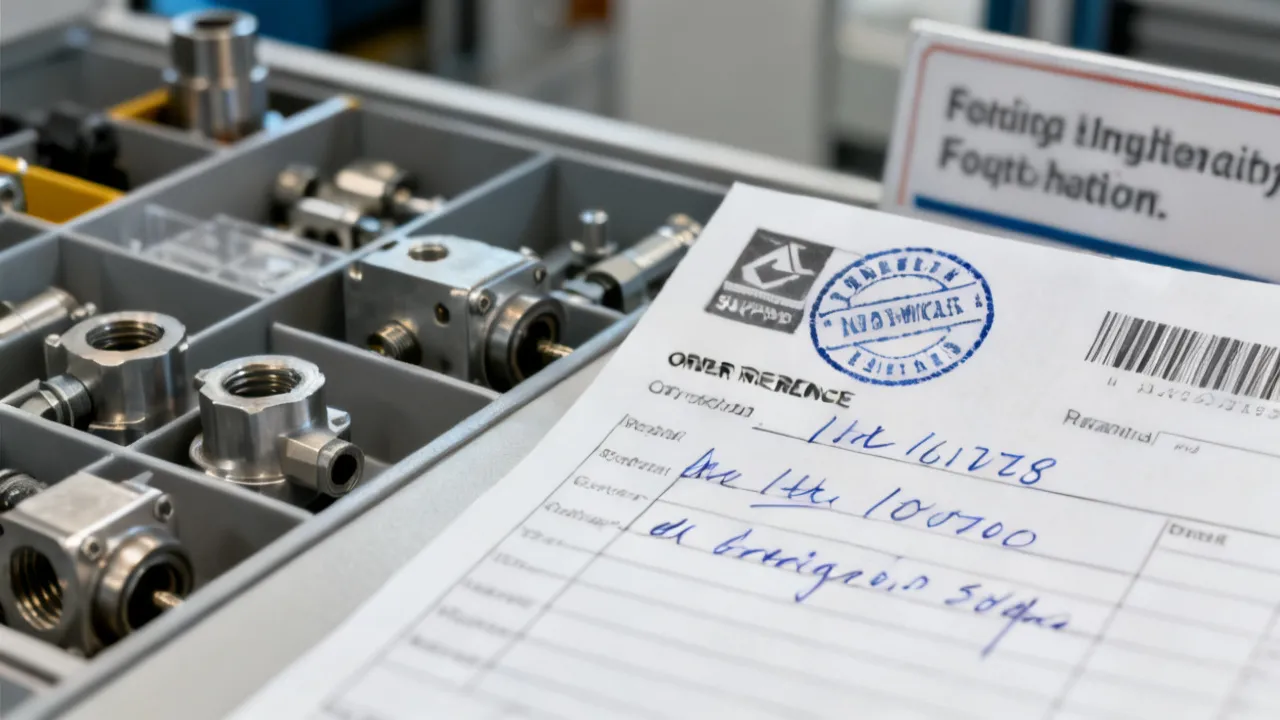
Understanding Item Code 1382 013 000200312
This guide explains how to correctly interpret the item code “1382 013 000200312” and related identifiers “' '' '' ” for ordering, verification, and documentation. It provides objective background on how part numbering works in supply chains, why digit sequences matter, and what an expert review checks before procurement or integration.

Critical first: verify “1382 013 000200312” before ordering
If you are working with the identifier 1382 013 000200312, treat it as a system key rather than a casual label. In most technical and industrial procurement environments, an identifier like this is the “address” that connects multiple data systems: engineering configuration lists, procurement master data, warehouse picking rules, receiving inspection forms, and the accounting/invoicing line. That is why accuracy matters early—long before goods arrive.
The fastest way to avoid delays is to confirm that this code matches the exact specification your project requires. Verification is not just about whether the code “exists” or whether the supplier recognizes it. It is about whether the code corresponds to the exact combination of attributes you need—form factor, compatibility class, revision level, and packaging/lot assumptions. Even small mismatches (for example, an older revision or a different packaging unit) can trigger receiving rejection, rework, warranty complications, or line stoppages.
Because your prompt also includes clustered keyword fragments (e.g., '' '' ''), the objective approach is the same: treat each fragment as potentially belonging to a broader naming or catalog scheme. In real procurement systems, partial fragments often appear in different contexts—product sheets, quotation attachments, packing slips, compliance certificates, internal CAD/BOM exports, or warehouse bin labels. When those fragments are ambiguous, the remedy is consistent verification: compare the code against the supplier’s official catalog record for the exact scope you are buying, and ask the supplier to map each fragment to the relevant catalog field.
What those digits typically represent in professional part numbering
Industrial and technical supply chains commonly use structured part numbers where each segment conveys meaning. While the precise structure of 1382 013 000200312 depends on the originating manufacturer or internal catalog system, the general logic is well established across sectors:
- Base identifier: Often the core sequence that maps to a specific product or configuration family. This is the portion that usually remains stable across minor updates, depending on the manufacturer’s naming discipline.
- Option or variant grouping: Additional digits may reflect material type, voltage/phase rating, size class, firmware/hardware revision, thermal characteristics, or mounting scheme. In many systems, option codes are what determine performance envelopes and interface compatibility.
- Packaging or compliance context: Some part-number systems encode whether the item is supplied individually, as part of a kit, or with specific compliance documentation. This matters because the “unit” you pay for may differ even when the physical component appears the same.
- Revision handling: Many catalogs preserve historic compatibility while still indicating updates. A change in revision may not appear “visually” obvious to non-specialists, but it is operationally critical. Revision changes can affect installation procedures, labeling standards, software/firmware behavior, or regulatory acceptance.
From an industry standpoint, the most valuable mindset is to treat the identifier as a lookup token into a controlled master record. That record is maintained by manufacturers, distributors, or enterprise procurement platforms. If your internal system uses a different naming convention, mapping tables are often needed—otherwise the same physical item may appear under slightly different labels, or it may be misassociated with an incompatible alternate.
Why your procurement workflow should start with code-to-spec confirmation
In procurement, mistakes are rarely caused by fraud or “mystery.” They usually come from assumptions: ordering “the same thing” based on a partial label, interpreting an outdated document, selecting a compatible substitute without validating critical interfaces, or relying on memory instead of master data.
When the item code is as specific as 1382 013 000200312, professionals typically proceed with a structured confirmation loop. The loop is meant to reduce uncertainty and convert it into confirmed facts that both the supplier and buyer can document.
- Confirm scope: Is this for a single component, a kit, or an assembled unit? Some identifiers refer to subassemblies; others refer to complete assemblies. If you assume the wrong scope, you may receive incomplete sets or pay for more than needed.
- Confirm compatibility: Does your application require a particular connector interface, mounting standard, chemical compatibility, thermal rating, signal characteristics, or performance envelope?
- Confirm revision: Ensure the digit sequence corresponds to the latest or required revision level for your project. Confirm that “latest” is aligned with the project’s engineering approval status, not just the catalog’s latest marketing revision.
- Confirm documentation: Verify that the supplied batch includes the expected paperwork (e.g., material declarations, compliance certificates, test reports, serial tracking if applicable). Documentation is often part of what you are really purchasing, particularly for regulated or safety-critical uses.
This approach reduces receiving discrepancies, returns, and line stoppages. It also improves audit readiness, because you can show traceability between your purchase order and the supplier’s catalog record, and you can connect receiving inspection results to the revision and lot/batch details associated with the identifier.
Pricing: how experts interpret “price information” without assuming
Your prompt includes placeholders for price information and supplier details, but no explicit numerical amount was provided. In objective practice, that means you should not infer pricing from the identifier alone. Part numbers can look structured, but pricing is not a direct mathematical function of digits. Professional pricing is shaped by factors such as:
- Lead time and availability (in-stock vs. manufactured-to-order). Items with similar identifiers may have very different lead times if one revision has been superseded or if a certain option is scarce.
- Quantity breaks and contract tiers. Pricing frequently changes at specific volume thresholds or when purchased under a negotiated framework agreement.
- Region-specific logistics (packaging, shipping method, customs handling where relevant). Two quotes for the “same part” can differ because one includes special packaging, hazardous shipping, or regional compliance support.
- Documentation scope (standard paperwork vs. extended compliance packages). Some buyers need extra documentation—certificates, test reports, or traceability statements—which can materially affect cost.
- Revision or alternates (a newer revision may price differently even if functionally similar). If the supplier offers an alternate that is “compatible,” the price can reflect differences in warranty, performance assurance, or documentation.
To maintain accuracy, procurement teams typically request a formal quotation tied to 1382 013 000200312, then reconcile it with the PO line item description and the receiving inspection checklist. The reconciliation step is important: it prevents the classic failure mode where the quote references the right identifier, but the packaging unit, revision, or documentation scope differs on the invoice/packing slip.
If your organization uses enterprise purchasing software, ensure the “item master” and “catalog number” fields align. Sometimes pricing is calculated based on a different internal SKU than the one printed on supplier documents. A disciplined check prevents invoice disputes and inventory valuation errors.
Supplier details: reduce risk by aligning master data
Even when the identifier is correct, supplier-specific catalog metadata can vary. For example, the same base code may appear in different catalogs with distinct package sizes or documentation levels. An expert review normally checks:
- Supplier SKU vs. manufacturer part number: Are they identical or mapped? Sometimes the supplier uses a different internal SKU that still corresponds to the exact manufacturer part number.
- Unit of measure: Each, set, box, or case—ordering the wrong unit is a common failure mode. If a part number is packaged in tens or hundreds, ordering “1” might mean “1 box” rather than “1 piece.”
- Effective date: Some catalogs supersede older records; your PO must reference the correct effective record. This matters especially when engineering changes are released but old stock still moves through distribution channels.
- Return conditions: If the item is custom configured, return policies may differ. Even non-custom items may be non-returnable if they are supplied as part of a controlled batch.
When your prompt references clustered keyword fragments such as '' '' '', treat them as potential secondary catalog fields. The reliable route is to request the supplier to confirm which fields correspond to the digits in 1382 013 000200312. For example, one fragment might represent a series name, another might represent a documentation type, and another might represent a packaging configuration. Without field mapping, these fragments can create ambiguity during order entry and during warehouse receiving.
A practical risk-reduction tactic is to ask the supplier to provide a “quotation line” that explicitly echoes: (1) the part number, (2) the revision level, (3) the unit of measure, (4) the packaging type (individually packed vs. bulk), (5) the documentation items included, and (6) the proposed substitute policy, if any.
Operational integration: what to check after receipt
After delivery, professionals avoid “it looks right” judgments. Instead, they validate that the received item matches the specification record created during ordering. Typical checks include:
- Visual inspection: Verify physical attributes consistent with the product description tied to 1382 013 000200312. This includes any color, material markings, form factor, labeling position, and presence/absence of features that correspond to your design requirement.
- Label and traceability: Confirm the printed code and any batch/serial details match the PO and receiving documentation. Pay attention to whether the label shows the same part number as the PO and whether it shows the expected lot/batch information.
- Interface and fit: Confirm connectors, mounting points, mechanical tolerances, and any interface standards. Even if the functional spec seems similar, interface mismatches are a top cause of assembly delays.
- Functional checks (when applicable): Run a test procedure aligned to the product’s intended use. For some products, functional checks can be as simple as continuity testing or calibration verification; for others, more elaborate acceptance testing is required.
These steps support safety and reliability, and they also help prevent downstream failures that are costly to diagnose. If the received unit does not match the spec, the receiving team should document discrepancy details immediately—photos of labels, batch identifiers, and packaging—so the supplier can trace the correct manufacturing record.
In regulated or safety-critical environments, receiving documentation might feed directly into quality management systems, nonconformance reports (NCRs), and root-cause analyses. A disciplined receiving process ensures that you can demonstrate control of external supplier items and that you maintain traceability for audits.
Industry context: why part-number discipline matters
Part numbering is not just an administrative detail; it underpins operational reliability in manufacturing, maintenance, and engineering procurement. Globally, many industries have formalized approaches to item master data and product identification to reduce mis-picks and to support traceability requirements.
While the exact standards vary by sector, the broad objective is the same: consistent identification across purchasing, warehousing, engineering, and quality systems. When identification is inconsistent, failures occur at every stage:
- Purchasing may order the wrong revision or the wrong packaging unit.
- Warehousing may store the item under a mismatched bin location, causing pick errors.
- Receiving may fail to capture traceability data correctly, undermining quality assurance.
- Engineering may be unable to correlate field performance issues to the correct configuration.
- Finance may value inventory incorrectly if unit-of-measure conventions differ between systems.
For example, international practices for supply-chain traceability commonly align with frameworks used in logistics and quality management systems. In quality management contexts, ISO documentation principles emphasize the importance of controlled records and traceable processes. Although your prompt does not specify a particular standard, disciplined identification and verification align with commonly accepted quality approaches across regulated and safety-critical industries.
Even in less regulated contexts, part-number discipline pays off because it reduces manual follow-ups and makes it easier to standardize procurement across multiple sites or buyers. When you have multi-region sourcing, consistent part numbering and master data alignment become even more valuable—particularly when supplier catalogs change and distribution partners repackage or relabel stock.
Comparison table (rephrased): conditions, requirements, and decision points
Below is a supplement framed as a comparison table to help you decide how to proceed when working with 1382 013 000200312 and related catalog fragments '' '' ''. The table emphasizes decision points that procurement teams commonly face—ordering, integration, ambiguity handling, and revision management.
| Scenario | Key condition | Recommended requirement | What to verify |
|---|---|---|---|
| Ordering a replacement | Code must map to the same functional configuration | Obtain supplier confirmation tied to the PO line | Compatibility class, revision level, and unit of measure |
| Integrating into an existing assembly | Interfaces must match design intent | Request interface/spec sheet aligned to the identifier | Mechanical fit, connector type, and documentation set |
| Handling ambiguous keyword fragments | Secondary fragments may represent different fields | Ask supplier which catalog attributes correspond to the fragments | Field mapping, naming conventions, and effective record date |
| Managing revisions over time | Newer revisions can affect performance or compliance | Use revision-specific documentation in receiving checks | Revision indicators, test reports, and batch labels |
Step-by-step guide: expert process for validating 1382 013 000200312
When teams treat an identifier as a “must-be-right” key, the validation becomes repeatable. The following step-by-step guide is written to be vendor-agnostic, focusing on best practice discipline. It is especially useful when your workflow includes multiple documents and partial fragments like '' '' ''.
-
Create an internal verification record
Document the exact identifier 1382 013 000200312, the intended application, and the required compatibility or performance constraints. Include references to any internal drawings, BOM entries, or prior receiving documents that mention the same code. -
Request a quotation with the identifier explicitly referenced
Ensure the supplier ties the quoted item to 1382 013 000200312 in the same format you will place on the PO. Ask the supplier to include revision level and unit of measure in the quotation line description, not just in a separate attachment. -
Reconcile item description vs. master record
Confirm that the textual description on the quotation aligns with the technical attributes expected from the identifier. In many workflows, the part number alone is not sufficient—two lines can share a part number family but differ in options or package contents. -
Validate unit of measure
Confirm whether “1” represents an individual component, a kit, or a packaged quantity that changes your effective cost and inventory planning. Ensure that the PO unit of measure matches the supplier’s invoicing unit, to avoid discrepancies and reconciliation effort later. -
Confirm lead time and delivery terms
Lead time can influence which revision and packaging batch is supplied; request confirmation for the relevant delivery window. Also confirm Incoterms (or equivalent delivery terms) and any special shipping handling requirements that may affect labeling and documentation. -
Prepare receiving inspection criteria
Define checks for label readability, traceability marks, packaging condition, and interface/fit. If your organization uses checklists, ensure the checklist fields explicitly reference 1382 013 000200312 and include places to capture lot/batch numbers and document IDs. -
Perform goods-in inspection against the identifier
Verify that the item received carries the correct code and any required documentation for your quality process. Check both the physical label and any packing slip line items. If there is a mismatch, capture discrepancy evidence before returning or re-stocking. -
Close the loop with documentation
Store supplier documentation and receiving results so that future audits or troubleshooting can reference traceable records. If the item is used in a critical assembly, ensure the receiving data and lot/batch information can be retrieved when tracking field performance issues.
Localized relevance: using “nearby” for regional purchasing clarity
Your instructions include a localization rule: if a keyword contains a city or country, replace it with “nearby.” That means any regional sourcing decision should be communicated as “nearby availability” rather than naming specific locations.
In practice, this is helpful when tailoring procurement guidance for different audiences, because it acknowledges that shipping routes, warehouse stock, and compliance documentation can differ by region without locking the advice to a single geography. For example, the same identifier 1382 013 000200312 may be stocked by different distributors in different regions, and lead times may differ based on customs or local warehousing. By focusing on “nearby,” the guidance stays accurate while remaining flexible.
Additionally, using “nearby” can reduce ambiguity in internal discussions. Teams often overfit to a specific supplier location and forget that catalogs and stock availability are dynamic. The goal is to keep your sourcing approach consistent while still accounting for operational reality in your supply chain network.
FAQs
1) What does “1382 013 000200312” mean?
It is most likely a structured item identifier used to look up an exact product record in a catalog or enterprise item master. The specific meaning of each digit depends on the originating manufacturer or system, but professionally it functions as a key for configuration, revision, and documentation mapping. Treat it as the authoritative reference for ordering and verifying the item, but always confirm its mapping to your needed technical requirements.
2) Can I order using only the identifier?
You may be able to, but expert practice recommends also confirming the item description and compatibility requirements. Using only the code can still fail if there are multiple packaging units, mapped supplier SKUs, or revision differences. A best practice approach is to request a quotation line that explicitly includes revision and unit-of-measure details so that the PO description and the supplier’s fulfillment match your receiving checklist.
3) What if the supplier quotes a slightly different description than expected?
Do not assume it is equivalent. Ask the supplier to confirm that the quotation line corresponds to 1382 013 000200312 and that it matches your required technical attributes, unit of measure, and revision scope. If the description differs because of internal naming conventions, the supplier should be able to show that the underlying part number mapping is identical and that no option or packaging changes are included.
4) Why are ambiguous keyword fragments included with the code?
Keyword fragments such as '' '' '' may represent additional catalog fields, internal notes, or partial identifiers copied from different documents. The correct action is to request field mapping from the supplier so the fragments can be interpreted consistently. For example, one fragment might correspond to a documentation package type, while another might correspond to an internal drawing revision or packaging configuration code.
5) How should I validate the item after delivery?
Professionals validate label and traceability, confirm the received code matches the PO reference, check packaging and documentation completeness, and verify mechanical/interface fit. If the application requires it, perform a functional test aligned to the product’s intended use. Document the results—especially if your organization requires evidence for quality records or audits.
6) Where can I find reliable standards or background references?
For quality and traceability principles, organizations often reference ISO quality management concepts and related guidance. For supply-chain traceability approaches, consult reputable industry reports and standards published by recognized bodies. When you share your industry or application domain (e.g., aerospace maintenance, medical devices, industrial automation, automotive components), it becomes easier to suggest suitable categories of references more precisely. Even without citing a specific standard, the core practice—controlled records, traceability, and verification—is consistently aligned with recognized quality methodologies.
Conclusion: treat the identifier as a traceability anchor
In summary, 1382 013 000200312 should be handled as a traceability anchor connecting procurement, receiving, and engineering documentation. By validating the identifier against supplier master records, confirming unit of measure and revision scope, and using a structured receiving checklist, you minimize the risks that typically lead to wrong parts, costly rework, and schedule disruptions.
If you share the missing “price information” and “supplier details” in your next message (even in plain text), the purchasing guidance can be refined to include a more concrete comparison of purchasing scenarios and a more tailored verification checklist aligned to your actual procurement documents.
Note: Your prompt included placeholders like '' '' '' and empty additional-information fields; the article therefore stays objective and vendor-agnostic, focusing on process discipline and identifier-based validation rather than unverified claims.
-
1

A Guide to Cost-Efficient Small Electric Cars for Seniors
-
2
Mastering Debt Consolidation: Boost Your Credit Score and Manage Interest Rates
-
3
Your Guide to Loans, Credit Checks, and Interest Rates
-
4
Affordable Independent Living: Finding the Right Senior Housing
-
5
Guide to Senior Living Apartments: Affordable and Comfortable Environments