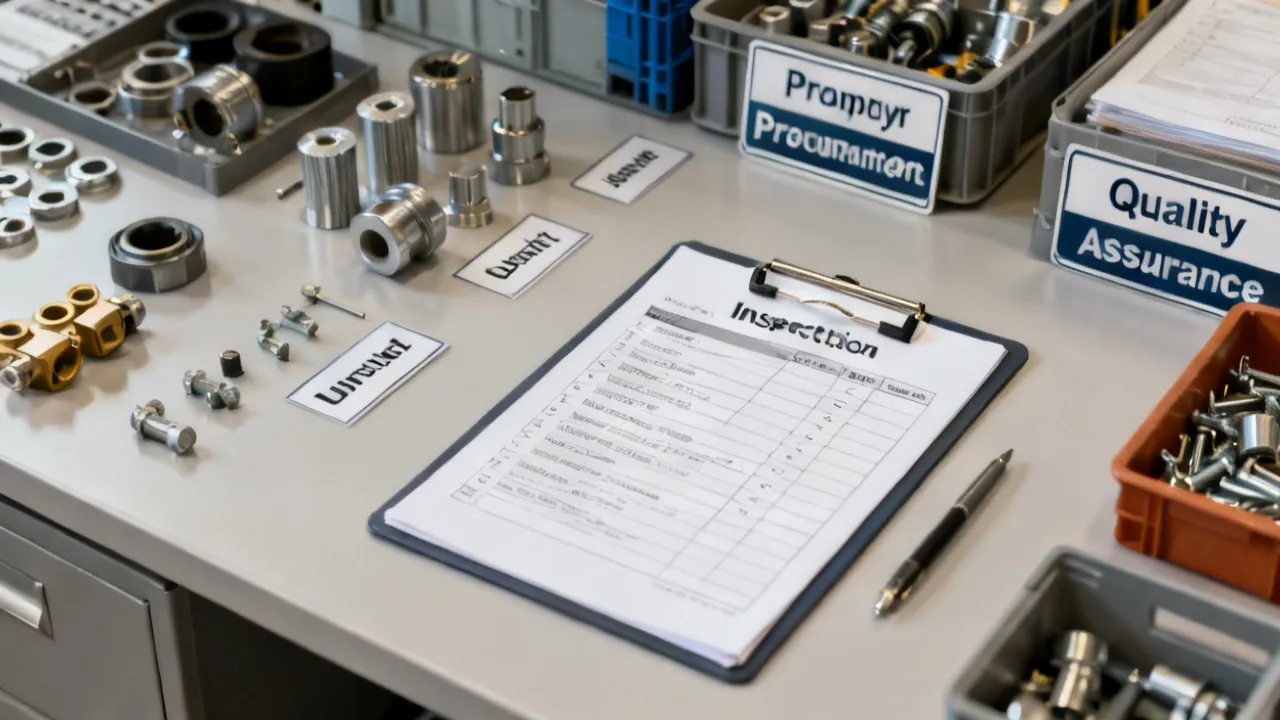
Jeidima: Supplier Insights, Pricing Factors, and Selection
This guide explains Jeidima in a practical, procurement-oriented way, covering how pricing is commonly shaped, what supplier information to verify, and which conditions should be met before committing. Background sections clarify what Jeidima refers to in sourcing discussions and why supplier due diligence matters. The goal is objective, decision-ready guidance grounded in standard industry practice.

Top takeaway: Treat Jeidima sourcing as a compliance-first procurement decision
When people search for Jeidima, they usually aren’t only looking for a product name—they’re looking for a reliable pathway to acquire goods or services with predictable performance. From an industry expert perspective, the decisive factors are rarely “one price line.” Instead, pricing, supplier capability, and verifiable conditions/requirements determine outcomes in the real world.
To help you evaluate Jeidima-related purchasing responsibly, this article focuses on: (1) what typically drives price differences, (2) which supplier details deserve scrutiny, and (3) what conditions you should confirm before ordering or contracting. Throughout, the discussion stays objective and avoids speculative claims.
Why Jeidima comes up in supplier and pricing discussions
Jeidima is commonly used as a keyword in sourcing contexts, where buyers want to match requirements to supply capacity. In procurement terms, the name functions as a shorthand that may reference a specific category, specification, branding convention, or supply program—depending on the seller and the market.
Because the exact meaning can vary by region and vendor documentation, the right approach is to treat “Jeidima” as a matching problem: confirm the specification, intended use, quality criteria, packaging expectations, compliance needs, and service requirements that the supplier associates with the term.
In practice, procurement teams learn quickly that a keyword can hide complexity. Two vendors can both say they sell “Jeidima,” yet provide products with different material composition, manufacturing routes, tolerances, shelf-life/storage constraints, labeling requirements, or documentation sets. Even when physical differences are small, the compliance and evidence differences can be large—and those are the differences that determine whether the supply chain can pass internal approvals and customer audits.
That is why buyers should avoid treating “Jeidima” as the full description. Instead, buyers should treat it as the starting point that triggers a requirements-and-evidence workflow: confirm what exactly is being supplied, under what conditions, and with what proof.
Pricing: what usually changes the Jeidima total cost
Even when buyers focus on “the price,” procurement reality is driven by total cost components. For Jeidima sourcing, you can expect differences based on the following categories:
- Specification alignment: If the requested Jeidima variant requires tighter tolerances, special materials, or enhanced documentation, supplier costs—and therefore pricing—often rise.
- Quality assurance and traceability: Vendors that maintain stronger traceability, batch records, or documented inspection processes generally price those overheads into the quote.
- Minimum order quantities and packaging: Some suppliers price lower per unit at larger volumes or standard packaging tiers.
- Lead time and logistics: Expedited handling, special shipping, or regional distribution requirements can significantly alter the landed cost.
- Documentation scope: Quotes may include (or exclude) certificates, test reports, compliance statements, or packaging labeling requirements.
- Contract structure: Fixed pricing versus framework agreements, warranty/service inclusions, and return policies affect the commercial terms.
Source note (objective): Broad procurement literature consistently emphasizes that “headline price” is not the same as total cost. For example, the U.S. General Services Administration (GSA) and other public procurement guidance commonly highlight whole-life costing and total cost of ownership concepts. These references focus on decision-making principles rather than any specific Jeidima figure.
To apply this principle more concretely, buyers should translate Jeidima “quotes” into a landed cost and compliance cost view. Landed cost includes logistics, customs (if applicable), handling, and any required storage conditions. Compliance cost includes the incremental effort needed to obtain documentation, validate certificates, perform receiving inspections, and maintain traceability records for internal and external stakeholders.
In many real purchasing processes, these compliance costs become unavoidable once you place the order. If the supplier doesn’t provide the right documentation up front, the buyer may have to incur internal time, third-party testing costs, or rework due to nonconformance. Those are “hidden costs” that often explain why a low unit price can turn into a high total cost after receiving, inspection, and acceptance.
Below are additional cost drivers that often surprise buyers when evaluating Jeidima quotes:
- Testing and verification costs: Some suppliers include factory test reports; others exclude testing and rely on “representative” information. If your application requires acceptance testing, you may need to pay for either supplier-run tests or buyer-run verification.
- Repackaging and labeling costs: Custom labeling, master carton labeling, barcodes/QR codes, or instruction sheets may add expense but can be essential for downstream operations.
- Conformance assurance programs: If the supplier participates in a recognized conformance program or maintains additional inspection checkpoints, the overhead may appear in price but can reduce rejection risk.
- Scrap, yield, and manufacturing complexity: If Jeidima production requires special tooling, low-yield batches, or regulated manufacturing steps, pricing may reflect those realities.
- Warranty logistics costs: A vendor offering robust replacement terms may charge more to cover the operational cost of replacements and handling.
Supplier details you should verify before committing
For Jeidima procurement, buyer confidence usually comes from evidence. An expert due-diligence checklist typically includes these supplier factors:
- Legal and operational standing: Confirm the supplier’s registered business details and ability to execute contracts reliably.
- Quality management system: Look for documented processes (often aligned with recognized standards) that support consistent output quality.
- Traceability evidence: Ask how the supplier maintains batch/lot traceability, especially if Jeidima is tied to quality-critical applications.
- Inspection and acceptance criteria: Ensure the supplier clearly states what will be tested, how it will be tested, and who signs off.
- Capacity and lead time realism: Require lead times supported by production planning and historical performance, not only optimistic estimates.
- Documentation package: Specify exactly what documents you will receive—test reports, certificates, packaging specs, and any compliance statements.
- Service and dispute resolution: Clarify warranty scope, replacement/return conditions, and how quality disputes are handled.
In practice, the “best” Jeidima supplier is rarely the one with the lowest quoted number. It is the one that can produce the expected result repeatedly under your stated conditions.
To make this “repeatedly” requirement workable, buyers should request evidence of consistency. Evidence can include historical performance metrics (where appropriate), sample acceptance performance, nonconformance handling records (often redacted), or references to prior orders with similar specifications. Even when vendors cannot share certain details, a transparent explanation of their process—how quality is controlled from incoming materials through final output—can provide meaningful risk reduction.
Additionally, buyers should evaluate whether the supplier is acting as a manufacturer, a distributor, or a reseller. This distinction affects the buyer’s ability to control documentation, manage changes, and pursue corrective actions. A reseller may offer fast availability but might not control upstream manufacturing documentation. A manufacturer is often better positioned to provide deeper traceability and change-control commitments.
Industry context: why due diligence affects outcomes
Across manufacturing and supply chains, buyers face risks such as inconsistent quality, unclear documentation, and mismatch between advertised specifications and delivered goods. Industry bodies and standards organizations repeatedly stress that procurement controls—requirements definition, supplier qualification, and acceptance testing—reduce these risks.
For instance, the International Organization for Standardization (ISO) frameworks commonly emphasize process consistency and documented quality management. While ISO does not “guarantee” any specific vendor outcome, organizations that align to these principles tend to be easier to audit and manage.
Due diligence also matters because quality problems rarely appear as “binary” failures. Instead, many issues show up in subtle ways: marginal performance, minor labeling differences, incorrect packaging units, incomplete certificates, or traceability breaks. Each of these can disrupt operations. For example:
- Documentation gaps: The product may be physically acceptable, but the missing certificate can block internal release or downstream customer requirements.
- Batch traceability mismatches: If you cannot trace lots back to production records, you may lose the ability to quarantine and remediate at scale.
- Acceptance testing ambiguity: If tests aren’t defined, disputes become subjective and slow—leading to delays, escalation costs, and potential liability exposure.
- Change-control failures: If the supplier changes materials or processes without notification, the buyer’s “Jeidima” assumption becomes inaccurate over time.
Because procurement controls reduce these risks, buyers should view due diligence as a risk management tool, not as bureaucracy. When due diligence is done early—before contract signing—it typically costs less than trying to fix problems after delivery.
Near comparison table: evaluating Jeidima offers (no links)
The table below is designed as a decision supplement. Replace placeholder details with your actual supplier quotes and documentation package.
| Evaluation Area | What to Request for Jeidima | Why It Matters | Buyer Condition/Requirement |
|---|---|---|---|
| Specification match | Full technical spec sheet; intended use mapping to Jeidima variant | Prevents mismatch and rework | Supplier must confirm written compatibility before quotation finalization |
| Pricing structure | Unit price, packaging unit, volume tiers, and landed cost breakdown | Total cost may differ from headline price | Quote must itemize logistics and documentation costs |
| Quality evidence | Inspection/test reports, batch/lot traceability method | Supports acceptance and risk control | Delivery must include the agreed quality documents |
| Lead time | Production timeline and shipping schedule assumptions | Determines operational continuity | Lead time must be stated with a realistic delivery window |
| Acceptance criteria | Defined acceptance tests and tolerances | Reduces “subjective” disputes | Buyer must approve acceptance criteria in writing |
| Warranty/service | Coverage period, replacement process, and fault classification approach | Limits financial exposure | Warranty must be described as a clear contractual clause |
| Communication & escalation | Single point of contact and escalation pathway | Speeds problem resolution | Supplier must name accountable contacts |
To make the comparison truly useful, buyers should ensure the table fields are evaluated consistently across all candidates. For example, if one supplier includes certain certificates “by default” and another includes them only “upon request,” the offers are not comparable. Buyers should normalize offers by insisting on the same evidence and deliverable package for each quote.
Another practical improvement is to score risk categories. You can do this informally (e.g., “high/medium/low” risk) or formally (e.g., weighted criteria). Either way, a compliance-first mindset means giving greater weight to evidence, remedies, and traceability than to unit price alone.
Step-by-step guide to selecting a Jeidima supplier
Use the following process as a repeatable workflow. It is intentionally written in procurement terms so it can be used whether you are sourcing for a small project or a larger program.
-
Define the Jeidima requirement precisely.
Write down the exact characteristics you need, including performance expectations, documentation scope, and any acceptance testing requirements. Avoid relying solely on the keyword “Jeidima” without an accompanying specification.
In a precision-first approach, you should also define “non-negotiables” and “negotiables.” Non-negotiables are requirements that block acceptance if unmet (e.g., tolerances, traceability evidence, labeling language, regulatory documentation). Negotiables are aspects you can adjust without harming downstream use (e.g., shipping mode, delivery schedule flexibility, minor packaging variations if functionally equivalent).
Defining these boundaries early reduces friction and prevents later disputes about what the supplier thought was required.
-
Request a structured quote.
Ask vendors to separate unit cost, packaging, logistics, documentation, and any recurring fees (such as compliance paperwork or inspection services).
A structured quote should also specify what is included vs. what is excluded. For example: Are test reports included or charged separately? Are certificates original or copies? Is the compliance documentation specific to the production batch or generic? Buyers should insist that quotes do not rely on “we can provide later” language unless the later provision is explicitly guaranteed and tied to acceptance.
-
Validate supplier capability with evidence.
Request traceability approach, inspection procedures, and records availability. If the supplier cannot explain how quality is controlled, treat that as a risk signal.
Evidence should be requestable and verifiable. Ask what records exist at the lot level and at the product level. If the supplier uses batch numbers or lot codes, ask how those codes map to production records and how they will appear on packaging. Traceability is only useful if it is complete and readable and can be referenced in internal receiving and quarantine procedures.
-
Align acceptance criteria before any shipment.
Define tolerances and acceptance tests. Confirm who performs testing and what happens if results fall outside tolerance.
Acceptance alignment should cover practical questions: Where are goods tested (factory, warehouse, third-party lab)? What equipment or standards are used? What sampling method is applied? What is the decision timeline? What happens if a test result is borderline? How is retesting handled?
Without these details, acceptance can become a subjective disagreement. With defined acceptance criteria, you reduce delays and create a clear remedy path.
-
Confirm lead time assumptions and delivery conditions.
Ensure you understand the production window and shipping method. Make sure any time-sensitive requirements are explicitly stated.
Lead time should be treated as a deliverable with assumptions. Ask for a breakdown: order processing time, production time, packing time, and shipping time. If the supplier provides a delivery window, buyers should define the consequences if the window is missed (e.g., expedited replacement shipments, credit adjustments, or cancellation rights depending on the contract).
-
Perform a controlled initial order (when appropriate).
If your application is sensitive, consider starting with a pilot or sample order that matches the final delivery conditions. The goal is to confirm fit, documentation completeness, and performance consistency.
A controlled initial order should not be a “wishful test.” You should specify that the pilot order is executed under the same production and documentation rules as the full order. If the supplier changes the production approach or provides a reduced documentation package for the pilot, the pilot results may not predict the full order behavior.
-
Document outcomes and update the purchasing strategy.
After receipt and acceptance, record results. If issues arise, use the results to refine requirements and adjust future orders or supplier qualification status.
Buyers should also document lessons learned into future purchasing templates: which documents were missing, whether inspection results matched expectations, how long acceptance took, and whether remedies were effective. This makes the next procurement cycle faster and less risky.
Conditions and requirements to clarify in contracts
Before signing, the most important Jeidima purchasing conditions typically include the following:
- Scope of deliverables: Exact quantity, labeling, packaging format, and documentation set.
- Quality assurance obligations: Inspection process, batch traceability, and what records are provided.
- Acceptance testing window: When tests occur and what results trigger rejection or corrective action.
- Corrective action process: Replacement lead time, root-cause investigation expectations, and prevention measures.
- Warranty and remedies: Repair/replace/refund terms and eligibility criteria.
- Change control: How the supplier handles material/process changes that could affect Jeidima performance.
Contract clarity matters because procurement is not just “buy and receive.” It is “buy, receive, verify, release, and—if needed—correct.” The contract should support all phases.
Below are additional contract clauses buyers commonly need when sourcing compliance-relevant goods. Even if your organization uses simplified agreements, you should consider whether these points are covered by your standard terms or require explicit negotiation:
- Specification priority clause: When multiple documents exist (quote, technical spec, general terms), the contract should state which document controls in case of conflict.
- Documentation delivery timing: Specify whether documentation must be delivered with the goods or within a defined period after delivery to qualify for acceptance.
- Nonconformance notification: Define how quickly the buyer must notify the supplier about issues, and how quickly the supplier must respond.
- Quarantine and disposition: Provide a mechanism for quarantining suspect lots and deciding whether replacement, repair, or refund applies.
- Right to audit or request objective evidence: For higher-risk applications, include a right to audit quality records or request objective evidence of compliance.
- Counterfeit/material authenticity controls: If authenticity matters, define what evidence supports authenticity and how counterfeit concerns are handled.
- Subcontracting/transfers: Clarify whether the supplier can use subcontractors and whether the buyer’s requirements apply unchanged.
A compliance-first procurement decision treats these clauses as practical tools. When something goes wrong, the contract becomes the playbook that reduces uncertainty, delays, and expensive rework.
Common buyer questions about Jeidima (FAQs)
1) What does “Jeidima” mean in supplier conversations?
In procurement contexts, Jeidima is often used as a shorthand term that may represent a specific product category or specification. Because the meaning can vary across vendors, you should require a written specification sheet that clearly defines what is being supplied.
To avoid confusion, ask vendors to provide: (a) the full product name used internally, (b) the corresponding spec document, (c) the manufacturing site(s) or production program (if relevant), and (d) the exact documentation package associated with that product. If the vendor cannot provide this mapping, that is an early warning sign.
2) How should I compare Jeidima prices across suppliers?
Compare on a total cost basis, not only unit price. Request an itemized quote covering packaging, logistics, documentation, inspection steps, and any applicable volume tiers. Make sure the specs and acceptance criteria are identical across quotes.
For practical comparability, buyers can normalize quotes by applying the same assumptions: same delivery location, same lead time expectations, same labeling requirements, and same documentation package. If one supplier’s price is lower because it excludes certificates or proposes a different acceptance approach, the buyer should treat that as a tradeoff and quantify its impact (e.g., expected receiving inspection cost, expected risk of delay or rejection).
3) What supplier information is most important to request?
Prioritize evidence of capability: traceability approach, quality management processes, inspection/test reports, documented acceptance criteria, and clear warranty or remediation terms.
Additionally, request information on supplier continuity. For example: How long has the supplier produced the Jeidima variant? Do they have documented processes for handling shortages, obsolescence, or redesigns? Continuity matters because the procurement decision may extend beyond a single order.
4) Is the lowest Jeidima quote always the best option?
Not necessarily. The lowest quote can be associated with narrower documentation, weaker traceability, unclear acceptance tests, or limited remedies. A quote should be evaluated against contractable conditions and verifiable performance controls.
Buyers should also avoid “scope mismatch.” A low quote might appear cheap because it excludes packaging units you truly need, or because it assumes a sampling method that is too lenient for your risk tolerance. If acceptance sampling differs, “price per unit” comparisons can become misleading.
5) What conditions should be included for acceptance of Jeidima deliveries?
Include defined acceptance criteria (tolerances, test methods, sample size if relevant), the test timeline, who performs testing, and the remedy process if results are outside tolerance.
Also define operational acceptance: When do you treat goods as accepted for payment? When can you release stock for production or distribution? Acceptance isn’t only about test results; it is also about decision timing and release authority.
6) Can I negotiate documentation and quality requirements?
Yes—if you clearly state your requirements and include them in the purchasing agreement. Many documentation items (certificates, inspection reports, labeling formats) can be negotiated, but they must be unambiguous in writing.
Negotiation works best when buyers offer a clear rationale. For example, if you need a certificate for regulatory reasons or customer audit readiness, state that requirement and allow vendors to propose equivalent evidence formats that still meet the underlying objective.
7) How do lead times affect the Jeidima selection decision?
Lead times influence operational risk. Confirm the production schedule assumptions, shipping timeline, and delivery window. If your application has fixed deadlines, request lead time commitments and plan contingencies.
Lead time impacts not only continuity but also cost. Expedited shipping can change cost dramatically. Delayed deliveries can create downtime, missed production windows, or rescheduling costs. A compliance-first approach ties lead time requirements to remedy options (e.g., supplier responsibility for delays or replacement shipments).
8) What if the supplier’s Jeidima specification differs from what I expected?
Resolve it before purchase. Require a written specification match and, when needed, ask for a sample or pilot order under the final acceptance criteria so that performance and documentation can be validated.
If a difference is discovered late, the buyer should evaluate whether the issue is purely documentation (e.g., certificates missing) or functional/specification (e.g., tolerances not met). The remedy path often differs. Documentation issues may be resolved with document corrections; specification mismatches may require replacement, rework, or refund depending on contractual remedies and risk impact.
Expert recommendations: making Jeidima sourcing more predictable
From an industry standpoint, the most effective way to reduce uncertainty in Jeidima sourcing is to formalize three things early: (1) requirements, (2) evidence, and (3) remedies. Buyers who invest in these steps typically spend less time firefighting later.
Additionally, keep your evaluation consistent. If you compare suppliers using different acceptance criteria or different documentation scope, you are not comparing apples to apples—you are comparing risk profiles that may look similar on a spreadsheet but behave differently in operations.
To operationalize these recommendations, buyers can implement a structured sourcing pack. A sourcing pack typically includes:
- Technical requirement document: The “what” (specification, performance metrics, tolerances, labeling and packaging requirements).
- Evidence requirement list: The “proof” (certificates, test reports, batch traceability details, inspection records).
- Acceptance plan: The “how” (test method, sampling approach, timeline, rejection criteria, retest rules).
- Commercial terms: The “so what” (warranty scope, remedies, change control, liability and dispute resolution).
When these elements are standardized, internal stakeholders (procurement, quality, engineering, legal) align faster, and supplier negotiations become more efficient because the buyer’s expectations are already packaged and contractable.
Evidence and sourcing principles (objective references)
While this article does not claim Jeidima-specific market statistics, it is aligned with widely applied procurement principles found in reputable guidance and standards:
- Whole-life and total cost thinking: Procurement guidance from public-sector entities (e.g., U.S. GSA) emphasizes evaluating total cost and performance outcomes rather than only headline prices.
- Quality management and process documentation: ISO-oriented quality principles highlight documented processes, consistent execution, and controllable outcomes.
To connect these principles to Jeidima sourcing in a practical way, consider how whole-life cost and quality-process thinking combine:
- Whole-life cost: If a vendor’s low unit price correlates with weaker documentation, the “whole life” cost increases due to receiving inspection, delays, and potential rework. A compliance-first decision considers those outcomes.
- Process documentation: If a vendor demonstrates documented quality processes, it becomes easier to predict output consistency and to manage changes over time. That predictability reduces operational risk.
For higher-risk sourcing—where regulatory compliance, customer audits, or safety-critical applications are involved—buyers should consider additional governance measures such as supplier qualification tiers, documented approval gates, and escalation procedures tied to nonconformance history.
Applying the compliance-first approach: practical scenarios
To make the decision framework feel concrete, here are several common procurement scenarios where compliance-first sourcing changes the outcome.
Scenario A: The “cheap” quote excludes key certificates.
A supplier offers a lower unit price for Jeidima but excludes batch-level certificates and provides only generic documentation. If your operation requires batch traceability for internal release, the cost of receiving delays and additional verification may exceed the initial savings. In a compliance-first procurement decision, you would either (a) require the missing certificates and reprice accordingly, or (b) treat the quote as noncompliant and eliminate it from consideration.
Scenario B: Two suppliers quote identical unit price, but acceptance terms differ.
Supplier 1 uses strict tolerance and clear rejection criteria; Supplier 2 uses a broader tolerance and an ambiguous sampling method. Even if unit price is the same, Supplier 1 likely has a higher compliance cost and thus a different risk profile. If your downstream application is sensitive, you prioritize the supplier with contractable acceptance criteria and reliable evidence delivery.
Scenario C: Lead time is short for Supplier 1, but remedies for late delivery are weak.
Supplier 1 can deliver quickly but limits replacement obligations if shipment is delayed. Supplier 2 delivers later but commits to remedies and clear escalation pathways. If your production schedule is inflexible, the operational risk from Supplier 1’s weak remedies might outweigh the lead time advantage. A compliance-first mindset ties delivery promises to remedy clauses.
Scenario D: Pilot order passes, but documentation changes on the full order.
The pilot order might include full evidence, but the full production might be shipped with partial documentation unless stated. A compliance-first procurement decision ensures the pilot is executed under the same documentation and quality requirements as the full order, and the contract includes documentation delivery timing and acceptance dependencies.
These scenarios illustrate that procurement outcomes are rarely determined by a single variable. They come from the system: requirements + evidence + acceptance + remedies + change control.
Conclusion: choose Jeidima suppliers through verifiable conditions, not assumptions
In summary, Jeidima procurement should be approached as an evidence-driven selection process. The best outcomes come from structured quotes, validated supplier capability, clear acceptance criteria, and contract clauses that define remedies if anything deviates from expectations. When you treat pricing, documentation, and supplier readiness as a single integrated decision, you reduce uncertainty and improve operational stability.
Next step: If you provide (1) the intended use of Jeidima, (2) your target quantity range, and (3) whether you need specific documentation or inspections, you can generate a tighter supplier comparison set using the table and guide above.
-
1

A Guide to Cost-Efficient Small Electric Cars for Seniors
-
2
Mastering Debt Consolidation: Boost Your Credit Score and Manage Interest Rates
-
3
Your Guide to Loans, Credit Checks, and Interest Rates
-
4
Affordable Independent Living: Finding the Right Senior Housing
-
5
Guide to Senior Living Apartments: Affordable and Comfortable Environments