
Understanding WLLE: Sourcing, Pricing, and Requirements
This guide explains WLLE 😊 😊 😊 by mapping how buyers typically evaluate product sourcing, pricing, and supplier credibility. Objectively, WLLE functions as a shorthand used in procurement discussions, while the emojis signal tone and community context rather than technical specifications. Readers will learn what due diligence usually requires, how to compare suppliers, and which documentation to request.
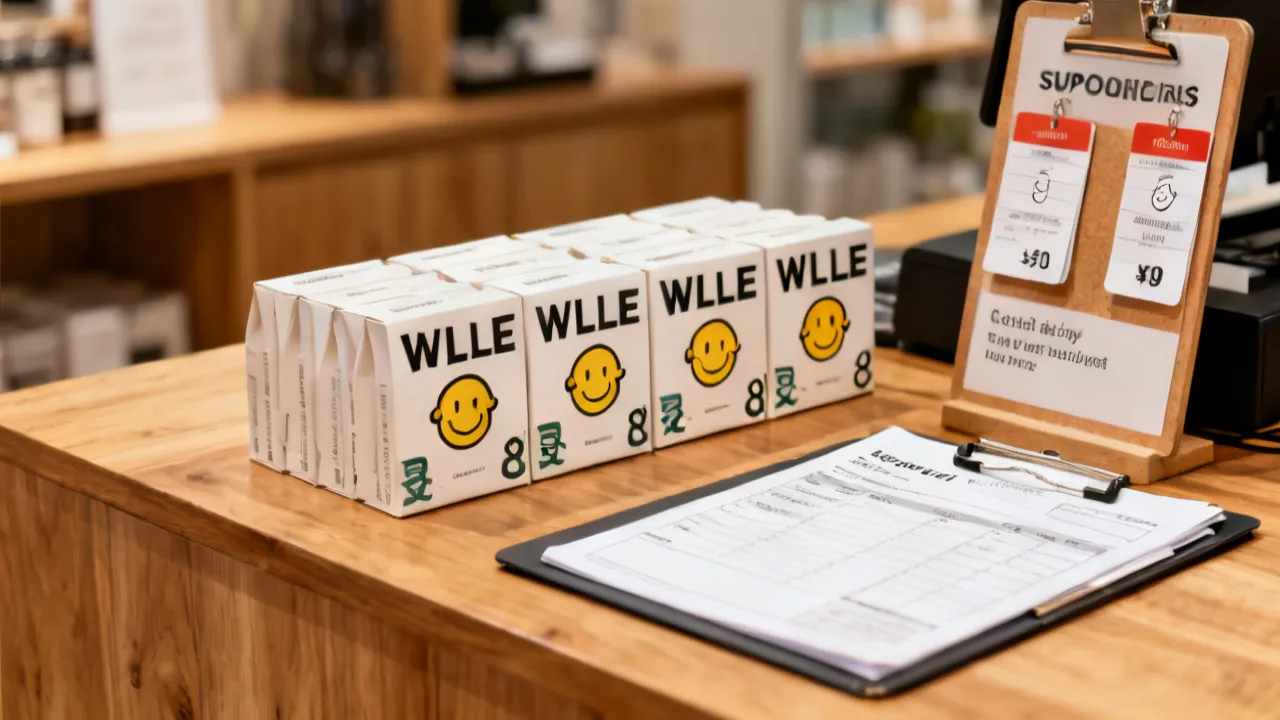
1) WLLE 😊 😊 😊 procurement overview—how buyers should evaluate it
When people mention WLLE 😊 😊 😊, they are usually referring to a product or program code that appears in sourcing conversations—often accompanied by expectations about cost, supplier readiness, and delivery terms. A strong approach is to treat “WLLE 😊 😊 😊” as a procurement identifier and focus on the fundamentals: what exactly is being supplied, at what price, by which supplier, and under what conditions. In practice, the very important question is not the emoji “vibe,” but the paperwork and the commercial terms behind it.
Procurement teams generally learn (sometimes the hard way) that shorthand phrases—whether they look like SKU codes, internal catalog names, marketing labels, or “friendly” tokens—can hide meaningful differences. One supplier may interpret the code as a particular material spec; another may interpret it as an upgraded service tier; a third may interpret it as a packaging variation or a bundled offer that includes documents, testing, or logistics. If a buyer assumes too quickly, the result is often spec drift, cost overruns at the “landed” stage, or timeline disruptions.
Therefore, a buyer should treat WLLE 😊 😊 😊 as a starting point rather than a complete description. Begin with a structured comparison across suppliers and purchase scenarios, because pricing and fulfillment reliability tend to vary more than many first-time purchasers expect. If you are negotiating with a supplier, the goal is to clarify scope (specs and batch), confirm lead times, validate compliance expectations, and ensure that the price you’re seeing matches the delivered outcome.
In modern sourcing workflows, this often means moving from “What are you offering?” to “What is the precise deliverable, measured and documented, and how will it be verified at receiving?” It also means making sure your acceptance criteria are consistent with how your downstream teams operate—whether that’s manufacturing, quality control, distribution, or compliance/regulatory clearance.
2) Key elements behind “WLLE 😊 😊 😊” discussions: what each part likely means
Because WLLE 😊 😊 😊 is presented as a compact phrase, it typically behaves like shorthand in buyer-supplier communication. The three emoji symbols—😊 😊 😊—are generally used to express positivity or friendliness. They are not, by themselves, technical descriptors. For objective decision-making, buyers should confirm whether the emojis correspond to a service tier, a packaging style, a marketing label, or simply a tone used by the seller or community.
In credible sourcing workflows, the buyer’s attention should land on three categories:
- Product definition: exact item name, model or version, materials, dimensions, performance characteristics, and any version-specific documentation.
- Commercials: unit price, minimum order quantity (MOQ), payment terms, shipping method, taxes, and any recurring fees.
- Execution requirements: lead time, quality checks, packaging requirements, returns policy, and after-sales support.
To make this actionable, buyers often translate shorthand into “requirements language.” For example, rather than accepting “WLLE 😊 😊 😊 is ready,” buyers ask:
- Which revision of the product is included? (e.g., Rev A vs Rev B)
- What is the production batch definition? (batch/lot/serial ranges)
- What quality standard is used for acceptance? (sampling level, test methods, or inspection criteria)
- What documents will be included with shipment? (certificates, test reports, declarations)
- What is the exact shipping responsibility split? (Incoterms, claims handling)
Even if WLLE 😊 😊 😊 looks like a friendly label, the buyer’s job is to remove ambiguity. The buyer can treat the emojis as “human tone,” but must treat scope and deliverables as “contractual facts.”
3) Pricing considerations: understanding what “price” usually includes
Pricing in supplier discussions rarely covers only one element. Even when a buyer sees a simple number, that amount may be influenced by:
- MOQ and batch size: the same item can cost differently at different volumes due to setup and handling costs.
- Packaging and labeling: customized labels, protective packaging, and branded inserts can change the total cost.
- Quality assurance level: whether the supplier includes incoming inspection, certificates, or batch testing.
- Freight and Incoterms: shipping mode and contractual responsibility boundaries can materially affect the “landed” price.
- Compliance documentation: some suppliers bundle documentation; others charge separately.
Industry top practice is to negotiate using “landed cost” logic rather than unit price alone. This aligns with how many procurement and supply-chain teams report costs: comparing like-for-like delivery outcomes, not just sticker pricing.
To do landed cost correctly, buyers typically create a cost model that captures at least the following components:
- Ex-works or ex-supplier price: the baseline manufacturing cost.
- Packaging: including primary and secondary packaging, palletization, and protective materials.
- Inland freight: movement from the supplier facility to port/warehouse (if applicable under the chosen Incoterms).
- Ocean/air freight: transit cost and any surcharges (fuel, handling, peak season).
- Insurance: whether it is included and at what coverage level.
- Customs and duties: duties/tariffs and customs fees.
- Brokerage/clearance: customs broker charges and documentation fees.
- Taxes: VAT/GST/sales taxes as applicable to the destination and importer of record.
- Warehousing and receiving: costs associated with unloading, inspection, and storage if timing differs.
- Quality cost impacts: if certificates are missing, buyers may need re-testing, retesting, or additional receiving checks.
Another pricing pitfall occurs when suppliers quote in a way that mixes currencies, includes or excludes certain deliverables, or provides “good faith” shipping estimates that later become real surcharges. A procurement team should require:
- A clear quote validity period (e.g., “valid for 14 days”).
- A written Incoterms term (e.g., EXW, FOB, CIF, DAP, DDP).
- A line-item list of certificates/documentation included.
- Explicit mention of packaging level (standard vs customized).
Finally, buyers should watch for “price compression” tactics: one supplier may offer a lower upfront price but later add documentation fees, expedited freight costs, or replacement charges for claims that should have been covered in the original scope. Those are avoidable when the contract and purchase order spell out what is included.
4) Supplier credibility: what to validate before committing
When evaluating the supplier behind WLLE 😊 😊 😊, an industry-focused due diligence process typically includes proof points such as:
- Company identity and operational history: verifiable registration, stable address, and consistent communication channels.
- Quality system evidence: internal quality procedures and, where applicable, references to recognized standards. (Request documents rather than assuming.)
- Traceability support: batch records, lot numbers, and the ability to provide documentation for each shipment.
- Capacity and lead-time alignment: realistic production schedules and clear confirmation process for “ready to ship” dates.
- Reference outcomes: past buyer feedback or service case studies relevant to your category.
An objective buyer also asks for sample or pilot confirmation when feasible. In many industries, a pilot order is the very practical method to validate specs, packaging quality, and delivery performance before scaling.
Supplier credibility can be viewed across several dimensions:
- Technical credibility: can they actually produce the spec they claim? Do their test reports align with your acceptance requirements?
- Commercial credibility: do they honor quote terms, delivery dates, and payment conditions without frequent renegotiation?
- Operational credibility: do they have stable processes and traceability that reduce randomness in quality?
- Compliance credibility: can they provide the required declarations and test documentation for your destination and category?
- Responsiveness: do they answer questions clearly within reasonable time windows, especially around quality holds or document corrections?
To avoid “paper credibility traps,” buyers should verify that the supplier’s claims match the documentation they provide. For instance, if a supplier says they can provide certificates, request a sample certificate template and check whether it includes the required fields (issuer, test method, batch/lot reference, and validity/traceability).
When a supplier cannot provide certain documentation, buyers should not simply accept “we’ll send later.” Instead, they should treat documentation readiness as a milestone: payment or production release should align with what can be verified. Many procurement organizations implement stage gates such as “approved sample,” “documents received,” and “production started.”
Additionally, consider conflict between marketing language and operational reality. Emoji-heavy communication can be friendly, but procurement diligence should still require concrete evidence. Friendly tone does not replace QA artifacts.
5) How to compare suppliers for WLLE 😊 😊 😊: a practical decision framework
Use a structured scoring model to reduce bias created by friendly messaging or emoji-heavy sales communication. A neutral framework often looks like this:
- Specification alignment (weight: high): do they match exactly what you require?
- Quality assurance (weight: high): what inspection steps are included?
- Delivery reliability (weight: high): can they meet timelines consistently?
- Total landed cost (weight: medium-high): unit price plus shipping, duties, taxes, and handling.
- Terms flexibility (weight: medium): payment options, refund or replacement policy, and responsiveness.
- Communication clarity (weight: medium): does the supplier provide documents and answers without ambiguity?
This is the difference between “cheap and uncertain” and “cost-effective and predictable.” In supply chains, predictability is often what protects margin.
To operationalize scoring, buyers can implement a rubric with numeric anchors. For example:
- Specification alignment: 0 = no match, 3 = partial match with deviations, 5 = exact match with documented proof.
- Quality assurance: 0 = none stated, 3 = basic QC with limited documentation, 5 = documented QC plan with certificate per shipment or per batch.
- Delivery reliability: 0 = frequent missed dates in provided references, 3 = variable but manageable, 5 = consistent lead-time performance with clear mitigation plans.
- Landed cost: 0 = missing costs or unclear incoterms, 3 = mostly transparent, 5 = fully itemized and comparable landed cost.
- Terms flexibility: 0 = rigid and unclear remedies, 3 = standard terms, 5 = clear return/claim process and workable payment terms.
- Communication clarity: 0 = contradictory statements, 3 = generally clear but requires follow-up, 5 = responsive and provides documentation without repeated corrections.
When buyers do this well, they avoid “false confidence.” A supplier with a slightly better tone might score lower on evidence, while a less polished supplier might score higher due to transparent documentation and acceptance alignment.
Also, compare suppliers under the same assumptions. If one supplier quotes different packaging or different documentation bundle, the landed cost comparison becomes apples-to-oranges. Make them provide comparable scope. The most effective comparison is to force a “requirements-based quote” rather than relying on the supplier’s default packaging and documentation assumptions.
6) Localization note: handling region-specific expectations
You did not specify a location in the keywords provided. Still, many buyers treat suppliers differently depending on local norms and logistics patterns. If you are sourcing internationally, consider how local customs procedures, port-handling timelines, and regulatory documentation practices can affect lead time and total cost. Even within the same country, neighboring regions (“nearby”) can have different shipping schedules, warehouse capacities, and clearance workflows.
Operationally, what matters is whether the supplier can provide the documentation needed for your clearance process and whether they’ve shipped similar orders into your distribution channel before.
Localization affects both the paperwork and the workflow:
- Customs documentation requirements: specific labels, declarations, or conformity documents may vary by product category and destination.
- Importer of record and responsibility: if the supplier is using certain incoterms, the buyer may become responsible for importer tasks.
- Warehousing constraints: some regions have limited cold storage, limited hazardous handling, or different pallet standards.
- Carrier performance variability: transit times and claims handling vary by region and season.
- Language and form accuracy: documentation errors can cause clearance delays and additional charges.
Localization also impacts how you define “delivery date.” A delivery date may mean “ship date,” “arrival date,” or “receipt at your warehouse.” Buyers should ensure the contract clearly states which date controls and what constitutes acceptable delivery (e.g., complete lot quantity delivered, documents provided, goods in acceptable condition).
7) “nearby” rule handling (no location was provided)
Your instructions specify: “Anytime {city} or {country} appears in keywords, replace it with ‘nearby.’” Since the keyword content you provided did not include any explicit city or country names, no replacements were needed. If you share additional keyword variants that include location terms, you can expect those terms to be normalized as “nearby” to keep the narrative consistent.
Even though no replacement was necessary here, the concept is still useful: when procurement documentation uses placeholders or normalized location terms, buyers should still validate that the supplier’s logistics plan is accurate for the actual destination. A normalized term like “nearby” should not become a substitute for the real delivery address, import process, or required documents.
8) Comparison table (rephrased additional information as supplement)
Note: No additional important information was supplied beyond the keywords themselves. Therefore, the following table is a neutral, industry-style supplement comparing typical supplier-evaluation dimensions, phrased as a “requirements-like” checklist for decision-making.
| Evaluation dimension | What to request | What “good” typically looks like | Conditions/requirements to confirm |
|---|---|---|---|
| Product definition | Exact item description, version/spec sheet, batch/lot details | Consistent specs across documents and responses | Seller confirms scope in writing before payment |
| Price structure | Line-item quote (unit price, MOQ, shipping, taxes, duties, handling) | Transparent cost breakdown to landed cost | Quote valid window is specified; Incoterms stated |
| Quality assurance | Inspection plan, certificate type(s), sampling method if relevant | Documented checks and clear evidence per shipment | Buyer receives QC artifacts for each batch |
| Delivery & lead time | Confirmed production timeline and “ship by” date | Realistic scheduling and proactive updates | Clear change-management process for delays |
| After-sales & returns | Replacement/claim procedure and eligibility conditions | Defined process, timelines, and documented responsibilities | Buyer submission deadlines and evidence requirements |
| Compliance documentation | Required declarations, test reports, or conformity statements | Matches the destination clearance and your internal requirements | Supplier confirms document readiness before shipment |
9) Step-by-step guide to sourcing “WLLE 😊 😊 😊” responsibly
Below is a step-by-step guide that procurement teams commonly use to reduce risk and avoid mismatches. This process is deliberately objective and emphasizes documentation, confirmations, and decision points.
Step 1: Translate “WLLE 😊 😊 😊” into a precise scope
Do not treat the phrase as self-explanatory. Ask the supplier to define exactly what “WLLE 😊 😊 😊” refers to (product name, version, intended use, and distinguishing features). Require a spec sheet or equivalent document.
To make this step effective, use a structured “scope capture” template in your email or procurement system. For example:
- Item name: [supplier’s name + buyer’s target name]
- Version/spec revision: [Rev/Model/Version]
- Intended application: [where/how it will be used]
- Materials/components: [as applicable]
- Dimensions/performance: [tolerances and test methods]
- Packaging configuration: [single pack, carton count, pallet format]
- Included documentation: [certificates/tests]
If the supplier cannot provide this at Step 1, treat it as a red flag. Even if they promise to “send later,” you should pause until the scope is clear.
Step 2: Request a line-item quote aligned to landed cost
Ask for a quote that separates:
- Unit price
- MOQ and any tiered pricing
- Packaging and labeling charges
- Shipping cost and method
- Taxes/duties handling (as applicable)
- Any certificates or documentation fees
Then reconcile it into a landed cost view. The goal is not merely to pick the cheapest unit price; it is to pick the supplier that delivers the agreed scope at the best total cost of ownership.
At this stage, buyers also confirm whether the supplier intends to use a standard packaging format or customized packaging. If customization is required for your warehouse or downstream partner (barcode labels, part numbers, carton counts), it needs to be priced and documented.
Step 3: Validate supplier documentation and quality capability
Request:
- Batch/lot traceability details
- Inspection records or quality assurance outline
- Any relevant certificates for the category
If documents are not available, ask for alternatives—an industry-safe approach is to align your acceptance criteria with what the supplier can evidence.
In practical procurement, you should also clarify whether certificates correspond to each shipment/batch or whether they are “generic” documents. A good sign is when documents include batch or lot identifiers that match the shipping documents.
Buyers often establish “document release gates,” such as:
- Documents to be provided before shipment (e.g., certificates, test reports).
- Documents to be provided with shipment (e.g., packing list, shipping notice).
- Documents to be provided after shipment (e.g., supplemental reports after receiving test results), but only if acceptance criteria tolerate that schedule.
If documentation is delayed, buyers should ensure the contract defines what happens operationally. For instance, if documents arrive late, will the buyer hold the goods? Will the buyer release them conditionally? Will there be a replacement plan?
Step 4: Confirm lead time and shipping milestones
Ask for:
- Production timeline
- Packaging and labeling timeline
- Estimated ship-out date
- Expected transit time (if shipping terms are already chosen)
Then align internal planning: procurement purchase approvals, manufacturing receiving schedules, and downstream consumption timelines must account for the shipping reality. “Lead time” may mean production lead time, but delivery lead time includes transit and clearance. Buyers should clarify both.
It also helps to request milestone updates:
- Milestone A: production started
- Milestone B: production completed
- Milestone C: packaging completed
- Milestone D: ship-out confirmed
- Milestone E: arrival date ETA
Define who provides updates and how often. The supplier should confirm changes promptly. If you don’t define update expectations, buyers often find out about delays only after receiving tracking alerts.
Step 5: Conduct a sample or pilot order (when feasible)
If the category allows, a pilot reduces “spec drift” and packaging surprises. Evaluate what matters to your downstream use case: appearance, performance consistency, and packaging durability.
A pilot also validates operational fit. Buyers should check:
- Incoming inspection feasibility: can you test quickly and reliably using your tools?
- Packaging durability: do carton or pallet materials prevent damage during typical transit?
- Label readability: are barcodes and part numbers readable at receiving and when placed on shelves?
- Compatibility: does the item integrate with your existing systems, tooling, or assemblies?
If you run a pilot, document results and compare them to your acceptance criteria. If the pilot reveals deviations, you can still mitigate by negotiating rework, replacement, or design changes—before the main order locks in cost and quantity.
Step 6: Negotiate acceptance criteria and claims process
Before placing a large order, define what counts as nonconformance and how claims will be processed. Include evidence expectations (photos, batch numbers, inspection reports) and response timelines.
Acceptance criteria should be measurable. Rather than “quality must be good,” define:
- What tests or inspections will be performed at receiving.
- What defect types are acceptable vs unacceptable.
- Sampling approach (e.g., AQL if relevant, or agreed inspection levels).
- Maximum allowed tolerance deviations.
- Packaging damage rules (minor vs major damage definitions).
Similarly, claims should define:
- When the claim must be submitted (e.g., within 7–15 business days after receipt).
- What evidence is required (batch/lot numbers, photos, test results).
- Who bears shipping for replacement/rework under the claim.
- Response timelines for supplier actions and credit/replacement issuance.
Without this, buyers sometimes end up in a loop: the supplier says “we need more proof,” the buyer says “we gave proof,” and neither side has a contractual timeline to resolve the issue.
Step 7: Place the order using written confirmations
Ensure that purchase agreements and confirmations reflect the final scope: “WLLE 😊 😊 😊” product definition, total price, delivery date, and documentation responsibilities.
A best practice is to create a “single source of truth” document. In practice, that might be your purchase order or a signed agreement referencing:
- Product spec and revision number
- Quantity and MOQ
- Incoterms and shipping method
- Estimated and required delivery dates
- Documentation list
- Acceptance criteria
- Claims procedure
If there are discrepancies between supplier emails and your purchase order, the buyer should resolve them before payment. Otherwise, the supplier may later interpret the contract differently.
Step 8: Track execution and verify delivery documentation
Upon shipment, verify that the batch/lot numbers match the documents and that certificates (if required) align with the delivered goods.
Execution tracking includes both logistics and quality. Buyers often do two parallel checks:
- Logistics check: does tracking match ship-out date, does it arrive to the expected destination, does it match the carrier and service level?
- Quality/document check: are certificates, packing list, and labeling consistent with the PO and acceptance criteria?
If issues are found, buyers should raise them quickly and document evidence. Waiting too long can complicate claims eligibility and reduces leverage.
Finally, close the loop after delivery by capturing performance metrics: on-time delivery rate, defect rates, documentation completeness, and claim resolution time. This helps future decisions about WLLE 😊 😊 😊 orders and whether to award more business.
10) Industry context: why structured sourcing matters
Across manufacturing and distribution sectors, procurement risk is often less about the original purchase intent and more about execution gaps: ambiguous specs, inconsistent documentation, or lead-time drift. Even when a supplier communicates positively—sometimes with friendliness cues like WLLE 😊 😊 😊—objective outcomes depend on measurable deliverables.
When evaluating supply performance, many organizations rely on supply-chain risk frameworks and quality management principles. For general guidance on quality and auditing approaches, organizations frequently reference international quality management standards published by recognized bodies such as the International Organization for Standardization (ISO). For buyer-side risk and due diligence, consult published guidance from recognized industry and governance sources.
Reliable sources for background reading (general principles): ISO (quality management and audit concepts); OECD guidance on due diligence for responsible business conduct; and official logistics/customs information from national trade authorities. (No location-specific claims are made here.)
Structured sourcing matters because procurement is inherently a “translation process.” A business requirement (what you need to sell, manufacture, or comply with) must be translated into an external supplier deliverable. Emoji shorthand and casual phrases can create translation errors. The remedy is structure: explicit requirements, explicit scope, and explicit verification points.
To illustrate how structured sourcing reduces risk, consider common failure modes:
- Failure mode: spec drift. Supplier interprets “WLLE 😊 😊 😊” as an older revision. Structured scope capture forces revision clarity and testable differences.
- Failure mode: cost surprises. Supplier’s quote excludes packaging customization or certificate fees. Landed cost decomposition forces inclusion of all cost components.
- Failure mode: delivery mismatch. Supplier quotes production time, but buyer expects arrival date. Milestone-based delivery tracking clarifies what “delivery” means.
- Failure mode: documentation gaps. Certificates arrive missing batch numbers. Document release gates prevent payment without key artifacts.
- Failure mode: claims delays. No defined evidence requirements and response timelines. Acceptance criteria and claims process definitions reduce disputes.
Another reason structured sourcing matters is that it enables internal alignment. Operations, quality, and compliance teams can review the scope and acceptance criteria before the supplier begins production. That reduces rework. It also makes purchasing decisions auditable: you can show that the supplier was evaluated on defined evidence rather than negotiation tone.
11) FAQs about WLLE 😊 😊 😊 sourcing, pricing, and requirements
Q1: What does “WLLE 😊 😊 😊” mean?
In very procurement conversations, WLLE 😊 😊 😊 functions as a shorthand identifier. The emoji portion typically reflects tone rather than technical specifications. You should confirm the exact product or service definition with the supplier using a spec sheet or formal description.
Q2: How should I interpret the price I’m offered for WLLE 😊 😊 😊?
Treat the quoted price as incomplete until you understand what it includes. Request a line-item breakdown to determine the landed cost, including shipping method, packaging, taxes/duties handling, and any documentation or testing fees.
Also confirm quote validity and whether pricing changes depend on exchange rates, fuel surcharges, or changes in shipping method. A structured quote should state assumptions clearly.
Q3: How can I verify the supplier behind WLLE 😊 😊 😊?
Ask for verifiable company details, documentation for quality controls, batch/lot traceability, and evidence of previous fulfillment. A pilot/sample order and a written acceptance criteria agreement can further reduce risk.
If possible, request a standard “supplier packet” that includes: quality policy, relevant certificates, standard inspection procedures, and a sample certificate template. Then compare those documents with the actual goods and documents delivered during the pilot.
Q4: Are the emojis a sign of product quality?
No. 😊 😊 😊 is not a measurable quality attribute. Quality should be validated through specs, testing, certificates (when required), and inspection evidence—not through tone.
It’s helpful to remind internal stakeholders that friendliness is a communication style, not a performance indicator. If a supplier is friendly but inconsistent on documentation, that inconsistency is what matters.
Q5: What requirements should be stated before placing an order?
Clarify the product scope, total landed price, MOQ, lead time, documentation responsibilities, packaging requirements, and the claims/returns process. If you’re sourcing internationally, confirm what documents are needed for clearance in your distribution channel.
To avoid last-minute surprises, specify required documents in a checklist, and specify when those documents must be delivered (before shipment, with shipment, or after shipment under defined conditions).
Q6: What if the supplier can’t provide certificates or batch traceability?
Request alternatives and confirm your acceptance criteria. If documentation gaps create operational risk for your use case, it may be safer to switch suppliers or limit the order to a pilot quantity until traceability is supported.
When you decide to proceed despite gaps (sometimes necessary), mitigate by tightening receiving inspections and requiring enhanced sampling and testing at your end. Make sure the contract still defines what happens if documentation is missing or inconsistent.
Q7: How do I compare two suppliers offering “WLLE 😊 😊 😊” at different prices?
Compare like-for-like deliverables: same spec/version, same packaging level, same documentation bundle, and same Incoterms/shipping method. A higher price can be justified if it includes quality checks and stronger delivery assurance.
Also consider total cost of ownership: if one supplier reduces risk and defects, your internal inspection cost and downtime cost may be lower, even if the unit price is higher.
Q8: What should I do if delivery is late?
Confirm how delays are handled in writing. Track milestones, request updated forecasts, and apply the agreed acceptance criteria. If the contract includes remedies for delay, follow the defined claim procedure.
In practice, define escalation steps: who you contact at supplier, what timeline you require updates, and what actions you take if updates are not provided. This turns “late delivery” from a negotiation topic into a contract-driven process.
12) Closing guidance: a neutral checklist for decision-makers
To make WLLE 😊 😊 😊 sourcing decisions objectively, focus on measurable inputs: precise product definitions, transparent pricing that supports landed cost calculations, supplier credibility evidenced through documentation, and clear execution terms. Friendly communication is helpful, but only written confirmations and verifiable deliverables protect your timeline and budget.
If you share the specific category behind “WLLE 😊 😊 😊” (for example, whether it is a product type, service program, or branded package), plus any real price quote and supplier location details, I can tailor the comparison and requirements to your scenario—still keeping the evaluation evidence-based and aligned with procurement top practices.
Before finalizing any purchase, decision-makers can apply a final checklist:
- Scope verified: you have a spec or formal description tied to the identifier.
- Quote reconciled: you understand what is included and calculated landed cost.
- Quality evidenced: you have a quality plan and clear certificates/test expectations (if applicable).
- Delivery defined: you have milestones, ship-out expectations, and a clear meaning of delivery date.
- Packaging and labels clear: you know what will arrive on your dock and how it will be labeled.
- Acceptance and claims defined: you know how nonconformance will be proven and resolved.
- Documentation checklist complete: you know what documents are required and when.
When these items are addressed, WLLE 😊 😊 😊 becomes less of a “phrase” and more of a managed procurement object with clear boundaries—making it easier to buy confidently, receive predictably, and maintain quality and compliance across shipments.
-
1

A Guide to Cost-Efficient Small Electric Cars for Seniors
-
2
Mastering Debt Consolidation: Boost Your Credit Score and Manage Interest Rates
-
3
Your Guide to Loans, Credit Checks, and Interest Rates
-
4
Affordable Independent Living: Finding the Right Senior Housing
-
5
Guide to Senior Living Apartments: Affordable and Comfortable Environments




