Understanding Supplier Code 1382 013 000200312
This guide explains what supplier code “1382 013 000200312” typically represents, how identifiers like “1382 013 000200312” help streamline procurement and inventory, and what buyers should verify before placing orders. Objectively, these numeric strings function as traceability keys; their exact meaning depends on the supplier’s internal catalog, standards, and documentation.
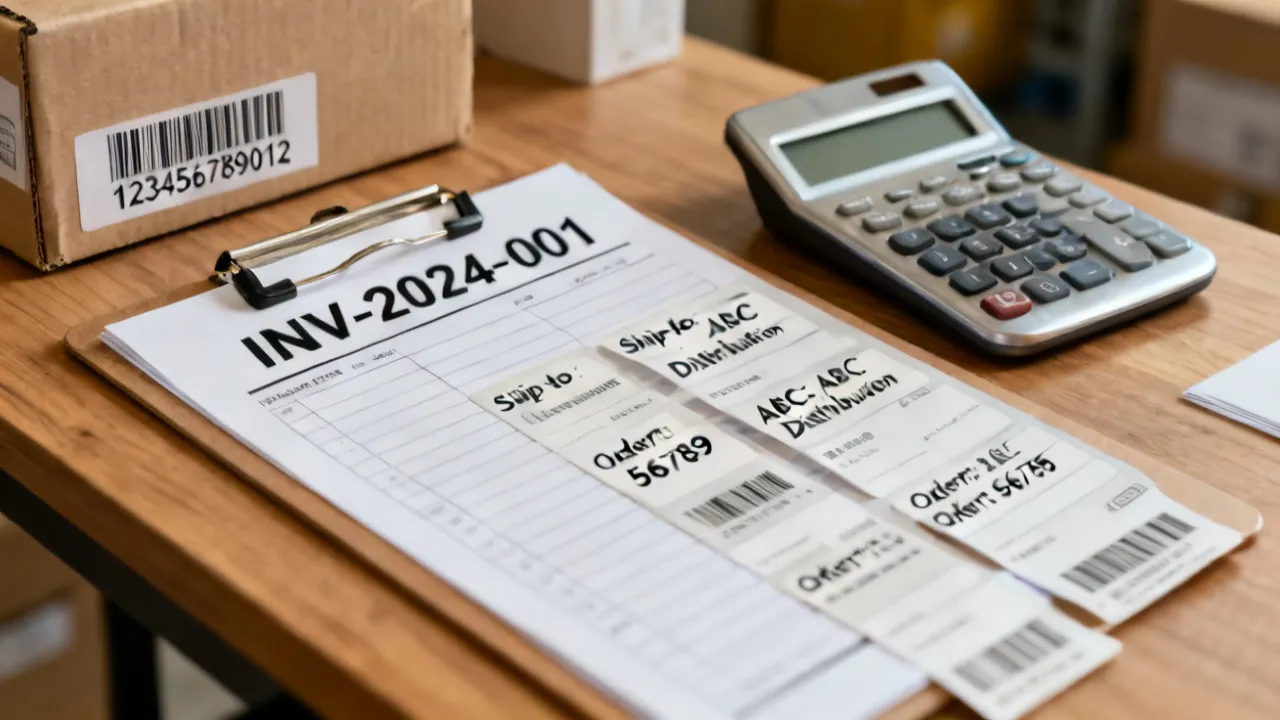
1) What “1382 013 000200312” Means for Procurement
In procurement and inventory workflows, a supplier code such as 1382 013 000200312 typically acts as a traceability identifier—a compact reference used to connect a purchase order line item to the correct product specification, variant, and fulfillment record. In practice, this code helps teams avoid mismatches when multiple items share similar descriptions, when revisions occur, or when goods move across warehouses and carriers.
Because the meaning of 1382 013 000200312 depends on the supplier’s internal structure and data model, a robust approach is to treat it as a key that must be validated against official supplier documents. Those documents often include an item master extract, a line-item data sheet, the packing list fields, and—just as importantly—the buyer’s own purchase order system mapping that links the supplier’s identifier to the buyer’s internal SKU and specification record.
The presence of other numeric sequences in your request—such as 1382 and 013 000200312—is consistent with the way organizations sometimes encode information: a category or segment prefix, a plant/site/family element, and a unique item number or revision token. However, this “consistent with” observation should be treated as hypothesis, not as confirmed semantics. Without the supplier’s mapping documentation, the safest assumption is that every digit group’s meaning is supplier-specific.
For procurement teams, the operational takeaway is simple: don’t treat 1382 013 000200312 as a descriptive phrase that you can interpret intuitively. Treat it as an authoritative identifier that points to structured data maintained by the supplier and mirrored (or mapped) inside your purchasing and inventory systems.
2) Why Codes Like “1382 013 000200312” Matter in Real-World Operations
From an industry perspective, item codes are less about the “story” of the number and more about operational correctness. They reduce ambiguity, enable faster receiving, and support downstream quality checks, inventory reconciliation, and compliance reporting. When a code is entered incorrectly—even by one digit—teams may ship the wrong variant, fail assembly requirements, create compliance issues, or generate reconciliation work that can outweigh any savings from quick ordering.
Procurement organizations that run well tend to emphasize “quality of data” as a controllable input. ISO-oriented supply chain practices often highlight traceability, documentation integrity, and consistent identifiers. While the specific composition of 1382 013 000200312 must be confirmed with the supplier, the governance around such identifiers is widely recognized across manufacturing, distribution, and regulated procurement environments.
Consider a practical scenario: a buyer orders components for a production schedule. The warehouse receives the shipment and scans labels against the purchase order. If the identifier is wrong (or if it is correct but not mapped to the right internal SKU), the system can either reject the receipt or accept it but place it into the wrong bin or classification. Either outcome increases cycle time and can create line stoppages later. Even when production can continue with a substitution, substitution itself can violate quality rules or documentation requirements, which can be critical in audits.
At a higher level, item identifiers like 1382 013 000200312 support:
- Traceability: linking what was ordered to what was received and ultimately what was installed/used.
- Inventory accuracy: ensuring stock counts and valuation align with the correct item master records.
- Quality control: connecting inspection results and certificates to the correct product configuration.
- Reconciliation and costing: supporting correct invoice matching and margin reporting.
- Audit readiness: providing consistent reference points across documents and systems.
3) Expert Checklist: Verify the Code Before You Buy
To use 1382 013 000200312 effectively, procurement teams typically validate multiple layers: (1) what the code maps to in the supplier catalog, (2) how it appears in your ordering system, and (3) how it is represented on shipping and receiving documents.
Below is an expert-oriented checklist for verification. It’s designed not only to prevent obvious errors, but also to catch “near matches”—the situation where a code is close to correct, yet references a different revision, tolerance, packaging configuration, or compliance attribute.
- Catalog mapping: Ask the supplier to provide the item name, specification, and revision level associated with 1382 013 000200312. If your supplier provides multiple “catalog views” (e.g., commercial vs. technical), request the view that matches your purchasing documents and configuration needs.
- Unit of measure: Confirm whether the code is tied to a piece, box, roll, kilogram, liter, or another unit of measure. Unit-of-measure mismatches are a frequent root cause of discrepancies between purchase orders, packing lists, and invoices.
- Compatibility and interchangeability: If the item is a component, confirm whether newer or older variants exist and whether they can be substituted under your approved alternates policy. For regulated industries, “compatible” often still requires formal approval and documentation.
- Packaging and labeling: Ensure the packing list will reflect the same identifier and any lot, batch, serial, or packaging attributes if applicable. Some suppliers encode packaging configuration implicitly in the identifier; others display it only in line-level fields.
- Quality and documentation expectations: If procurement is safety- or compliance-critical, confirm what documents are expected for 1382 013 000200312. Examples include certificates of conformity, material certifications, inspection reports, test results, calibration certificates, or specific batch/lot documentation.
- Revision control: If 1382 013 000200312 includes a revision or version component, verify how revisions are represented (e.g., suffixes, separate revisions codes, or revision dates). Confirm whether the supplier treats revisions as new line items or as updates under the same identifier.
- ERP/portal field mapping: Ensure that the code is stored in the correct ERP field (supplier item number vs. buyer item number vs. external manufacturer part number). Storing it in the wrong field can cause receiving scans to fail or produce audit confusion later.
- Receiving workflow readiness: Confirm whether receiving is barcode-based and whether the label printed by the supplier matches the code format you expect. If the label format differs (spacing, separators, leading zeros), you may need a normalization rule or consistent formatting guidance.
4) Supplier Considerations: How the Same Code Can Behave Differently
A key caution is that item identifiers live inside business processes. Two suppliers might both use numeric codes, yet encode different meaning. For example, one supplier might embed location or manufacturing line into the identifier; another might reserve digits for product family only. That is why you should not infer too much from 1382 013 000200312 alone.
However, it is reasonable to expect consistent behavior once the supplier publishes the identifier for ordering. In mature supplier-buyer relationships, the identifier should appear consistently on:
- Order acknowledgments (confirmations)
- Invoices and credit notes
- Packing lists / shipping documents
- Labels on cartons, pallets, or individual units
- Certificates and documentation bundles
When those surfaces do not match—e.g., the invoice uses one identifier while the packing list uses another—procurement teams typically experience rework. In multi-warehouse setups, mismatches can be even more costly because the same receiving process may be run by different teams using different scanner rules or internal mapping templates.
Additionally, suppliers may sometimes issue substitutions due to supply constraints. In those cases, a code like 1382 013 000200312 might remain unchanged in certain documents while the physical material changes, or vice versa. Therefore, you should ensure that any substitution is governed by your approved supplier policies, including requiring an approved alternate and an explicit documentation trail.
5) Industry Context: Traceability and Standards Drive Identifier Practices
Although your request does not specify a domain (electronics, industrial materials, medical supplies, automotive parts, etc.), the broader operational logic is common across sectors: item identifiers support traceability, forecasting, inventory accuracy, and compliance reporting.
In regulated contexts, traceability is discussed within quality management systems and documented controls. For general procurement and logistics, standards bodies and industry guidance emphasize consistent identification practices to reduce errors and support auditing. For background concepts (not a mapping claim for 1382 013 000200312), organizations often reference:
- ISO 9001 (Quality management systems)—relevant for controlled documentation and traceability expectations in quality processes.
- GS1 guidance (global item identification)—relevant to the broader concept of using structured identifiers for supply chain visibility, particularly when parties want interoperability beyond a single supplier’s internal code system.
That said, the exact alignment between 1382 013 000200312 and any formal standard cannot be assumed. Many supplier item numbers are internal-only. Even when codes resemble structured formats, the “meaning” is usually defined by the supplier’s item master and the buyer’s mapping configuration—not by a public standard alone.
In practical procurement terms, standards matter because they shape process expectations—how changes are documented, how approvals are controlled, how records are retained, and how traceability is audited. Your internal procedures should be designed to maintain traceability even when identifiers are supplier-specific.
6) Operational Risk Scenarios Involving Numeric Codes
Even a small numeric identifier can be the difference between smooth fulfillment and costly correction. Below are common risk scenarios involving codes like 1382 013 000200312, along with why each scenario happens and what procurement can do to prevent it.
- Catalog drift: A supplier updates specifications but reuses or partially changes internal codes. Without revision validation, buyers may receive a near-match that fails assembly requirements or compliance needs.
Prevention: require confirmation of spec revision, not just code text; store revision metadata in your item master mapping; request updated documentation when specs change. - Unit-of-measure confusion: The code references one unit of measure, but the purchase order line defaults to another. For example, the supplier might price and label per “box,” while your ERP expects “each.”
Prevention: validate UoM fields in the supplier catalog extract and confirm conversion factors; test a small order if conversion is unclear. - Data entry errors: Transposed digits (e.g., swapping “013” and “001”) can lead to incorrect line items. This risk increases when codes are manually typed.
Prevention: implement scanning, use dropdown selections tied to item master entries, and apply input validation rules that flag improbable formats (length, allowed characters, leading zeros). - Cross-warehouse labeling mismatch: Receiving scans may not match procurement codes if label formats differ or if there’s inconsistent spacing or delimiter usage. Some systems store codes without spaces; others store with spaces; barcodes might remove separators entirely.
Prevention: establish normalization rules (e.g., strip spaces) and confirm the exact string format used in scanner labels vs. ERP fields. - Lot/serial expectations: Some items require lot traceability; the code alone might not carry lot data, which must appear in additional fields such as “lot number,” “batch number,” “serial number,” or “production date.”
Prevention: ensure your receiving process collects required lot/serial fields and links them to the item record associated with 1382 013 000200312. - Partial shipments and split deliveries: When a line is split across multiple shipments, the identifier must remain consistent while lot/serial data differs. Inconsistent handling can cause audit gaps.
Prevention: enforce document control rules for split shipments; ensure each shipment’s documentation includes the correct code and required lot/serial references. - Invoice matching failures: AP (accounts payable) often uses invoice line items to match against PO lines. If the supplier uses slightly different identifier formatting (missing separators, different spacing), the match may fail or—worse—match to the wrong line.
Prevention: align identifier formatting rules across PO, GRN (goods receipt notes), and invoicing; configure ERP matching tolerances carefully. - Substitution without approval: A supplier might send a functionally similar item when shortages occur, but only one document might reflect the substitution.
Prevention: require that substitutions are pre-approved and documented; block receipt in the system if the identifier or revision does not match the approved alternate policy.
7) How to Integrate “1382 013 000200312” Into Your System
For buyers using ERP systems, the top practice is not just to store the numeric string, but to establish a controlled mapping between:
- Supplier identifier (e.g., 1382 013 000200312)
- Internal SKU
- Specification record (technical parameters, tolerances, performance constraints)
- Procurement policy (approved sources, substitution rules, authorized revisions)
- Receiving rules (scan method, required attributes, document requirements)
This reduces ambiguity during audits and improves resilience when staff changes occur. It also helps ensure that the identifier remains meaningful across the procurement lifecycle: ordering, shipment, receipt, inspection, warehousing, and issuance to production.
In a well-designed setup, 1382 013 000200312 becomes part of a structured item master record. For example:
- You store the supplier code in an “external reference” field, not as the primary internal SKU.
- You attach quality/document requirements to the internal SKU that the supplier code maps to.
- You track revisions so that old mappings do not silently override new ones.
- You specify receiving requirements so that a GRN cannot be completed if lot/serial fields are missing (for items that require them).
Also consider normalization: because the code includes spaces (1382 013 000200312), while barcodes may encode without spaces (e.g., 1382013000200312) depending on how the supplier prints labels, you may need a consistent string handling approach. The key is to keep a canonical stored form and apply normalization during scan/receipt.
8) Location Handling: “nearby” and What It Signals
Your instructions include a localization rule: anytime a city or country appears in keywords, replace it with “nearby.” In practical editorial and content-handling terms, that means if a provided keyword set contains any geographic token, the article should refer to geographic context as nearby rather than naming a specific place.
This can be useful for maintaining general applicability while still reflecting logistics realities such as regional distribution routes, typical lead-time windows, and the fact that suppliers may quote differently depending on shipping lanes.
Because your provided keywords do not explicitly include a city or country name, the article maintains the general, location-agnostic approach—while still applying the “nearby” substitution rule if future keyword variants include geography.
From a procurement operations viewpoint, it’s worth noting that logistics variability is a real factor. Lead times and shipping charges often depend on distance, customs processing, and carrier availability. Even so, your procurement documentation and system mapping should focus on the stable identifiers (like 1382 013 000200312) and treat geography as dynamic metadata, not as part of the authoritative item identity.
9) Supplement: Comparison Table, Source Notes, and Step-by-Step Guide
| Topic | What to Check for Codes Like 1382 013 000200312 | Why It Matters |
|---|---|---|
| Supplier catalog mapping | Confirm the exact item description, specification, and revision tied to 1382 013 000200312. | Prevents receiving the wrong variant or outdated configuration. |
| Ordering data fields | Verify the code’s association with the correct unit of measure, packaging, and any required attributes. | Reduces invoicing and receiving discrepancies. |
| Documentation alignment | Check whether the supplier confirmation and packing list will display the same identifier. | Supports auditability and smoother receiving workflows. |
| Traceability requirements | If the item requires lot/serial traceability, confirm which additional fields accompany 1382 013 000200312. | Ensures compliance with internal quality procedures. |
| System mapping | Map the supplier code to your internal SKU and specification record. | Improves data quality, searchability, and procurement reliability. |
Step-by-Step Guide (Procurement Use)
- Collect official references: Request supplier documentation that explicitly links 1382 013 000200312 to the product’s description, specification, and revision. If the supplier maintains an item master, ask for an extract or screenshot of the relevant item record.
- Confirm line-item requirements: Validate unit of measure, packaging count (e.g., number of units per carton), and any mandatory attributes such as grade, tolerance, finish, regulatory flags, or performance ratings.
- Create or update internal mapping: Store the supplier code alongside your internal SKU and specification data. Include revision tracking and approval metadata (who approved the mapping, when, and which documents were used).
- Place a controlled test order (if appropriate): For high-cost or safety-critical items, conduct a pilot to verify receiving and documentation alignment before scaling to full procurement volume.
- Validate receiving scans: Ensure the identifier on the packing list matches what receiving systems record. Confirm that barcode scanning returns the expected value and that any normalization rules (spaces, delimiters) are consistent.
- Perform post-receipt reconciliation: Confirm that invoice quantities, units, and item identifiers align with the purchase order line. Investigate discrepancies immediately rather than accepting mismatches as “minor.”
- Lock in the mapping after confirmation: Once validated, ensure the mapping is set to “approved” status so it cannot be overwritten by future supplier changes without formal review.
- Monitor for exceptions: Over time, review receiving exception logs for mismatched identifiers, frequent manual overrides, or recurring unit-of-measure problems tied to items like 1382 013 000200312.
Conditions and Requirements
- Procurement should treat 1382 013 000200312 as authoritative only when it matches the supplier’s official documentation for that exact item and revision.
- Any substitution policy must be documented and approved. Never substitute based on partial similarity of codes, descriptions, or numeric fragments.
- Where quality management applies, ensure that identifier changes are tracked under document control. If the supplier updates the item master, you should confirm whether 1382 013 000200312 remains valid or if a new identifier supersedes it.
- For items requiring traceability beyond the code itself, require lot/serial or batch data fields in addition to 1382 013 000200312.
10) FAQs About Supplier Codes and Identifiers
FAQ 1: What exactly is “1382 013 000200312”?
It is very commonly a supplier-specific item or catalog identifier used in procurement and logistics to reference a particular product configuration. The precise breakdown of digits must be confirmed with the supplier’s documentation, because suppliers define internal code structures differently.
FAQ 2: Can I determine the product specs just from the code?
In general, not reliably. Numeric strings like 1382 013 000200312 are often encoded using internal conventions that vary across suppliers. The safest method is to request a catalog extract or item master record from the supplier (or use your internal mapping if you already have it validated).
FAQ 3: Why do procurement teams insist on matching the code on the packing list?
Matching identifiers supports traceability and reduces receiving errors. When the code on shipment documents aligns with what was ordered, receiving and reconciliation are faster and more auditable. It also reduces the risk of stock being placed under an incorrect classification, which can lead to downstream quality issues.
FAQ 4: What should I do if the code in the invoice doesn’t match the PO?
Pause reconciliation until you confirm with the supplier. Ask whether there was a revision change, an internal item remapping, a packaging configuration change, or a data-entry error. Then update your internal mapping only after the supplier confirms the correct link between the physical goods, the invoice line identifier, and the intended PO line.
FAQ 5: How can I prevent digit-entry mistakes?
Use barcode/label-based scanning where possible, add input validation in procurement software, and enforce a two-step verification for high-value line items. For identifiers like 1382 013 000200312 that include multiple digit groups, scanning helps avoid the most common human error: transposition and missing leading zeros.
FAQ 6: Does the presence of other numeric fragments (e.g., “1382” or “013 000200312”) change the meaning?
Not necessarily by itself. The fragments could reflect how the supplier groups digits internally (family, site, category, item number), but interpretation must be validated by the supplier’s item master documentation. Some systems store identifiers with spaces for readability; others store them without spaces; the underlying “meaning” is still defined by the supplier’s data model.
FAQ 7: Are there industry standards that govern these codes?
There are broad standards and best practices for supply chain identification and traceability. However, a supplier’s internal code like 1382 013 000200312 may not map directly to a single public standard unless the supplier explicitly states interoperability or alignment with that standard.
FAQ 8: When should I request additional documents?
Request additional documentation if the item is safety-critical, compliance-critical, or used in systems with strict configuration requirements. Ask specifically what documentation the supplier provides for items referenced by 1382 013 000200312. For example, for regulated materials you may need certificates tied to a specific lot, not just general product-level documentation.
11) Practical Guidance: Turning Codes Into Better Decision-Making
Supplier codes are often treated as “just an identifier,” but mature procurement turns them into decision support. Once 1382 013 000200312 is mapped accurately to a specification record and your receiving rules, organizations can operationally:
- Improve forecast accuracy by standardizing item master data and reducing duplicate or near-duplicate SKUs caused by inconsistent supplier code formatting.
- Reduce receiving disputes by aligning what people order with what people receive, including matching revision and packaging configuration.
- Enhance quality processes by linking identifiers to inspection or documentation requirements (and by ensuring that nonconformities are tied to the correct item version).
- Strengthen audit readiness through consistent reference documentation across PO, GRN, invoice, and quality records.
That transformation requires disciplined data governance: version control, approved mappings, and clear rules for how updates are handled. In other words, the code is not the “data”—the code is the pointer into your data ecosystem. If the ecosystem is governed correctly, the code becomes a powerful control mechanism.
To make this concrete, consider how procurement might evolve:
- Instead of relying on manual description matching (“looks like the right one”), teams rely on identifier-based matching (1382 013 000200312), with description used only for human review.
- Instead of asking suppliers “is this the same part?” teams ask suppliers to provide the exact mapping and revision documentation associated with the identifier.
- Instead of allowing exceptions to accumulate, teams quantify mismatch rates and use them to drive supplier performance improvement.
All of these improvements hinge on consistent identifier usage across procurement systems and supplier documents.
12) Quality and Governance: What “Professional Handling” Looks Like
From an expert viewpoint, professionalism in identifier use is demonstrated by process design. For example, procurement teams should establish:
- Approval workflows for new mappings between 1382 013 000200312 and internal SKUs. Approvals ensure that no one can quietly map a supplier item code to an incorrect internal spec.
- Exception handling procedures when documentation conflicts occur. For instance, if the supplier confirmation shows one code and the packing list shows another, the system should flag it and require investigation.
- Training and escalation paths so staff know when to contact the supplier or internal quality team rather than guessing. Training should include common identifier pitfalls: leading zeros, spacing differences, and revision suffixes.
- Audit trails that record who changed the mapping and why. Audit trails are especially important when codes correspond to regulated products or when certificates must be tied to specific lots.
- Periodic data hygiene reviews to remove duplicate internal SKUs that may have been created when supplier codes were entered inconsistently (e.g., with or without spaces).
This governance is consistent with widely adopted quality management principles in supply chain operations, including the idea of controlled processes and documentation integrity associated with quality management systems such as ISO 9001.
It’s also worth noting that governance is not only about preventing mistakes—it’s about enabling continuous improvement. When teams track where mismatches occur, they can identify whether root causes stem from supplier label formatting, inadequate catalog extracts, or internal receiving rules.
13) Common Misconceptions (Objective Clarifications)
To keep the discussion grounded, here are common misconceptions that procurement teams sometimes encounter when dealing with supplier item identifiers like 1382 013 000200312:
- Misconception: “The digits must correspond to a specific product type.”
Clarification: The digit structure is supplier-specific. Without the item master, you cannot infer exact specifications. The code’s meaning is defined by the supplier’s system and your mapping. - Misconception: “If descriptions look similar, code mismatch is minor.”
Clarification: Similar descriptions can hide version differences, packaging differences, compliance variations, or different test/inspection requirements. Even if the item “seems interchangeable,” procurement must follow approved interchangeability rules. - Misconception: “We can fix everything during receiving.”
Clarification: Rework during receiving is costly. It can delay production schedules, create inventory inaccuracies, and generate audit issues. Prevention is cheaper than correction. - Misconception: “If the invoice matches the PO, the shipment must be correct.”
Clarification: It’s possible for the invoice to match PO text while the shipment includes the wrong physical variant. That’s why receiving documentation and label-level identifiers matter. - Misconception: “All suppliers format codes the same way.”
Clarification: Suppliers may include spaces or separators for readability, while barcode labels might remove them. Some systems strip non-numeric characters. Normalization rules should be deliberate and documented.
14) Reliable Sources and References (for Background)
While this article focuses on the practical handling of supplier identifiers like 1382 013 000200312, readers may find the following authoritative references useful for the general concepts of quality systems, documentation control, and supply chain identification:
- ISO 9001 — Quality management systems; relevant to process control and documentation integrity.
- GS1 (global standards for identification) — background on supply chain identification concepts and structured identifiers.
Source note: This article does not claim that 1382 013 000200312 conforms to GS1 or ISO-specific coding schemas. Instead, it uses recognized operational principles for how identifiers support traceability and procurement accuracy—regardless of the exact coding method used by the supplier.
In real implementations, teams often combine standards-based thinking (controlled documentation, traceability logic, audit-ready records) with supplier-specific identifier mappings. That hybrid approach is practical because most supplier codes are internal and not necessarily standardized across the entire industry.
15) Conclusion: Treat “1382 013 000200312” as a Verified Key
Codes like 1382 013 000200312 are best understood as operational keys rather than standalone “product descriptions.” A professional procurement approach validates the identifier against official supplier documentation, maps it to internal specifications, and ensures receiving and invoicing systems align with the same reference. When those controls are in place, the numeric code becomes a practical tool for traceability, reduced errors, and more reliable supply chain execution.
Ultimately, the value of 1382 013 000200312 is realized only when it is connected to the right data: the correct item master record, the correct revision, the correct unit of measure, and the correct documentation expectations. Procurement maturity is shown less by how well teams interpret the number, and more by how consistently they govern the mapping between the identifier and the physical, documented goods behind it.
-
1

A Guide to Cost-Efficient Small Electric Cars for Seniors
-
2
Mastering Debt Consolidation: Boost Your Credit Score and Manage Interest Rates
-
3
Your Guide to Loans, Credit Checks, and Interest Rates
-
4
Affordable Independent Living: Finding the Right Senior Housing
-
5
Guide to Senior Living Apartments: Affordable and Comfortable Environments