Understanding 03837516399 for Reliable Sourcing Decisions
This guide explains how to interpret 03837516399 for practical, dependable sourcing and verification. Objectively, the keyword string functions as an identifier-like reference used in procurement, logistics, or catalog workflows. The article discusses how suppliers handle reference numbers, what buyers should confirm, and how to reduce ordering errors through documented checks.
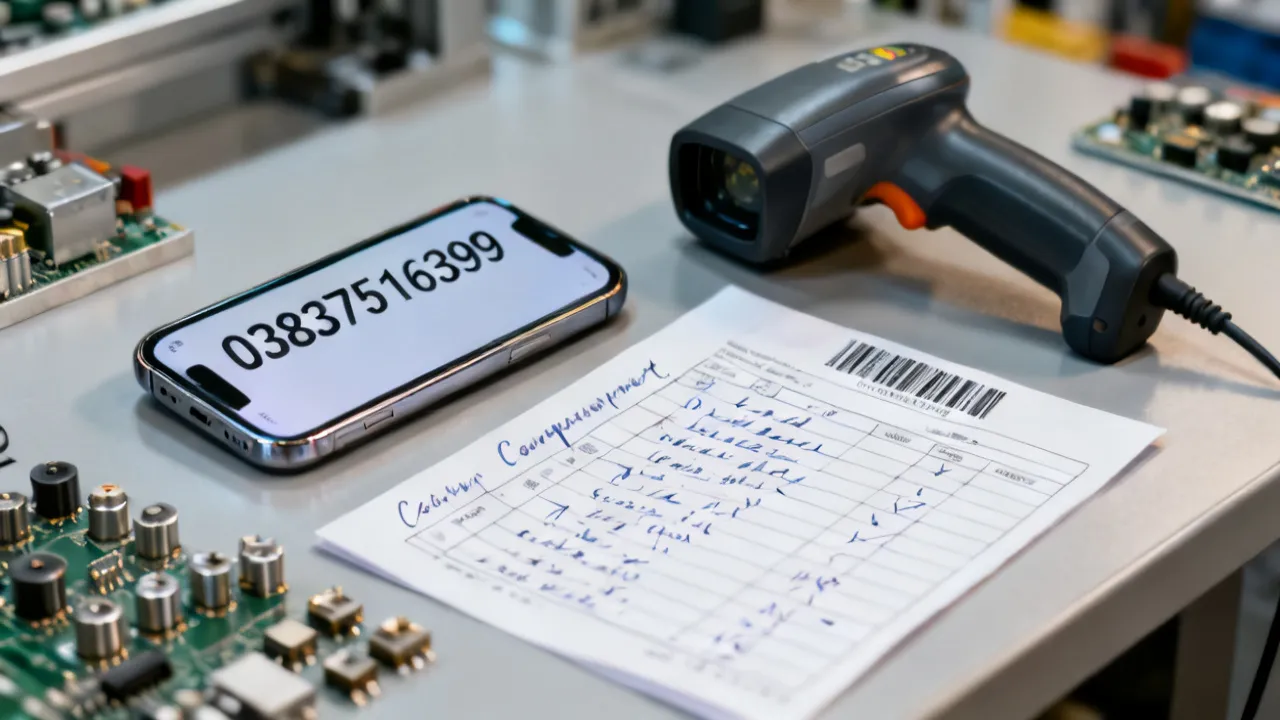
Key Takeaway: Treat “03837516399” as a verification reference, not just a number
When you encounter 03837516399, approach it as an identifier that should map to a specific item, batch, catalog entry, invoice record, or shipment reference. In professional procurement workflows—especially where multiple variants exist—this kind of reference is valuable only when you confirm what it belongs to, which party issued it, and whether it aligns with the exact specification you intend to purchase.
Because the request also includes additional keyword fragments (shown as empty strings in the provided input), this article focuses on the one concrete, actionable keyword: 03837516399. If your other keyword fragments are meant to represent supplier names, product types, or locations, you can share them and the article can be refined accordingly.
In practice, treating the identifier as a “verification reference” means you actively demand the missing context around it—what it identifies, how it was generated, what documentation proves the mapping, and what commercial terms are tied to the exact configuration you need. Without that context, the identifier might be accurate yet still lead you to the wrong purchase (wrong revision, wrong package, wrong spec, or wrong fulfillment record).
Why identifier-like keywords matter in procurement
In many industries—industrial components, electronics, B2B services, and distribution—buyers rarely order from memory. Instead, they rely on reference identifiers that appear in catalogs, quotation sheets, purchase orders, or shipping documents.
From an industry-expert perspective, a reference like 03837516399 typically serves one (or more) of these roles:
- Product or SKU linkage: A number tied to a specific model, revision, or configuration.
- Order or delivery reference: A number used by logistics systems to track a shipment.
- Document reference: It may correspond to an invoice line, quotation number, or warranty/repair record.
- Supplier internal catalog reference: Different suppliers can use similar-looking identifiers differently—so confirmation is required.
The key point is straightforward: an identifier is only meaningful when it is connected to an auditable document trail. Procurement is not just about selecting “an item”; it is about ensuring that what you ordered is what you receive, what you receive matches what you can prove, and what you can prove matches what your internal stakeholders require (engineering, quality, finance, compliance, and operations).
In other words, identifier references are the glue between systems. The problem is that buyers often assume the glue is the object. The identifier is not the product—it’s the pointer. And pointers can be misinterpreted, outdated, or mapped differently across suppliers, ERP systems, and warehouses.
Very critical checks to perform before ordering or paying
Whether you are contacting a distributor, placing a purchase order, or confirming a repair part, your verification routine should be consistent. A disciplined check reduces costly mismatch issues, such as wrong revision numbers, incompatible connectors, mismatched ratings, or incorrect packaging/labeling that complicates warranty and compliance.
Below are priority validations to complete early:
- Confirm the identifier’s owner: Ask whether 03837516399 is issued by the supplier, manufacturer, warehouse system, or a third-party platform.
- Match it to a specific description: Require a written description of the item/service tied to 03837516399 (e.g., “Model X, revision Y, specs Z”).
- Validate technical specifications: If the reference relates to a product, confirm ratings, dimensions, compatibility, and documentation (datasheet, manual, compliance statements).
- Check for revision or batch differences: Identifiers may be reused across documentation systems; revisions matter.
- Request evidence: Ask for a photo of the label, a packing slip excerpt, or the invoice line that contains 03837516399.
- Clarify lead time and fulfillment responsibility: Ensure who ships and by which process the item is fulfilled.
These steps are not “optional bureaucracy.” They are standard risk controls used in B2B buying practices, aligned with quality management principles recognized in international standards such as ISO 9001 (process control and documented verification) and general supply-chain top practices reported by organizations like the ISO and major industry associations.
To make this practical, you should treat the verification as a checklist that you can repeat for every order that includes 03837516399. Repetition reduces the “human interpretation” factor and helps avoid last-minute decisions made when receipts arrive or when finance asks why the invoice doesn’t match the PO.
How suppliers typically use reference numbers like 03837516399
From a supplier-operation viewpoint, identifiers are essential for handling many SKUs, frequent updates, and multi-location inventory. A well-implemented reference system helps suppliers prevent pick errors and supports traceability for:
- Inventory reconciliation: Linking stock movements to item codes.
- Quality checks: Associating batch testing or inspection documents to the right item.
- Warranty or RMA workflows: Connecting returns to specific shipments or manufacturing lots.
- Customer service: Allowing support teams to identify the correct history quickly.
However, the same operational advantages become buyer risk if you assume that the identifier automatically implies the correct specification. A reference number can be accurate yet still refer to a different revision than the one you need. Additionally, suppliers may use internal references that are not identical to manufacturer part numbers. That distinction matters because your engineering requirement might reference the manufacturer’s naming scheme, not the supplier’s internal catalog.
Another common operational reality is that warehouses sometimes map the same product to multiple identifiers across channels: for example, one identifier for e-commerce, another for wholesale, another for returns processing, and another for import/export documentation. If 03837516399 appears in one of these contexts, you must confirm which mapping is in play.
Risk scenarios when buyers misinterpret identifier references
Even experienced procurement teams can stumble if they rely on identifier strings without confirmation. Common issues include:
- Wrong item match: Two products with similar descriptions might share identifiers across systems.
- Revision mismatch: The number might refer to a newer/older revision that has different compatibility.
- Documentation mismatch: The number appears on a document but not on the physically shipped packaging label.
- Incorrect billing line: A payment transaction references the number, but the invoice line does not correspond to the intended item.
To expand on how this can happen, consider a typical chain of events in a mid-size manufacturing firm:
Example scenario: A buyer requests a component “using reference 03837516399” from an email thread. The supplier provides a quotation that includes 03837516399 in the line item description. The buyer then issues a PO referencing that identifier. When the shipment arrives, the packing slip lists 03837516399, but the invoice uses a different internal code. Quality inspects the item and notes that the revision marking on the device does not match the revision described in the datasheet the buyer expected. Even if the supplier can claim that 03837516399 is their internal mapping, the buyer’s engineering requirement is revision-specific. Without pre-shipment evidence, this becomes a dispute.
In high-stakes environments, that mismatch can lead to:
- Scrapping inventory or rework
- Delays in production schedules
- Compromised compliance reporting
- Invoicing disputes and credit note delays
- Warranty claim failures due to documentation gaps
These are precisely the downstream costs that verification is meant to prevent. When 03837516399 is treated as a pointer that must be verified, the procurement team can avoid “paper correctness” that doesn’t hold up against physical labels and technical requirements.
Pricing and commercial terms: what to confirm alongside 03837516399
The user request mentions “price information” and “supplier details,” but no explicit price, currency, or supplier identity was provided in the input. In professional practice, pricing should always be tied to the exact item definition—especially when only an identifier like 03837516399 is provided.
To ensure you and the supplier agree on commercial terms, request:
- Unit price and total price: Specify quantities, taxes, and any mandatory fees.
- Price validity: Confirm the effective date range for the quotation.
- Incoterms and shipping method: Clarify shipping responsibility and risk transfer point.
- Warranty scope and return conditions: How the supplier handles defects and returns tied to 03837516399.
- Documentation included: Packing list, invoice, certificates, manuals, or compliance statements.
If your situation involves multiple suppliers quoting different prices for “the same reference,” it’s a strong signal that 03837516399 may be interpreted differently across catalogs—again reinforcing the need for spec-level confirmation. Sometimes suppliers quote a reference that corresponds to a broad product family rather than a specific revision, or they quote a “compatible alternative” but still reuse the identifier in their internal system.
A robust commercial confirmation request is not merely about money. It is about alignment. If the reference is used incorrectly, the price comparison becomes meaningless. You might be comparing different items while believing they are identical because the identifier is the same.
To address this, ensure your purchase document (PO) includes not only 03837516399 but also the written description and key technical fields that make the item unambiguous.
Industry context: traceability and documentation reduce downstream costs
Across manufacturing and distribution, the value of traceability is well-recognized. When reference identifiers are correctly used, organizations can:
- Reduce rework and corrective shipping costs
- Improve audit readiness
- Minimize time spent resolving customer service issues
- Support compliance documentation where applicable
Although this article does not claim specific market statistics (because none were provided in the prompt), these principles align with established quality management and supply-chain traceability practices documented in standards and widely used in regulated industries.
To make the traceability value more concrete, consider a compliance audit in a regulated domain (even if not every industry is regulated the same way). An auditor typically asks:
- What exactly was purchased?
- Which specification was required?
- How did the supplier deliver it?
- How do you prove the delivery matches the purchase order?
- How do you handle deviations and nonconformities?
If your documentation is centered on an identifier like 03837516399 but does not clearly connect to a description, revision, batch, and evidence of shipment labeling, you may be forced into time-consuming evidence reconstruction. That can include chasing suppliers for copies of documents, re-requesting photos, or even performing retesting. In contrast, if you proactively verify that 03837516399 corresponds to the exact item and shipment, traceability becomes straightforward.
From a cost perspective, it’s often cheaper to do verification before payment and receipt than after. The difference is not just money—it’s also time and organizational friction.
Comparison table: practical approaches to using 03837516399
| Approach | What you do | What it helps you confirm | Typical requirement/condition |
|---|---|---|---|
| Document-first verification | Request quotation and invoice lines that contain 03837516399 plus written item description | Correct mapping of the identifier to the intended item/service | Supplier must provide matching documentation before payment |
| Spec matching | Compare technical specs (model, revision, ratings) against your engineering or compliance needs | Revision-accurate correctness | Buyer needs minimum spec checklist from internal stakeholders |
| Label and packaging confirmation | Ask for photo of the label or verify the packing slip shows 03837516399 | Match between documentation and physical shipment | Supplier agrees to share images or pre-shipment check results |
| Traceability / batch check | Request batch/lot or serial traceability details associated with 03837516399 | Quality and warranty traceability | Only feasible if the supplier tracks lot/serial records |
| Operational alignment | Confirm fulfillment responsibility, carrier details, and delivery workflow tied to 03837516399 | Correct logistics route and delivery expectations | Both parties agree on Incoterms and lead time assumptions |
Expanding the practical verification workflow (beyond the basics)
A short checklist is helpful, but it’s also useful to understand how verification fits into the broader procurement lifecycle: request for quotation (RFQ), supplier selection, purchase order issuance, shipment, receipt, and post-receipt documentation retention.
Below is an expanded approach that integrates 03837516399 into each lifecycle stage, so you don’t accidentally verify only at one point and then “stop thinking about it” when it seems convenient.
1) RFQ stage: force unambiguous identification
When you send an RFQ that includes 03837516399, avoid asking vague questions like “Can you supply this reference?” Instead, build your RFQ to require a response that includes:
- A written product description tied to 03837516399
- The manufacturer part number (if different)
- The revision or version (if applicable)
- Key technical parameters that matter for compatibility
- Whether the reference is a SKU, document number, or shipment code
This reduces the chance that the supplier will respond with a broad product family or an internal warehouse code that happens to include 03837516399 somewhere in their system.
If you don’t know what 03837516399 represents, you can still ask: “Is 03837516399 your SKU, the manufacturer’s part number, or a quotation/invoice reference?” The supplier’s answer becomes the foundation for correct ordering.
2) Supplier selection: compare items, not just references
Many buyers focus on price and lead time during supplier selection. But with identifiers, you should compare:
- The exact item definition (description + revision)
- The included documentation
- Warranty and return handling
- Quality assurance practices (e.g., incoming inspection, batch traceability)
- Packaging and labeling standards
Two suppliers might both mention 03837516399 but still deliver different revisions. If you only compare unit cost, you may select a cheaper offer that is not the correct spec. Over time, that can cost far more than the price difference.
3) Purchase order issuance: add “spec-level guardrails”
Once you choose a supplier, update your PO to include guardrails that reduce ambiguity. A PO that lists only 03837516399 can be risky because identifier meanings can vary.
Instead, include at minimum:
- Reference identifier: 03837516399
- Full description: as provided by the supplier/manufacturer
- Manufacturer part number (if available): plus revision
- Key technical requirements: ratings, dimensions, materials, compatibility
- Quantity and unit of measure
- Delivery terms / Incoterms
- Document requirements: packing list, certificate(s), manuals, compliance statements
These details create a contract-like baseline that makes it easier to resolve disputes if the shipment does not match the intended item.
Step-by-step guide to reduce ordering errors
Below is a practical workflow you can follow when 03837516399 appears in a quote, message, or document.
- Capture the full context: Record where 03837516399 appears (email line, invoice line, packing slip, or chat reference).
- Ask for a definition: Request a written statement: “What item/service is associated with 03837516399?”
- Request technical confirmation: Ask for datasheet/manual details and confirm model/revision compatibility.
- Confirm quantity and commercial terms: Verify unit price, taxes, shipping charges, and payment schedule tied to the correct line item.
- Verify shipping documentation: Require the packing list/invoice to match the identifier and item description.
- Inspect upon receipt: Check label, packaging, and paperwork alignment with the identifier 03837516399.
- Document exceptions immediately: If there is a mismatch, notify the supplier with evidence and request a resolution path (replacement, RMA, credit note).
Common “gotchas” to watch for with identifier numbers
Even with good processes, certain pitfalls occur frequently. Below are “gotchas” specifically relevant to the idea of identifier strings like 03837516399.
- Leading zeros issues: Identifier strings may be treated as numeric data in some systems, stripping leading zeros. Confirm that 03837516399 is preserved exactly as sent and stored (e.g., in Excel, ERP imports, invoice parsers).
- Line-item vs. header references: Some documents include 03837516399 in the header (e.g., invoice reference) rather than the line-item description. Make sure the line item matches the product you intend to receive.
- Partial matches: Emails may contain 03837516399 as part of a larger reference string (e.g., order number + line number). Verify you are not dealing with a substring.
- Multiple packaging levels: A case carton may have one code, while inner packaging has another. Confirm which label you care about for receiving, traceability, and warranty.
- Cross-system mapping: Supplier’s SKU might map to a manufacturer part number. Buyers must ensure they are comparing like-for-like.
- Revision drift: Suppliers may ship “new revision” stock unless you specify revision lock or compatibility requirements. If your application is revision-sensitive, make that explicit.
By anticipating these gotchas, you can build a more resilient workflow that remains effective even when systems behave unpredictably.
Conditions and requirements for a reliable transaction
To make identifier-based purchasing dependable, certain conditions must be met—by you and by the supplier.
- Buyer must provide requirements: At minimum, specify what “correct” looks like (spec sheet checklist, compatibility constraints, installation constraints).
- Supplier must provide traceable documentation: Documentation should explicitly connect 03837516399 to the item and the shipment.
- Both parties should agree on revision control: If revisions exist, ensure the identifier maps to the correct one.
- Record-keeping should be maintained: Save quotes, invoices, packing slips, and any communication referencing 03837516399.
- Quality checks should be proportionate: For critical components, consider incoming inspection or verification against a reference standard.
In mature procurement organizations, there is a concept of “criticality.” For low-criticality items, a lighter verification process might be acceptable. But for high-criticality items—safety-critical, mission-critical, regulated, or expensive—verification should be stronger. Because this article cannot assume the criticality of the item linked to 03837516399, you should choose the verification intensity based on your real-world risk.
One practical way to decide is to ask: “If we receive the wrong revision associated with 03837516399, what happens?” If the consequences are serious (downtime, safety risks, compliance breaches), strengthen checks immediately.
Supplier communication template (professional and objective)
You can use the following message structure when you contact a supplier. Adjust specifics to your industry.
Subject: Verification request for reference 03837516399
Message: “Hello, I’m reviewing your quotation/order reference 03837516399. Could you confirm the exact item description, model/revision, and key specifications? Please also share the associated invoice line or packing slip excerpt showing the same reference. If available, provide a photo of the label and confirm lead time, shipping method, warranty/return conditions, and the total price breakdown tied to this reference.”
This approach tends to yield clearer answers because it forces the supplier to connect the identifier to specific documentation and specs.
If you want to increase supplier responsiveness, you can add a “response format” requirement—e.g., asking them to answer in a table with columns for “Reference,” “Item description,” “Revision,” “Specs,” “Included documents,” and “Price.” That makes it easier to compare suppliers and speeds internal approval workflows.
FAQs
1) What does 03837516399 usually represent?
In procurement contexts, 03837516399 commonly functions as an identifier that links to a product, a document line, a shipment reference, or a supplier catalog entry. The exact meaning depends on who issued it and where it appears in the documentation trail.
Because identifiers can represent different object types (SKU vs. shipment vs. invoice header), the safest practice is to ask for its definition. Treat “what it is” as the first question before you treat it as “what it orders.”
2) Should I rely on 03837516399 alone to order?
No. A reference identifier should be treated as a starting point. For reliable purchasing, confirm the item description, model/revision, key specs, and matching invoice/packing documentation associated with 03837516399.
Additionally, do not rely solely on vendor confidence or verbal assurances. Your objective should be documentation-backed verification: a written description tied to the reference, plus evidence from packing and labeling.
3) How can I confirm that the shipment matches 03837516399?
Request (or inspect upon receipt) packaging labels and shipping documents that explicitly show 03837516399 and match the agreed item description and specifications. If you can’t verify pre-shipment, plan an incoming inspection immediately after delivery.
When you perform receiving inspection, capture evidence. For example, photograph labels, keep copies of packing slips, and note revision markings. If you later need to request an RMA or credit note, evidence speeds resolution.
4) What if different suppliers give different pricing for the same reference?
That can happen when the identifier is interpreted differently, mapped to different revisions, or quoted with different commercial terms. Ask each supplier to provide the full item description, specs, revision, warranty scope, and price breakdown tied to 03837516399.
If one supplier provides a narrower definition (e.g., a specific revision) while another provides a broad or compatible alternative, pricing differences become expected. Your goal is to ensure you are comparing the same “definition of correct,” not just the same identifier.
5) Is 03837516399 connected to a specific location?
No location was provided in the prompt. If your original context includes a place name within the keyword set, share it and the article can be localized—such as aligning terminology and local procurement practices. As written, this guide remains location-agnostic.
In real deployments, location matters mainly for logistics and regulatory documentation. But the fundamental verification principle remains the same: confirm what the identifier points to, and confirm the documentation and labels match.
6) What documents should I keep for auditability?
Keep the quotation and invoice referencing 03837516399, packing list excerpts, delivery notes, any supplier communication that defines the item, and evidence from incoming inspection. This supports traceability and reduces ambiguity in case of disputes or returns.
For internal governance, organize these documents by PO number and by receipt batch. That way, when someone searches later for a specific identifier like 03837516399, they can quickly locate the complete set of supporting proof.
7) Are there any quality or compliance considerations?
If the item is regulated or used in safety-critical systems, request relevant documentation such as datasheets, manuals, and conformity statements appropriate to your industry. Even outside regulated sectors, quality management practices benefit from traceable identifiers like 03837516399.
Compliance requirements can include certificates, testing reports, material declarations, and documentation tied to batch/lot traceability. If 03837516399 is involved in a traceability chain, you should ensure the documentation provides that traceability at the correct level (lot, serial, or batch).
Closing perspective: make the identifier work for you
Identifiers like 03837516399 are common tools for managing complexity in modern supply chains. But the buyer’s advantage comes from turning that identifier into a verified, documentation-backed match—rather than treating it as a standalone instruction.
If your identifier appears in your quote, invoice, or shipping documents, your next move is to validate it. Ask what it maps to, request the supporting documentation, confirm revision and specifications, and ensure the shipped labeling aligns with the record. When you do this, 03837516399 becomes a reliable part of your procurement decision-making—not a source of ambiguity.
If you provide the missing keyword fragments (the empty strings in your input) and any concrete “supplier details,” “price information,” or “location” you intended, I can revise this article to include your exact context while maintaining professional objectivity and SEO-focused structure.
-
1

A Guide to Cost-Efficient Small Electric Cars for Seniors
-
2
Mastering Debt Consolidation: Boost Your Credit Score and Manage Interest Rates
-
3
Your Guide to Loans, Credit Checks, and Interest Rates
-
4
Affordable Independent Living: Finding the Right Senior Housing
-
5
Guide to Senior Living Apartments: Affordable and Comfortable Environments