MRV Explained: Applications, Selection, and Top Practices
This guide explains MRV in practical terms, from how it’s measured and documented to how organizations evaluate vendors, integration requirements, and operational safeguards. Objectively, “Mrv” is commonly used as an abbreviation in technical and measurement contexts, where reliable data handling and traceability matter. The article outlines selection criteria, procurement considerations, and FAQs to support informed decision-making.
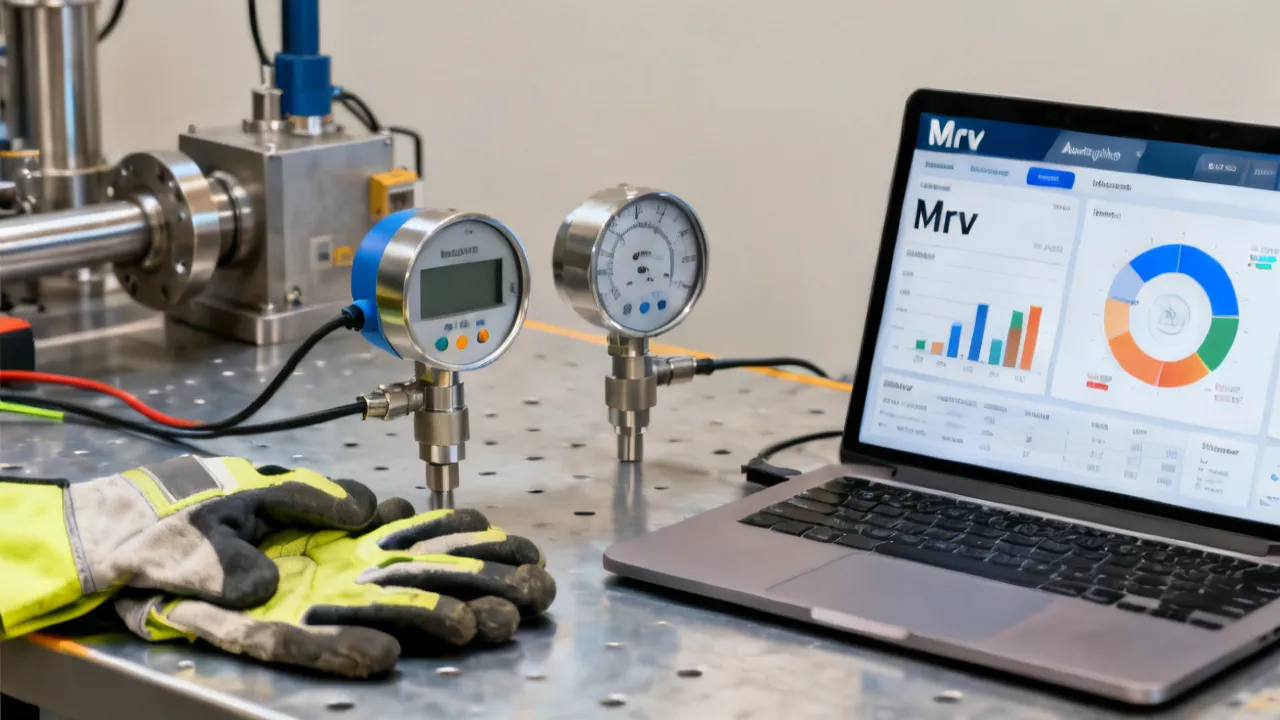
Why MRV Clarity Matters for Reliable Measurement and Decision-Making
MRV (often written as “Mrv” in technical discussions) is a measurement-and-verification approach used to ensure that recorded information is accurate, auditable, and fit for the purpose it serves. In many industries, the difference between a “data record” and a “decision-grade evidence package” comes down to how MRV is designed: what is measured, how uncertainty is handled, which records are retained, and how verification is performed. This article provides an expert, objective walkthrough of MRV concepts, typical workflows, vendor selection factors, and operational requirements—so stakeholders can evaluate systems and processes with confidence.
Although MRV is often discussed as if it were primarily a data management exercise, the strongest MRV programs behave more like a structured control system. They are designed to prevent “silent failure,” where numbers may still be computed but no longer reflect the measurement basis, no longer have traceability to calibration and methods, or no longer match the scope intended by the claim. In other words, MRV clarity is what keeps measurement from becoming a black box.
When MRV is unclear, organizations frequently discover problems at the worst time: during internal sign-off, during a customer audit, or when a regulator or auditor requests evidence. By then, teams are forced into expensive rework, questionable estimation, or justification-by-memory. When MRV is clear, teams can respond quickly with evidence that is complete, consistent, and interpretable.
To make MRV truly reliable for decision-making, stakeholders need to understand not only what MRV is, but why particular design choices matter. Clarity includes clarity of intent (what the data is supposed to support), clarity of boundaries (what is included and excluded), clarity of methods (how values are computed), clarity of quality controls (how data is protected from error), and clarity of verification (how reviewers validate and what triggers escalation). This article expands on each of these aspects to help organizations assess MRV approaches and implement improvements systematically.
Background: What “Mrv” Typically Refers To in Industry Contexts
In professional settings, “Mrv” is used as a shorthand for MRV, commonly associated with frameworks where measurement and verification processes are applied to generate credible outputs. The “M” emphasizes how data is collected (methods, instrumentation, sampling, calibration, and QA/QC). The “R” emphasizes how data is recorded and structured into a form that can be reviewed (documentation, metadata, versioning, and audit trails). The “V” emphasizes how claims are checked (internal review, third-party assessment, sampling-based verification, and reconciliations). While the exact scope can vary by sector—energy, logistics, infrastructure monitoring, environmental reporting, compliance, or performance assurance—the underlying theme is consistent: MRV aims to reduce uncertainty and strengthen traceability.
From a governance perspective, MRV is not only a technical process; it is also a control system. Organizations typically use it to align operational realities with reporting requirements, contract deliverables, or regulatory expectations. For procurement teams, the same logic applies when selecting systems or service providers: credible results require credible processes.
It can also be helpful to distinguish MRV from adjacent terms that people sometimes mix into one conversation. For example:
- Monitoring is continuous or periodic observation of variables, often without a full “claim-ready” evidence framework.
- Reporting is the presentation of metrics or values, which may be based on monitoring but not necessarily backed by an evidence chain.
- Assurance is the verification of information, which can be internal or external and may be driven by different assurance standards.
- MRV integrates measurement discipline, recording discipline, and verification discipline into a unified approach.
In strong MRV programs, the measurement process is selected to meet the needs of the claim, the recording process preserves provenance and comparability, and the verification process checks whether the evidence supports the claim.
Where MRV Is Used: Common Application Patterns
MRV approaches frequently appear in scenarios where stakeholders must trust that “what you say happened” is consistent with “what was actually measured.” Below are common patterns, expressed without assuming any specific jurisdiction or claim:
- Performance assurance in operations: verifying that performance metrics reflect measured conditions rather than estimates.
- Data integrity for reporting: building auditable records that show how numbers were derived, including calculation methods and assumptions.
- Quality management in measurement pipelines: ensuring instrumentation calibration, data cleaning rules, and anomaly handling are documented.
- Change control and versioning: confirming that methodology changes are controlled and that historical data remains interpretable.
- Third-party reviews: supporting external verification through evidence packages and sampling plans.
- Contract deliverables: ensuring that contractual KPIs and measurement-based payments rely on verifiable evidence rather than informal reporting.
- Risk management: managing measurement risk, including drift, data loss, and misinterpretation, with explicit controls.
Across all these patterns, MRV addresses the same fundamental problem: how to produce outputs that a reviewer can check without needing to “trust the spreadsheet” or rely on undocumented institutional knowledge.
Industry Expert View: The MRV “Evidence Chain” Principle
From an industry perspective, MRV quality depends on an “evidence chain” that links instruments to outcomes. If any link is weak—unclear measurement boundaries, missing calibration records, undocumented data transformations—verification becomes fragile. A robust MRV design typically includes:
- Defined boundaries: operational scope, system limits, and consistent inclusion/exclusion rules.
- Transparent methods: documented protocols for sampling, measurement, and calculations.
- Traceability: audit trails showing who changed what, when, and why.
- QA/QC controls: calibration schedules, data validation rules, and corrective actions.
- Verification logic: internal assurance plus a clear path for external checks if required.
When organizations treat MRV as an evidence program rather than a spreadsheet exercise, verification outcomes tend to be more consistent. The evidence chain is what makes the system resilient. Instead of asking, “Did the output look reasonable?” the reviewer can ask, “Is the measurement basis correct, and can the numbers be traced to a controlled method and verified inputs?”
In practice, evidence-chain thinking requires teams to think like an auditor or verifier early in the design stage. A common pitfall is to design instrumentation and analytics first, then bolt on documentation later. MRV flips that approach: documentation requirements shape instrumentation choices, data model design, and workflow decisions from the start.
Another important aspect of the evidence chain is comparability over time. If measurement methods or boundaries shift, MRV must preserve historical comparability through controlled methodology updates, reprocessing rules, version labeling, and clear documentation of what changed and when. Otherwise, even accurate current measurements cannot be used for trend analysis or performance attribution.
How MRV Data Is Typically Built: From Measurement to Verified Outputs
An MRV workflow is usually structured as a pipeline:
- Define measurement intent: what the organization claims and which variables support that claim.
- Select measurement methods: instrumentation, sampling approach, measurement frequency, and calculation formulas.
- Establish QA/QC: calibration, instrument checks, uncertainty treatment, and data validation.
- Record with metadata: timestamps, measurement conditions, data provenance, and method references.
- Perform verification: reconciliation, anomaly review, and independent checks (internal or third-party).
- Maintain documentation: version control for methodologies and records suitable for audit.
To make this pipeline concrete, consider a generic measurement scenario where an organization must compute a performance metric based on multiple sensors. The pipeline may look like this:
- Measurement intent: “Compute a monthly metric for Device Group A that reflects actual operating conditions.”
- Methods: define how to aggregate data points, how to treat gaps, how to correct for known sensor bias, and how to handle conditions such as maintenance windows.
- QA/QC: specify calibration frequency, define acceptable ranges, implement automated validation checks, and require manual review for thresholds or anomalies.
- Recording: store raw sensor readings, processed values, applied corrections, and the method version used.
- Verification: reconcile aggregated results with expected operational ranges, cross-check against independent data sources (if available), and document exceptions.
- Documentation: keep SOPs, calibration certificates, change-control tickets, and evidence of approvals.
Each of these pipeline stages can be implemented in multiple ways depending on technology maturity, but MRV requires that the pipeline is explicit and repeatable.
In more mature MRV programs, the pipeline is supported by defined data governance policies. These include data ownership, data retention timelines, roles for measurement vs. approval, and triggers for reprocessing when methods or calibration data change. The objective is to prevent inconsistencies where a correction is applied in one place but not in another.
Selection Criteria for MRV Solutions: What to Evaluate First
Whether you are implementing MRV internally or procuring a service, selection should start with fit-to-purpose rather than “feature lists.” Consider the following criteria:
- Method transparency: Does the solution clearly document measurement methods, conversion factors, and calculation logic?
- Data integrity controls: Are there controls for data lineage, versioning, and audit logs?
- Uncertainty and QA/QC support: Does the approach manage missing data, outliers, and calibration status?
- Compatibility and integration: Can it integrate with existing sensor systems, spreadsheets, databases, or reporting workflows?
- Verification readiness: Can outputs be reviewed by internal governance teams or external auditors?
- Documentation quality: Are user guides, SOPs, and evidence templates provided?
- Operational durability: Can the process remain stable across staff changes, upgrades, and evolving requirements?
Procurement teams often find that the top vendors are not only able to deliver software or reports; they provide strong methodology documentation and help you demonstrate control. This distinction matters because many MRV failures stem from insufficiently documented methods and insufficient process control rather than from computational errors.
When evaluating MRV tools, it is also important to test them for “evidence sufficiency.” A practical way to do this is to ask the vendor to produce a sample evidence package for a hypothetical case. The package should include raw inputs, processing outputs, calculation steps, method version labels, QA/QC results, and final approval records. If the vendor cannot produce these items in a structured format, the tool may not support real verification needs.
Another evaluation lens is workflow realism. Some tools can compute outputs but require extensive manual work to assemble audit evidence. Mature MRV solutions reduce manual assembling by design: they integrate evidence templates with the measurement pipeline so that evidence is created as a byproduct of normal operation, not as a last-minute afterthought.
Finally, stakeholders should evaluate the solution’s ability to handle “exception paths.” MRV is not only about normal data. Verification-ready outputs require clear handling for instrument downtime, calibration failures, missing samples, anomalous readings, and boundary changes. A tool that only supports ideal data will not satisfy assurance expectations when reality deviates from the ideal.
Price and Procurement Considerations for MRV Implementations
Pricing for MRV initiatives typically varies with scope: the number of measurement points, the complexity of calculations, the level of verification support, and the effort required to build or standardize data pipelines. Because MRV programs can be tailored to operational boundaries and governance needs, it is difficult to state a single universal “MRV price” without a defined scope.
That said, experienced procurement buyers generally evaluate cost using a structured breakdown:
- Setup and configuration: data model design, method alignment, integration work, and documentation.
- Measurement assets and instrumentation: sensors, meters, calibration support, and installation (if applicable).
- Software and data handling: platforms, storage, role-based access, audit logs, and reporting templates.
- Verification support: internal assurance tooling and third-party review preparation.
- Training and change management: SOP adoption, staff enablement, and operational handover.
- Ongoing operations: calibration cycles, data monitoring, updates, and continuous improvement.
For supplier evaluation, request itemized quotes tied to measurable deliverables (evidence templates, integration artifacts, QA/QC procedures, verification reports), rather than quoting only by “modules.” This approach reduces ambiguity during contracting and makes later audit steps more manageable.
Procurement teams may also benefit from requesting a “total cost of evidence ownership.” In practice, some costs are hidden: data reprocessing after method changes, time required to gather historical calibration certificates, and manual reconciliation when automation fails. A mature supplier can provide a transparent estimate of evidence-related work and define service-level expectations for data availability, incident response, and evidence regeneration.
Contracting considerations often include:
- Responsibilities matrix: who owns measurement, who owns data processing, who approves evidence.
- Change control: how changes to methods or data structures are handled and communicated.
- Documentation rights: whether SOPs, templates, and calculation logic remain accessible and transferable to your organization.
- Exit plan: how evidence packages can be produced after contract termination, including export formats and data retention.
By addressing these items explicitly, procurement can reduce the risk of being “locked-in” to a vendor that controls the MRV evidence pipeline without delivering full transparency.
Supplier Due Diligence: Avoiding Process Risks
MRV programs often fail not because of arithmetic mistakes but because of process risk: incomplete calibration records, undocumented transformations, inconsistent measurement boundaries, or unclear responsibilities. When assessing an MRV supplier (technology provider, consulting partner, or integrator), perform due diligence in the following areas:
- Competence in methodology: Can the supplier explain measurement choices and verification logic clearly?
- Evidence package experience: Do they understand what reviewers typically request—assumptions, SOPs, sample calculations, and audit trails?
- Security and access controls: How are permissions managed and how are evidence changes logged?
- Delivery track record: Are there relevant case examples with transparent scope descriptions (not marketing claims)?
- Change management: How does the supplier handle evolving methods or reporting requirements over time?
Where possible, ask for a sample evidence template aligned to your internal governance needs. A vendor that can show structured documentation usually indicates a mature MRV approach.
Due diligence should also assess the supplier’s ability to work with real constraints. Some MRV initiatives look simple in slide decks but become complex due to operational realities: mixed sensor types, inconsistent data logging intervals, missing calibration during transitional periods, or legacy data stored in multiple formats. A capable supplier should discuss how they handle these constraints without compromising evidence integrity.
When evaluating cybersecurity and data integrity, buyers should ask targeted questions such as:
- Is audit logging immutable or tamper-evident?
- How are permissions scoped (least privilege) for measurement input vs. approval vs. administration?
- Is there separation of duties between those who change data and those who approve evidence?
- How are evidence packages exported for external verification?
These questions matter because MRV evidence is often treated as a “record of truth.” If access control is weak, the evidence chain can be compromised even if the calculations are correct.
Conditions and Requirements That Often Determine Success
Even a well-designed MRV approach depends on operational conditions. Common requirements include:
- Consistent operational boundaries: clear definitions of what is included in measurement versus what is excluded.
- Documented procedures: SOPs for calibration, data validation, and issue resolution.
- Role clarity: ownership of measurement, data entry, review, and approval steps.
- Data quality thresholds: rules for acceptable missingness, outlier handling, and reconciliation triggers.
- Training and competency: staff understand how to use the system and how to interpret QA/QC outcomes.
- Ongoing governance: periodic internal audits and continuous improvement loops.
In practice, the “hard part” of MRV is rarely the measurement itself; it is establishing repeatable governance so the evidence remains credible across time. Measurement can often be performed repeatedly if instrumentation exists, but governance must be built to survive staff turnover, technology upgrades, and evolving requirements.
Operational success is frequently tied to the existence of explicit exception management. For example, if calibration fails, what happens next? If sensor data is missing for a day, does the system interpolate, flag the record as invalid, or trigger a manual estimate? A good MRV design makes these paths explicit and documents them as part of the method, not as ad hoc decisions made during the reporting deadline.
Another determinant of success is data comparability and harmonization. In organizations with multiple sites or systems, data may have different units, collection intervals, or labeling schemes. MRV requires harmonization rules and a controlled approach to mapping data into a consistent model. Without harmonization, verification becomes impossible because reviewers cannot tell whether differences reflect real operational change or artifacts of inconsistent data processing.
MRV Comparison Table (Process Depth vs. Common Buyer Needs)
| MRV Aspect | Less Mature Approach | More Mature Approach | Typical Buyer Benefit |
|---|---|---|---|
| Measurement boundaries | Unclear inclusion/exclusion rules | Defined system limits and consistent methodology | Reduces reviewer questions and avoids scope drift |
| QA/QC controls | Calibration checks performed irregularly | Scheduled calibration and documented validation rules | Improves data integrity and audit readiness |
| Data lineage | Transformations not documented | Audit logs and provenance tracking for calculations | Supports reconciliation and independent review |
| Verification method | Single-pass review without documented sampling logic | Defined review steps, sampling plan, and escalation path | More consistent verification outcomes |
| Documentation | Evidence stored in inconsistent formats | Standard templates and version-controlled SOPs | Faster evidence retrieval and fewer compliance gaps |
Expanded Risk View: Where MRV Breaks in Real Life
Many stakeholders assume MRV breaks because of arithmetic errors, but the more common failure modes are process-related. To make MRV more resilient, it helps to examine typical “break points” where evidence chains fail. Below are common break points and what “clarity” looks like when they are addressed.
1) Boundary Confusion: The Scope Problem
Boundary confusion occurs when the measurement scope is not clearly stated or changes without controlled governance. Examples include:
- A site is added to the operational footprint but is not consistently included in measurement.
- Maintenance activities occur, but exclusion windows are not documented.
- Data from a particular subsystem is used sometimes and ignored other times.
Clarity requires more than a narrative description. MRV should specify measurable inclusion/exclusion rules, such as:
- Which assets belong to the metric group (by asset ID list or mapping rule)?
- Which time periods are included, and how are time zones handled?
- How do commissioning and decommissioning dates affect inclusion?
- What is the treatment of partial data coverage?
From a verification standpoint, boundary clarity reduces reviewer time because the reviewer can trace whether each included record qualifies. Without it, reviewers often end up doing manual scope reconciliation, which increases both cost and risk.
2) Calibration and Traceability Gaps: The Instrument Truth Problem
Calibration and traceability gaps occur when calibration certificates are missing, calibration dates are not linked to measurement intervals, or calibration status is not recorded at the time data is collected. Even if the measurement values are “reasonable,” lack of calibration traceability weakens assurance.
Clarity in MRV requires:
- Linking calibration status to measurement periods (not just storing certificates in a folder).
- Documenting uncertainty or correction factors derived from calibration.
- Defining what happens when calibration is overdue (e.g., treat data as nonconforming, revalidate, or apply correction with explicit uncertainty).
In mature MRV programs, calibration status can influence downstream calculation confidence. For example, data collected during periods of instrument drift can be flagged with lower confidence rather than silently accepted.
3) Undocumented Data Transformations: The Logic Transparency Problem
Undocumented transformations are one of the most common MRV weaknesses. They can include unit conversions, cleaning rules, deduplication logic, outlier removal, interpolation methods, and mapping of raw tags to standardized variables. When these transformations are not documented, verification becomes speculative.
Clarity requires:
- Documenting the transformation logic in a method-controlled manner (versioned rules).
- Capturing the applied transformation version for each output record.
- Storing raw inputs and processed outputs so reviewers can reperform calculations.
Even if transformation logic exists in code, it must be described in a way that evidence reviewers can audit. The goal is that an independent reviewer can replicate outputs or understand why they differ.
4) QA/QC Inconsistency: The Validation Discipline Problem
QA/QC inconsistency occurs when validation checks are applied inconsistently across time, sites, or staff. For example, one technician may correct anomalies manually, while another may suppress them or apply a different threshold. This leads to hidden variability and undermines confidence.
Clarity requires:
- Defined validation rules with documented thresholds and rationale.
- Clear escalation paths for failing checks (what triggers a manual review, who approves, and how exceptions are recorded).
- Periodic review of QA/QC rule effectiveness (to ensure they still match operational realities).
Clarity also means capturing QA/QC outcomes in evidence packages, not only the final outputs. A reviewer should be able to see which records passed and which were exceptions, and how exceptions were resolved.
5) Evidence Packaging Fragility: The “Last-Mile” Problem
Some MRV systems produce correct numbers but are weak in evidence packaging. For instance, outputs might be generated in a dashboard, but the evidence required by auditors—raw data links, calibration documentation, SOP versions, approvals—may be stored separately, inconsistently, or not at all.
Clarity requires “evidence by design,” meaning that evidence templates and packaging are integrated into the workflow. When evidence is created automatically during normal operations, the system is less vulnerable to deadline-driven last-minute assembly.
A robust evidence package usually includes:
- Method references and versions used for calculations.
- Raw data references (identifiers, time intervals, source system details).
- Processing steps (what transformations were applied).
- QA/QC outcomes and any exceptions.
- Approvals and sign-offs with timestamps and roles.
Step-by-Step Guide: Building or Improving an MRV Program
The steps below present a practical sequence that many organizations follow when they need a credible MRV framework. Adapt them to your measurement boundaries and governance requirements.
-
Clarify the claim and the measurement basis.
Write what is being supported by data. If multiple claims exist, separate them so each has a defined measurement basis.
In practice, “claim clarity” means translating business or compliance statements into measurable variables. If the claim is “X performance,” then MRV should specify what X means operationally and which variables are required to compute it.
-
Define system boundaries and roles.
Specify what is in scope (sites, assets, time windows) and who is responsible for measurement, review, and approval.
Roles should be mapped to responsibilities. For example, the role that configures measurement methods should not be the sole role that approves final evidence. Separation of duties strengthens assurance and reduces the risk of inadvertent bias.
-
Select measurement methods and define frequency.
Choose instrumentation and protocols suitable for your environment. Document measurement frequency, sampling approach, and calculation formulas.
Method selection should consider not just accuracy but also repeatability, maintainability, and evidence impact. If a method requires manual sampling that is hard to repeat, verification might be less consistent even if the method is theoretically sound.
-
Set QA/QC rules and uncertainty handling.
Define how you handle missing data, instrument drift, anomalies, and outliers. Ensure calibration records are maintained.
Uncertainty handling should be explicit. Even if you do not publish uncertainty externally, internally you should track it to support verification decisions and risk scoring. For example, data quality rules can determine whether an output is “verified,” “provisional,” or “requires rework.”
-
Design data structure and audit trails.
Create a data model with metadata fields (timestamps, calibration status, method references). Enable audit logging for edits and approvals.
The data structure should support evidence traceability. For each output value, the model should make it possible to trace back to the raw inputs and the exact method version. Many MRV failures occur because the data model does not preserve the needed context.
-
Develop internal verification steps.
Implement reviews such as reconciliation checks, trend comparisons, and sampling-based verification. Document escalation paths for exceptions.
Verification steps should not be purely qualitative. A mature approach defines check types (completeness checks, reasonableness checks, cross-source reconciliation), sampling logic, and thresholds for escalation. It also defines how verification outcomes are recorded and approved.
-
Prepare evidence packages in standardized templates.
Assemble documentation that a reviewer would need: SOPs, assumptions, sample calculations, raw data lineage, and approvals.
Standardized templates reduce variability and speed up reviews. They also serve as a training tool for new staff. Over time, they can incorporate lessons learned from previous audits or internal reviews.
-
Run a pilot and refine.
Test the workflow on a subset of operations. Compare outputs against known baselines or reference measurements, then refine methods and controls.
Pilots should include verification scenarios, not only “happy path” measurement. Pilots should also test exception management, including missing data, outliers, and calibration issues, to validate that evidence packaging still works under stress.
-
Scale with governance and continuous improvement.
After the pilot, expand to additional assets and formalize periodic internal audits.
Continuous improvement should include monitoring of verification performance. For example, if too many outputs fail QA/QC thresholds, rules may need adjustment; if too many exceptions are manually resolved, more automation or better instrumentation may be needed.
Conditions and Requirements Checklist (Use Before Procurement or Implementation)
- Defined scope: Are measurement boundaries explicitly documented?
- Method documentation: Are calculations and assumptions transparent and version-controlled?
- Calibration regime: Are calibration schedules and records ensured for measurement hardware?
- Data quality thresholds: Are rules established for missingness and outliers?
- Verification plan: Is there a documented verification approach (internal and, if needed, external)?
- Access controls: Are approvals, audit trails, and role permissions implemented?
- Evidence templates: Can the organization produce consistent evidence packages on request?
- Integration readiness: Are systems compatible with your existing data sources and reporting workflow?
- Exception management: Are scenarios for missing/inconsistent data explicitly defined and tested?
- Reprocessing rules: If methods change, can you reprocess historical data with traceable method versions?
- Data retention: Is there a retention plan for raw data, processed outputs, and evidence artifacts?
Reliable Sources and Why They Matter for MRV Decisions
When building an MRV program, stakeholders benefit from aligning with established measurement and verification principles and general assurance practices used across compliance and quality systems. For broader governance and verification concepts, many organizations reference:
- ISO 9001 (Quality Management Systems): provides a widely used framework for process control, documentation, internal audits, and continual improvement. (Source: International Organization for Standardization)
- ISO/IEC 17025 (Testing and Calibration Laboratories): relevant where calibration and measurement traceability are critical. (Source: International Organization for Standardization)
- GFSI / food and safety assurance patterns (general example): while sector-specific, the logic of audit trails and corrective actions is transferable. (Source: Global Food Safety Initiative)
Note: These sources support underlying quality and measurement credibility; MRV implementations still require domain-specific methodology and may be governed by additional sector standards or contractual requirements.
Additionally, organizations often look to internal or organizational standards for data governance, information security, and audit readiness. Even when MRV is not explicitly standardized, the disciplines behind these frameworks—document control, evidence preservation, internal audit, corrective action—are highly applicable.
MRV Verification: What “Good” Looks Like During Review
Verification is the “V” in MRV, but not all verification is the same. A mature verification process is designed to detect both random error and systematic bias. It includes planned checks, sampling logic, escalation, and evidence recording. Good verification is also repeatable: different reviewers should arrive at consistent conclusions given the same evidence.
Verification commonly includes some combination of the following:
- Completeness checks: ensuring required data fields exist and coverage meets defined thresholds.
- Consistency checks: ensuring data units, labels, and method versions match the measurement scope.
- Reasonableness checks: comparing results against expected operational ranges, historical trends, or reference sources.
- Reconciliation checks: verifying that aggregated values reconcile to independent totals or independent measurement sources where available.
- Sampling-based verification: selecting representative records for deeper examination based on risk (e.g., high uncertainty readings, unusual patterns, or newly added assets).
- Exception review: verifying that exceptions were handled according to documented SOPs and approved by the right roles.
Verification readiness depends on evidence structure. Even strong calculation logic can fail verification if the reviewer cannot trace inputs and method versions. Therefore, MRV clarity includes not only calculation clarity, but evidence presentation clarity: how the information is organized, how it is labeled, and how reviewers can quickly navigate it.
Another subtle point: verification outcomes should be recorded in a way that closes the loop. If verification identifies a weakness—such as repeated sensor drift not detected by QA/QC rules—then MRV governance should trigger corrective actions. Without corrective-action discipline, verification becomes an inspection ritual rather than a reliability improvement mechanism.
Uncertainty, Missing Data, and Exception Handling: Turning Uncertainty into Controlled Evidence
One of the most important elements of MRV clarity is the explicit handling of uncertainty. Many MRV failures happen because uncertainty is treated as a theoretical concept rather than as an operational control. In practice, uncertainty handling determines whether outputs are:
- Accepted as reliable for the intended purpose,
- Accepted with limitations, or
- Rejected or require remeasurement / reprocessing.
Similarly, missing data and sensor failures are not rare. A credible MRV program expects data gaps and has explicit rules for how to treat them.
Example exception-handling strategies (conceptual, domain-agnostic):
- Interpolation with documented conditions: allow interpolation only when surrounding data meets defined consistency thresholds.
- Use of alternative sources: if primary sensor fails, use a secondary measurement source under defined substitution rules.
- Flag and reprocess: mark outputs as provisional and trigger investigation to reprocess once missing data is restored.
- Reject records above uncertainty thresholds: do not allow high-uncertainty data to be silently included.
Clarity requires that the organization not only implements these strategies, but also documents them in the method and evidence package. Reviewers should see not only the final numbers, but also the rationale for uncertainty decisions.
In mature MRV programs, uncertainty influences verification sampling and reviewer attention. For instance, records with high uncertainty might be selected more frequently for deeper review. This risk-based approach increases efficiency and reduces the likelihood of systematic oversight.
Data Governance and Audit Trails: Ensuring MRV Survives Time
MRV evidence often needs to remain meaningful long after it was created. This is why governance features—data retention, version control, audit trails, and change management—are essential. Without them, evidence can become non-reproducible.
Key governance elements include:
- Version-controlled methods: if calculation rules change, older outputs should remain tied to the version used at the time of computation.
- Audit logs for data edits: who changed data, what changed, when it changed, and why.
- Separation of duties: those who modify data should not be the only approvers of the evidence.
- Evidence retention: raw inputs, processed outputs, and supporting documentation preserved for defined audit periods.
- Reprocessing controls: reprocessing should be traceable and should not overwrite evidence without retention of prior versions.
From a decision-making standpoint, these governance controls ensure that decisions based on MRV outputs are not later undermined by evidence inconsistencies. For leadership, that means the organization can confidently use MRV outputs in planning and performance management without later reputational or compliance risk.
Audit trails should also support operational transparency. For example, if a manual correction was applied due to an outlier, the evidence chain should record the correction reason, the method used for correction, and approval. Otherwise, manual edits become difficult to justify and can appear arbitrary to reviewers.
Practical Vendor Evaluation: Beyond Demos
Demos can show how a tool works, but they rarely demonstrate how the tool creates verification-ready evidence in realistic conditions. When evaluating MRV vendors, buyers should structure evaluations that test:
- End-to-end evidence creation: start from raw inputs and end with a review-ready evidence package.
- Exception scenarios: test missing data, calibration failures, and outliers.
- Method versioning: apply a method change and verify that historical outputs remain traceable to old method versions.
- Audit log completeness: confirm that changes are captured with appropriate roles and timestamps.
- Exportability: verify that evidence packages can be exported in formats suitable for internal and external review.
It is also beneficial to request references where possible, specifically focusing on how the vendor handled evidence review outcomes. Buyers should ask how many corrections or reworks were required during audits and what documentation gaps were discovered and resolved. The goal is to select a vendor that understands not just implementation, but review.
Finally, ask about operational support. MRV programs require ongoing data monitoring, calibration coordination, and method governance. A vendor that provides robust operational support—clear escalation, incident handling, and periodic review—reduces the risk of MRV degradation over time.
Operational Requirements Checklist: Making MRV Work Day After Day
Even after implementation, MRV requires operational discipline. A system that is technically capable might still fail if operational ownership is unclear or if governance tasks are not scheduled.
Operational requirements typically include:
- Calibration scheduling: calendar-based triggers and workflows for recording calibration certificates and status.
- Data monitoring: continuous checks for missing data, sensor anomalies, and data pipeline failures.
- QA/QC rule maintenance: periodic review to ensure thresholds remain appropriate as operational conditions change.
- Change control: controlled updates to methods, mapping rules, and calculation logic.
- Training and competency: recurring training and documentation for staff roles.
- Internal audit scheduling: periodic audits of both data and evidence packaging completeness.
When these operational requirements are missing, MRV evidence can degrade. For example, if calibration certificates are not recorded promptly, the system may still compute outputs but the evidence chain is incomplete. If QA/QC rules are not monitored, the system can stop detecting certain anomaly patterns.
Therefore, MRV clarity includes operational clarity: who owns tasks, when tasks occur, and how deviations are resolved.
FAQ: Common Questions About MRV (Mrv) in Practice
1) What does “Mrv” mean?
“Mrv” is commonly used as a shorthand for MRV (measurement, reporting/recording, and verification) in technical and governance contexts. The core intent is to ensure data is measured reliably, recorded transparently, and verified through defined review steps.
2) Is MRV only for environmental reporting?
No. While MRV is frequently discussed in environmental and emissions-related measurement, similar evidence-and-verification concepts apply to other domains such as operational performance assurance, quality documentation, compliance reporting, and regulated measurement activities.
3) How do organizations determine MRV price?
MRV cost is typically driven by scope (number of measurement points, method complexity, integration effort), verification depth (internal review only versus external support), and ongoing operational needs (calibration schedules, monitoring, and governance). Buyers should request itemized deliverables to avoid ambiguity.
4) What should I request from an MRV supplier during procurement?
Request a methodology outline, documentation templates, QA/QC and verification approach, audit trail and access-control features, and a sample evidence package aligned to your intended review process. Also ask how the supplier handles changes and exceptions.
In addition, consider requesting a proof-of-evidence session. For example: provide a small set of sample inputs and ask the vendor to show how it produces a full evidence package, including QA/QC outcomes and approval logs. This demonstrates evidence readiness rather than only computational capability.
5) What are the very common causes of MRV failure?
Common failure modes include unclear measurement boundaries, insufficient QA/QC, undocumented data transformations, weak audit trails, and lack of a repeatable internal verification plan. In many cases, the process is more fragile than the calculations.
Another often overlooked cause is inadequate exception management. When organizations do not explicitly define how missing data and sensor failures are handled, teams may use inconsistent or non-documented practices during reporting time pressure. This undermines verification credibility.
6) Does MRV require third-party verification?
Not always. Some organizations rely on internal verification. However, when external assurance is required by regulators, customers, or contracts, the MRV system must be designed to satisfy reviewer expectations for evidence quality and traceability.
Even when third-party verification is not required, internal verification should still follow MRV principles. Internal assurance builds organizational maturity and reduces the risk of surprise findings during external review.
7) How can we improve MRV credibility quickly?
Start by tightening documentation: define boundaries, standardize SOPs, ensure calibration records are complete, and implement audit logs and version control. Then test verification steps on a pilot set to identify recurring gaps.
If time is limited, prioritize the highest-risk evidence chain links: boundaries, calibration traceability, transformation documentation, and audit trail completeness. These areas most strongly influence reviewer confidence.
8) Can MRV handle data gaps and sensor failures?
Yes—if the MRV design includes explicit conditions for missing data, uncertainty handling, and escalation triggers. The key is that these rules are documented and applied consistently.
Clarity also requires that missing-data decisions are recorded as evidence. Reviewers need to see not only the outputs but the rationale and method-based treatment of gaps.
9) What does “verification-ready” output mean?
Verification-ready outputs are produced with evidence packages that clearly show measurement methods, assumptions, calculation logic, data lineage, approvals, and QA/QC results—so reviewers can independently trace and assess the data.
Verification-ready does not mean that no questions will arise. It means that the evidence is structured and complete enough that questions can be answered quickly and transparently, and any exceptions can be justified according to documented procedures.
10) How should we handle methodology updates over time?
Methodology updates should follow controlled change management. The MRV system should preserve the method versions used for historical outputs and document what changed, why it changed, and how reprocessing should be handled (if reprocessing is required for audit or reporting comparability).
A practical approach is to label each output with a method version and ensure older outputs remain reproducible. If reprocessing is performed, record the reprocessing date, reason, and evidence of approved change control.
11) How do we ensure consistent MRV performance across teams?
Consistency is achieved through SOP standardization, role clarity, training, and evidence template enforcement. Additionally, internal verification should include checks for process adherence—not only output correctness. For example, reviewers can sample evidence packages and verify that required artifacts (SOP version, calibration status, transformation logic, approvals) are present and correctly linked.
12) What is risk-based verification in MRV?
Risk-based verification is a strategy where verification depth or sampling frequency increases for records with higher risk characteristics—such as high uncertainty, newly commissioned assets, unusual measurement patterns, or periods with incomplete calibration history. It improves efficiency while strengthening assurance where it matters most.
Conclusion: Treat MRV as Governance, Not Just Measurement
MRV (or “Mrv”) is top understood as a governance system that connects measurement reality to verification confidence. Effective MRV programs are built around transparent methods, robust QA/QC, traceable records, and clearly defined verification steps. By evaluating MRV solutions with evidence-chain thinking—plus careful supplier due diligence and well-defined requirements—organizations can reduce avoidable risk and build outputs that stand up to internal scrutiny and, when needed, external review.
Ultimately, MRV clarity is what allows measurement to be trusted for decisions. Clarity makes evidence reproducible, uncertainty manageable, and verification consistent. In a world where operational complexity keeps increasing, organizations that treat MRV as a control system rather than a reporting task are more likely to achieve reliable results, faster audits, and stronger decision-making over the long term.
-
1

A Guide to Cost-Efficient Small Electric Cars for Seniors
-
2
Mastering Debt Consolidation: Boost Your Credit Score and Manage Interest Rates
-
3
Your Guide to Loans, Credit Checks, and Interest Rates
-
4
Affordable Independent Living: Finding the Right Senior Housing
-
5
Guide to Senior Living Apartments: Affordable and Comfortable Environments