Understanding QuickenLoans and Global Loan Dynamics
This guide delves into the world of financial loans, spotlighting QuickenLoans.com as a major player in the U.S. lending landscape. Quicken Loans is a highly regarded mortgage lending company, offering various mortgage products to suit different client needs. Its role in modern finance highlights the significance of efficient online loan application processes and comparative financial services across different regions.

Introduction to Global Loan Services
In today's financial landscape, securing a loan has become a vital option for individuals and businesses seeking growth and stability. Prominent in the United States, QuickenLoans.com has established a formidable reputation, especially in the realm of mortgage lending. Utilizing cutting-edge digital platforms, Quicken Loans simplifies the borrowing process, appealing to tech-savvy clients. This article will explore global loan services, comparing offerings across key English-speaking countries, while also delving into the nuances of each system and highlighting emerging trends in international lending practices.
Loan Services in English-Speaking Countries
The variety in loan services among countries like Australia, Canada, the UK, and the United States displays a striking diversity in terms of available loan amounts, interest rates, and fees. Each country's unique economic conditions, regulatory environments, and cultural attitudes towards borrowing and lending shape their lending markets. This analysis highlights lenders such as Harmoney in Australia and Wells Fargo in the United States, each catering to different borrower needs with localized financial products tailored to their market dynamics.
The Australian Loan Market
Australia's lending landscape is characterized by a competitive marketplace dominated by both traditional banks and peer-to-peer lending platforms. For instance, Harmoney has made significant strides in providing personal loans through an innovative approach that connects borrowers directly with investors. This model not only enhances the potential for lower interest rates for borrowers but also diversifies investment opportunities for lenders.
In addition to Harmoney, Australia features major institutions such as Commonwealth Bank and ANZ, which offer comprehensive banking services, including personal loans, mortgages, and business financing. Lenders often look at various metrics, including credit scores and income levels, to determine eligibility and interest rates, with a focus on responsible lending practices to mitigate the risk of default.
Canadian Loan Services
In Canada, the loan market is noted for its rigorous regulations and consumer protection policies. TD Bank, one of the largest banks in Canada, serves as an example of a traditional lender that combines strong digital offerings with in-person services. The Canadian lending landscape offers a variety of mortgage products, personal loans, and lines of credit. The recent shift towards online lending has also seen the emergence of fintech companies like Borrowell and Mogo, which offer fast and flexible loan options using advanced algorithms to assess creditworthiness.
Furthermore, Canadians often enjoy a higher level of service regulation; strict lending criteria, including debt-to-income ratios and comprehensive credit simulations, help ensure that borrowers do not overextend themselves financially. The Canadian government's intervention in setting environmental and social benchmarks for lending practices also reflects a growing emphasis on sustainable finance.
The United Kingdom's Approach to Loans
The UK lending market is similarly sophisticated, encompassing a diverse range of financial products that cater to varying customer segments. Lloyds Bank represents one of the cornerstones of traditional banking in the UK. As part of a masterpiece of transformation, Lloyds has digitized various aspects of its lending process, making it easier for consumers to apply for loans online with rapid approval times. Additionally, platforms like Funding Circle have revolutionized business lending by enabling small enterprises to access funds directly from investors through peer-to-peer lending.
The UK's regulatory framework, under the Financial Conduct Authority (FCA), imposes stringent requirements on lenders to ensure transparency and fairness in the lending process. The presence of interest rate caps and responsible lending guidelines aims to protect consumers from predatory practices and unmanageable debt levels.
Loan Services in the United States
The United States boasts a varied and intricate loan landscape characterized by a mix of traditional banks, credit unions, and emerging online lenders. Wells Fargo is emblematic of traditional banks in the U.S. and offers a broad spectrum of loan products, including personal loans, mortgages, and auto loans. Wells Fargo's extensive branch network provides customers with access to in-person consultations, which can be particularly beneficial for an initial loan consultation or for navigating more complex financial products.
Emerging fintech companies, such as SoFi and Upstart, have disrupted the traditional lending process by utilizing technology to streamline application processes and reduce approval times substantially. These platforms often employ alternative credit-scoring models that consider various financial behaviors beyond just credit history, allowing a broader segment of potential borrowers to qualify for loans.
In recent years, the U.S. lending landscape has been shaped by the rise of digital wallets and mobile banking applications, making borrowing more accessible. This trend towards digitalization is evident in the increasing number of consumers who prefer applying for credit online, reflecting a demand for speed and convenience that traditional banks are beginning to embrace.
| Country | Bank/Lender | Annual Interest Rate | Loan Amount | Additional Fees | Repayment Period | Repayment Example |
|---|---|---|---|---|---|---|
| Australia | Harmoney | From 5.76% p.a. | AUD 2,000–70,000 | Establishment fee | 3, 5, or 7 years | AUD 20,000 over 5 years costs ~$382/month |
| Canada | TD Bank | From 8.99% p.a. | CAD 5,000–50,000 | Application fee varies | 1–5 years | CAD 10,000 at 7.99% over 4 years costs ~$244/month |
| United Kingdom | Lloyds Bank | From 4.9% p.a. | £1,000–50,000 | No application fees | 1–7 years | £10,000 over 3 years at 5.5% costs £302/month |
| United States | Wells Fargo | 7.49%–23.74% p.a. | USD 3,000–100,000 | No origination fee | 12–84 months | USD 20,000 at 6.99% over 5 years costs ~$396/month |
Sources: Harmoney, TD Bank, Lloyds Bank, Wells Fargo
How to Apply for a Loan Across Different Countries
To successfully apply for a loan, potential borrowers must commence by identifying their financial needs and selection criteria. This could involve comparing rates, fees, and conditions across lenders. Typically, the application process involves submitting personal and financial details through an online or in-branch application, followed by an evaluation phase led by the financial institution. Approval depends on credit assessment outcomes and compliance with legal requirements. Understanding the local context can significantly enhance the success rate of a loan application.
U.S. Loan Application Process
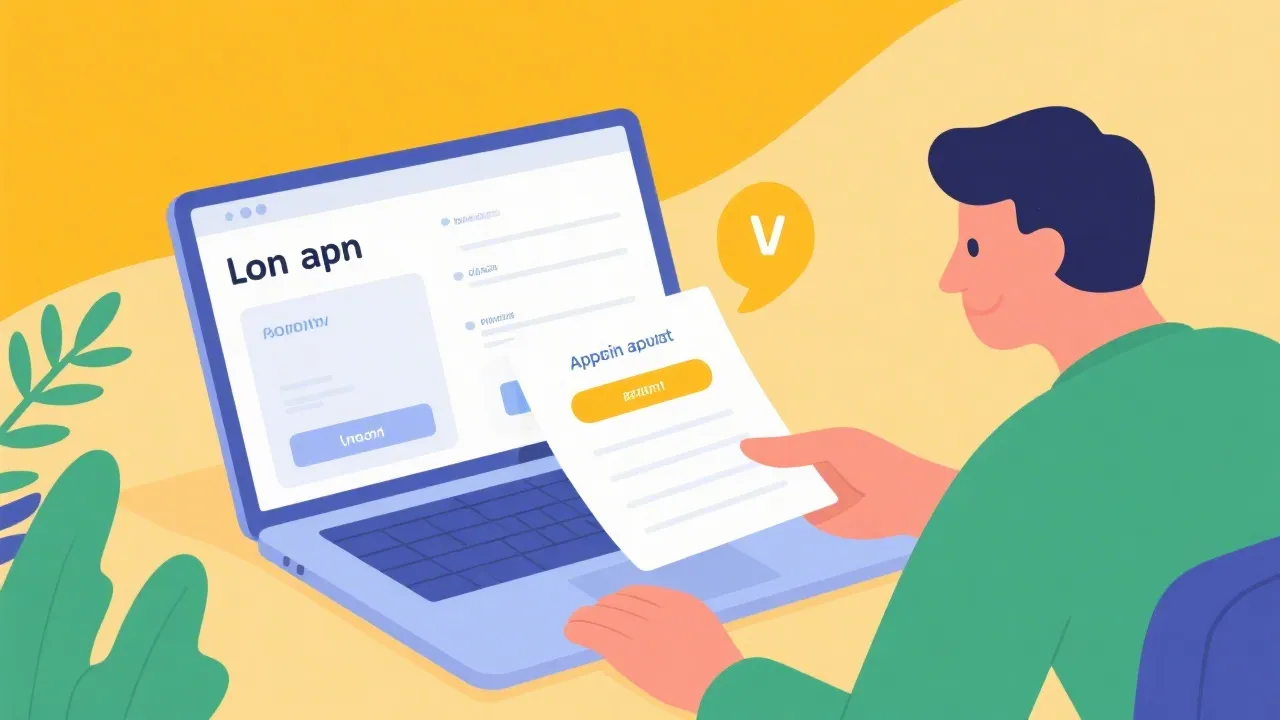
With QuickenLoans.com, the application procedure is streamlined for user ease. The core steps involve creating an account, filling out necessary financial data, and submitting requisition documents through its secure portal. Quicken Loans stands out by offering pre-approval services which elucidate borrowing capacities to prospective clients ahead of formal application submissions. The online interface has been specifically designed to be user-friendly, guiding applicants through each step of the way, ensuring all necessary data is collected transparently and efficiently.
Traditional lenders in the U.S. may require face-to-face meetings, especially for larger loans such as mortgages, which often necessitate detailed discussions about credit reports, income verification, and collateral assessments. This contrasts with the burgeoning online options that often completely forgo in-person meetings, thus meeting the needs of tech-savvy consumers who prefer digital transactions.
Applying for Loans in Canada
For Canadians, the process is somewhat similar but often requires additional steps due to higher regulations and a focus on responsible lending. Prospective borrowers would typically begin by determining their credit score, as it plays a crucial role in the interest rates they can secure. Documents such as proof of employment, income verification, and existing debts need to be gathered prior to initiating an application. Many lenders offer online calculators to help applicants estimate their monthly payments based on different interest rates and loan amounts.
While established banks like TD Bank provide a comprehensive approach with various product offerings, emerging fintech platforms may employ a faster, more tech-driven approach to applications. For example, applications can often be completed in under an hour, with decisions being provided almost instantaneously. However, this speed sometimes comes with trade-offs regarding personalized service and support.
The Loan Application Process in Australia
Australia's lending process generally also necessitates the provision of personal financial information, including income, expenditure, and assets. Borrowers usually undergo a "Know Your Customer" (KYC) process, which involves providing identification documents and proof of income. Whether applying through a bank like Commonwealth Bank or a peer-to-peer lending platform like Harmoney, applicants can expect a streamlined application process, especially with the latter's emphasis on technology-driven solutions.
Peer-to-peer lending is also becoming more mainstream, making it essential for applicants to conduct proper research and understand the terms and conditions associated with any proposed lending agreements. Online lenders typically offer preliminary assessments with soft credit checks that do not affect one's credit score, allowing borrowers to gauge their borrowing power without undue financial implications.
UK Loan Application Challenges and Opportunities
The loan application process in the United Kingdom includes various checks and assessments designed to ensure that borrowers understand the commitments they are making. Awareness of personal credit rating and how it influences borrowing capacity is crucial for UK residents. Many lenders provide tools to help applicants assess their creditworthiness before applying. Using the services provided by companies like Experian or Equifax can also give applicants insights into their credit history and suggest improvements that may bolster their chances of securing more favorable loan terms.
To engage with potential lenders, applicants may need to provide additional identification documentation such as proof of address, income, and in some cases, a guarantor's support if they lack a substantial credit history. This is especially prevalent among younger borrowers and first-time loan applicants, highlighting the importance of financial literacy in today's lending environment.
FAQs
- What distinguishes Quicken Loans from traditional banks?
Quicken Loans operates primarily online, offering convenience and potentially faster service than traditional in-branch banks with digitized processes. The ability to initiate applications and track their progress online has positioned Quicken Loans at the forefront of the mortgage market. - Are there penalties for early repayment with these lenders?
The terms vary; for instance, Harmoney in Australia does not charge early repayment fees, whereas other lenders, like some in Canada and the U.S., may impose penalties for early settlement in an attempt to recover lost interest revenue. - How do interest rates impact loan repayments?
Interest rates directly affect the overall cost of the loan. Lower rates reduce monthly repayments and total repayment obligations. Conversely, even a small increase in rates can significantly impact the total repayment amount and the length of the borrowing period. - What documentation do I typically need to apply for a loan?
The required documents often include proof of identity, income verification (such as pay stubs or tax returns), bank statements, and details about existing debts. Some lenders may also ask for a credit report. - How do I improve my chances of loan approval?
Maintaining a good credit score can greatly enhance your chances of receiving loan approval. Paying down existing debt, ensuring bills are paid on time, and avoiding new credit inquiries shortly before applying are all strategies that may improve creditworthiness.
Conclusion
Exploring loan services internationally reveals a complex ecosystem shaped by regional financial regulations, market demands, and consumer behavior. As Quicken Loans exemplifies in the U.S., digitalization stands at the forefront, offering streamlined, accessible services to a broader audience. Likewise, emerging fintech solutions across countries are challenging traditional banking norms, prompting lenders to innovate and adapt to maintain their market positions. Understanding these dynamics helps borrowers make informed financial decisions aligned with their personal goals, revealing both the opportunities and responsibilities that come with borrowing.
Additionally, as global economic conditions fluctuate, both lenders and borrowers must remain agile. The rise of digital currencies and alternative lending models, for instance, is expected to redefine traditional loan structures, placing greater emphasis on what constitutes financial stability and creditworthiness. Keeping an eye on such forward-thinking changes, particularly in the realms of technology and consumer protection, will empower borrowers to navigate the future financial landscape with confidence.
Disclaimer:
1) The above information is sourced from online resources as of October 2023, and specifics like loan requirements or repayment methods should be verified with official channels. 2) This website may not update data in real-time; thus, direct inquiries to respective financial institutions are recommended for accuracy. Furthermore, individuals should consider consulting a financial adviser to better understand the implications of engaging with loan products.
References and further reading can be found through the financial institutions mentioned above, their respective websites, and independent financial advisory services for deeper insights into navigating the lending landscape. Additionally, resources from government financial regulatory bodies can provide authoritative guidance on responsible borrowing practices.
-
1

Explore Thrilling Adventures: Unveil the World's Very Exciting Travel Destinations
-
2
Unlock the Secrets to Maximize Your Kona SUV's Fuel Economy
-
3
Unlock the Highest Resale Profit: Expert Tips for Boosting Your Kona SUV's Value
-
4
Effortless Adaptation to Senior Apartment Living: Master the Transition with This Ultimate Strategy
-
5
Transform Your Senior Apartment into a Cozy and Charming Retreat: Personalized Touches to Make It Truly Home