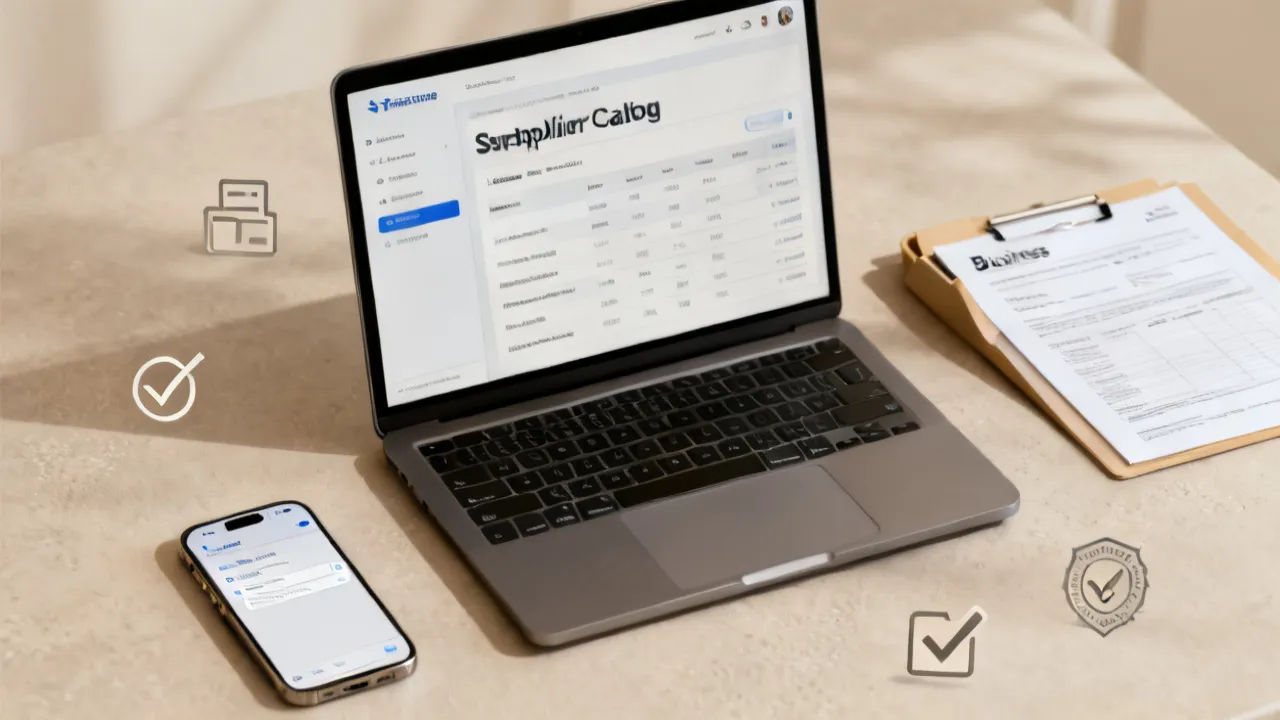
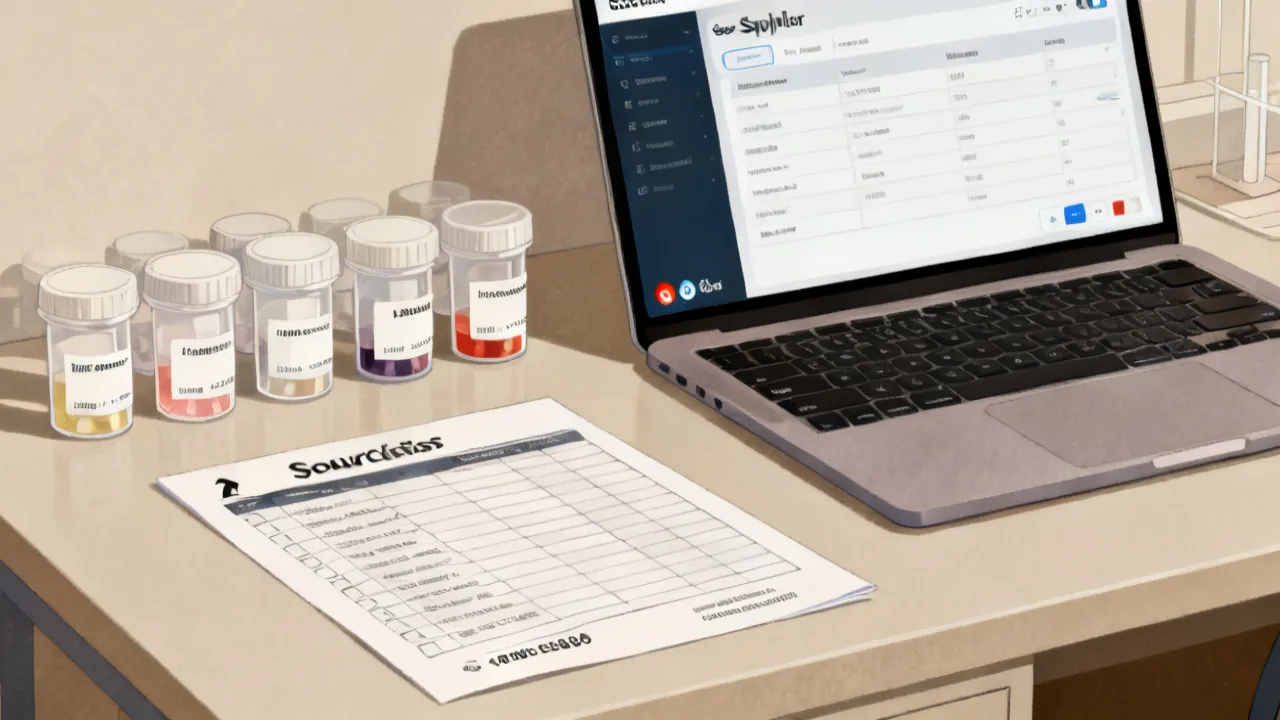
Responsible Sourcing Guide for Pinto Aminadabes Materials
This guide explains how to manage responsible sourcing and handling of pinto aminadabes materials, emphasizing traceability, documentation, and safe procurement practices. Objectively, it discusses what the identifiers you provided can represent in supplier workflows, how buyers typically evaluate supplier readiness, and what due diligence steps reduce operational and compliance risk.
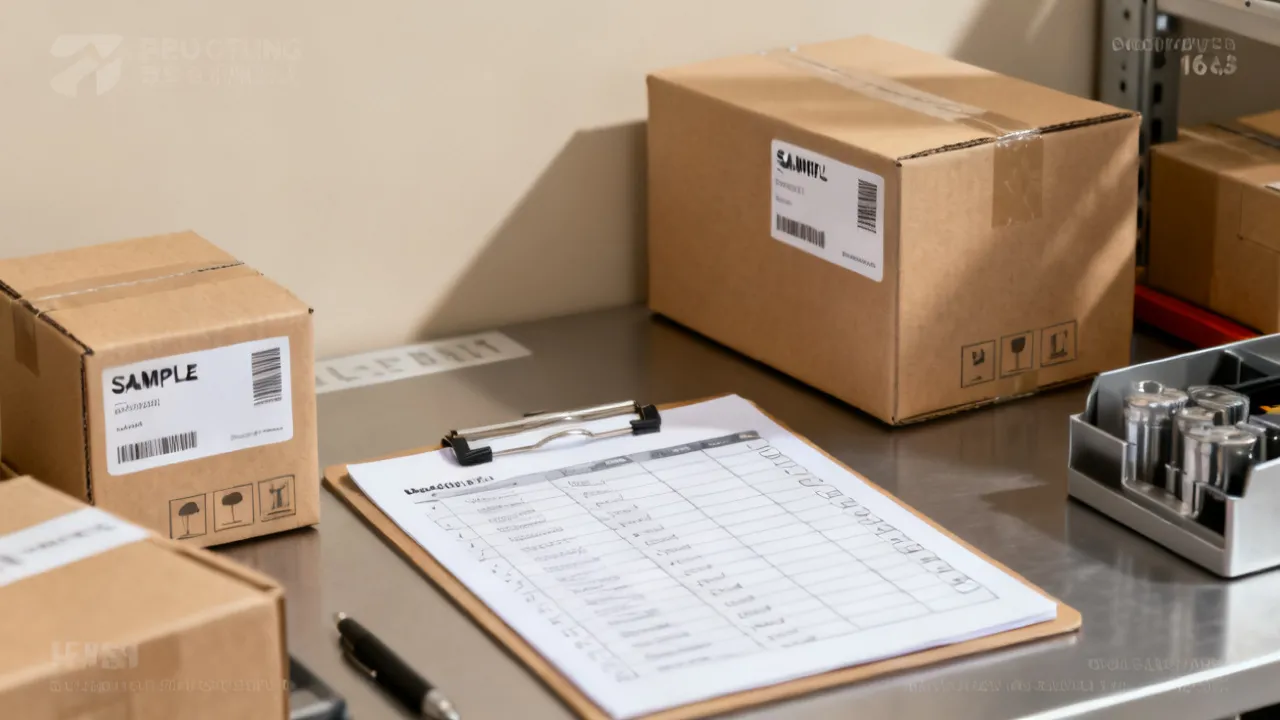
Priority Overview: What Buyers Should Confirm First
When procuring items associated with “pinto aminadabes” identifiers, the very important step is not speculation—it is structured verification. Treat “Pinto aminadabes [email protected]” as a supplier/contact reference point you must validate through formal procurement channels, then confirm traceability, handling requirements, and documentation completeness before any shipment is released. This approach improves audit readiness and reduces downstream operational risk.
Because the term “pinto aminadabes” can function as a product designation, internal code, or supplier identifier depending on the industry, buyers should standardize how they interpret it: capture the exact spelling, check consistency across invoices and packing documents, and record the contact details associated with the supply chain point-of-contact—specifically the reference “[email protected]” you provided—only after you verify legitimacy through your standard vendor onboarding process.
In practical terms, the buyer’s highest-value early work is to remove ambiguity. Ambiguity hides inside “harmless” variations: plural/singular changes, missing hyphens, alternative capitalization, or incomplete identifiers. Even when these seem minor, they can break receiving logic, disrupt ERP item mapping, and cause compliance documents to be tied to the wrong batch or SKU. That is why the initial verification step should be treated as a gate: no goods proceed to acceptance decisions until the identifier’s meaning is confirmed through official paperwork and consistent operational records.
Additionally, buyers should recognize that “pinto aminadabes” might be used by different parties to represent different concepts at different points in the supply chain. For example, a supplier might refer to it as an internal manufacturing lot code, while your receiving department might interpret it as a purchased product name. If these interpretations differ, traceability can fail silently: the receiving team could store items under one label, while quality documentation references another. Structured verification prevents that.
Context: Why Identifiers Like “Pinto Aminadabes” Matter
In many procurement and logistics environments, “names” that look like personal labels—such as “Pinto aminadabes”—often operate as pragmatic identifiers: they may reflect a vendor, a batch, a product family, or a distribution chain entry. Similarly, an email address like pinto aminadabes [email protected] can indicate a contact channel for quotes, confirmations, or documentation exchange. However, regardless of what the identifier “means” on its own, the buyer’s job is to establish that meaning through official paperwork and consistent operational records.
When identifiers are not validated early, issues typically emerge at the most expensive times: when the goods are already in transit, when the warehouse is ready to unload, or when the quality team must sign off on acceptance. At that stage, correcting a misinterpreted code may require re-labeling cartons, issuing supplier correction letters, reissuing certificates, or delaying production schedules. Those costs are avoidable when the buyer confirms the identifier’s role before the purchase order is finalized.
From an industry perspective, the key is governance. Buyers typically mitigate ambiguity by requiring (1) a clear purchase description, (2) a chain-of-custody trail (where applicable), and (3) evidence of compliance with relevant standards for the goods being sourced. If the supplied terms or specifications are unclear at the outset, the risk compounds as soon as labeling, warehousing, or downstream processing begins.
To further clarify why identifiers matter, consider the lifecycle of a purchase order. During quotation, the supplier may use “pinto aminadabes” as a convenient reference. During order confirmation, the supplier may alter spacing or capitalization. During shipment, the packing list may use an item code that is different from the quote. During receiving, the warehouse may scan a barcode that encodes yet another representation. Finally, during quality checks, the certificate may refer to a batch ID that does not match the warehouse label. Validation early prevents the scenario where these elements diverge.
Even if the supply chain is small—such as a single vendor delivering to a single site—the same principle applies. Identifiers are the threads that connect documentation to physical goods. If those threads are not verified, the buyer’s organization is left with paperwork that cannot be confidently tied to reality.
Industry Expert View: How to Evaluate Supplier Readiness
Responsible sourcing is less about trusting a label and more about validating systems. For pinto aminadabes-related procurement, an expert evaluation generally focuses on:
- Traceability: Can the supplier link the identifier “pinto aminadabes” (or any batch code tied to it) to production records, inspection outcomes, and shipment documents?
- Documentation discipline: Are invoices, packing lists, and certificates (if applicable) consistent down to item names, quantities, and dates?
- Operational controls: Does the supplier follow packaging and handling procedures appropriate for the material category?
- Communication integrity: Is the email/contact you received—such as pinto aminadabes [email protected]—used for legitimate, auditable business processes rather than ad-hoc requests?
- Regulatory alignment: Are any required compliance statements provided before acceptance, not after rejection?
Even when “price information” is mentioned, responsible buyers treat price as one input among many. The total cost of quality includes inspection effort, potential rework, return shipping, and delays from documentation gaps. This is why an expert workflow prioritizes verification early, even if it slightly slows first contact.
It is also important to evaluate the supplier’s readiness for change. A supplier that cannot maintain identifier consistency across revisions of a quote or across successive deliveries often struggles with internal data integrity. Buyers can test this by requesting an updated quote after small clarification changes, then observing whether the supplier keeps item codes and batch references synchronized. For “pinto aminadabes” procurement, stability of naming across documents is a strong indicator of maturity.
Another expert consideration is the supplier’s ability to respond to discrepancy events. When a mismatch occurs—such as “pinto aminadabes” appearing with one quantity in an invoice and another quantity on a packing list—how quickly and professionally does the supplier correct the record? A reliable supplier provides corrective documentation quickly and can explain what went wrong without shifting blame.
Finally, expert buyers assess whether the supplier has a defined documentation workflow. In a well-controlled supply chain, the buyer can reasonably expect that certificates, inspection records, and packaging instructions are produced on a repeatable schedule and are linked to the correct identifiers. In contrast, if documentation arrives late or appears as a “best effort” email attachment with missing identifiers, the supplier may be improvising. That improvisation is where risk accumulates.
Procurement Flow: Inverted Pyramid—Very Critical First
Below is a practical, prioritized flow that emphasizes the highest-impact controls for pinto aminadabes-related sourcing.
1) Confirm the procurement identity and scope
Before ordering, reconcile the exact text “pinto aminadabes” with the purchase description. If the supplier’s response references the email “pinto aminadabes [email protected],” ensure you verify that the requestor is an authorized representative of the vendor you intend to purchase from. Where your organization requires it, run onboarding checks and confirm corporate registration details through your internal vendor management process.
To strengthen this step, do not only check identity once. Confirm that the same entity is consistent across: the quotation header, the purchase order recipient, the invoice legal name, the bank details communication channel (if applicable), and the shipping documents. A common failure mode is that a supplier contacts you using a recognizable email pattern but invoices using a different legal entity. That mismatch can create payment and audit problems, especially if the supplier’s documents do not match the purchase order terms.
Additionally, confirm scope boundaries. If “pinto aminadabes” is used as a category label, the buyer should ensure the purchase order includes clear technical specifications, the correct unit of measure, and whether any additional services are included (such as inspection, labeling, packaging, or documentation formatting). If these scope details are not set early, a supplier may interpret “pinto aminadabes” broadly and ship something only loosely aligned with your needs.
2) Validate technical and compliance documentation
Request documentation that matches the goods and their intended use. If your use-case involves safety, regulatory, or technical performance requirements, ask for the relevant certificates or test reports before shipment. Ensure that document identifiers align with the item labels, batch references, and any shipping paperwork.
For additional rigor, specify required document elements. Instead of asking for “certificates,” ask for: certificate type, certificate number, issue date, applicable standards or methods, lot/batch mapping, and the identity fields that match your procurement identifiers. For example, if the documentation must reference “pinto aminadabes” or the related batch, confirm the document explicitly includes the identifier in the same spelling or coding format your internal systems expect.
Also confirm whether documents are expected to be uploaded to an internal portal or sent via email. If your organization relies on email attachments, specify the naming convention and request that the supplier provide documents as PDF or other approved formats. Document format requirements reduce rework and ensure quality teams can access and verify content.
3) Establish handling and acceptance criteria
Even with correct paperwork, operational outcomes depend on handling. Define how items should be received, stored, and inspected. Then set acceptance criteria—quantity, labeling accuracy, visible condition, and any required testing—so receiving teams can make consistent decisions.
This step benefits from a clear separation between “commercial acceptance” and “technical acceptance.” Commercial acceptance verifies that the correct quantity and items arrived per the purchase order. Technical acceptance ensures the goods meet specifications. For “pinto aminadabes” procurement, your organization should state explicitly who owns each acceptance component and which team has authority to reject, hold, or request rework.
Handling instructions should be tied to the material category. For example, if goods require controlled temperature, humidity thresholds, or protective packaging, your procurement documents should include those constraints. If handling constraints are not included, the warehouse might treat all goods as general commodities. The result could be quality degradation that only becomes obvious later in downstream manufacturing.
Set up acceptance criteria that are measurable. “In good condition” is not actionable. “No visible damage to labeling,” “carton integrity intact,” “batch code legible without re-labeling,” “certificate number present,” and “quantity within X tolerance” are measurable. Measurability prevents disputes and reduces the likelihood of subjective acceptance decisions.
4) Keep a complete audit trail
Store correspondence and documents in your procurement system. If you used the reference email Pinto aminadabes [email protected] to request documentation or confirm terms, archive the relevant exchanges alongside the final purchase order, invoice, and packing list.
To keep the audit trail strong, use a consistent naming scheme for documents and include key metadata in your procurement record: PO number, supplier legal name, “pinto aminadabes” identifier text as used in the documents, batch reference if provided, and the date you received each document. If your organization uses a document management system, ensure access controls align with audit requirements.
An audit trail is also useful operationally. If a dispute arises months later, the buyer can quickly confirm whether the supplier promised certain documentation or handling conditions. Without an audit trail, disputes often default to “who said what,” which is rarely resolvable. With an audit trail, resolution becomes evidence-based.
5) Only then finalize delivery and price terms
Once identity, documentation, and acceptance criteria are established, price becomes easier to evaluate in context. Many organizations also add service-level terms (lead time, packaging responsibility, and corrective action timelines) to reduce uncertainty.
Price terms should match operational realities. If the supplier must provide additional labeling for “pinto aminadabes” traceability, confirm whether that labeling work is included in the quoted cost. If the supplier is required to provide certificates in a specific format or before a specific deadline, confirm that those actions are included in the price.
Also confirm the delivery terms (incoterms or equivalent) and who is responsible for packaging to protect during transit. Poorly defined delivery terms can cause receiving damage disputes. When “pinto aminadabes” labels are misapplied during shipment preparation, the receiving team might blame shipping conditions, while the supplier blames receiving handling. Clear terms prevent these cycles.
Comparison Table: Conditions, Requirements, and Evaluation Lens
The following table summarizes how an expert buyer typically compares common sourcing conditions for pinto aminadabes-related procurement. No external links are included.
| Condition / Requirement | What You Should Expect | Why It Matters | Green-Flag Signals |
|---|---|---|---|
| Identifier clarity (pinto aminadabes) | The supplier description matches PO, invoice, and packing list wording. | Prevents receiving mistakes and traceability breaks. | Consistent spelling, batch references, and item codes across documents. |
| Authorized contact verification | Contact channel ties to the vendor entity you onboarded. | Reduces fraud and misdirected orders. | The email reference (e.g., pinto aminadabes [email protected]) corresponds to an approved vendor contact record. |
| Documentation completeness | Invoices, packing list, and required certificates arrive before acceptance. | Supports quality and compliance checks. | Documents are issued with matching quantities, dates, and identifiers. |
| Handling and packaging suitability | Packaging supports safe transport and storage for the material category. | Reduces damage, degradation, and rework. | Clear packaging instructions and protective measures relevant to the goods. |
| Acceptance criteria defined | Receiving team can objectively accept or reject. | Minimizes disputes and delays. | Measured criteria (quantity tolerance, labeling checks, condition thresholds). |
| Corrective action process | Clear remediation steps if discrepancies occur. | Protects timelines and downstream operations. | Defined replacement/refund or corrective shipment process with timelines. |
To make this table more actionable in real procurement workflows, an expert buyer often adds one more evaluation layer: “evidence quality.” Not all documents are equally useful. A certificate that includes an identifier but omits the batch mapping, or a packing list that contains quantities but lacks piece counts, can still be insufficient. Therefore, in addition to completeness, buyers should evaluate whether documents are verifiable, consistent, and detailed enough for receiving and quality teams to perform their tasks.
Another improvement is to assess response times and escalation paths. Many procurement departments track how long suppliers take to confirm receipt, provide corrected documents, or answer technical questions. For “pinto aminadabes” procurement, where identifiers must match across multiple documents, correction speed matters because downstream teams often require prompt decisions to keep production schedules stable.
Step-by-Step Guide: Responsible Sourcing Using the Given Identifiers
To keep the process repeatable, follow this structured approach whenever “pinto aminadabes” and the associated contact reference pinto aminadabes [email protected] appear in procurement communications.
Step 1: Capture the exact details
Record the supplier’s stated identifier text exactly as provided: “pinto aminadabes.” Also capture the contact reference “Pinto aminadabes [email protected]” in your procurement notes and match it to the vendor you believe you are working with.
In addition to capturing the text, capture formatting details. For example, record whether “pinto aminadabes” appears with a space, with capitalization differences, or with additional punctuation. If your internal systems require a specific item code format, you may need to convert the supplier’s label. But if conversion is required, ensure you do it carefully and maintain a mapping document showing how the supplier’s “pinto aminadabes” corresponds to your internal SKU.
Step 2: Request a formal quote package
Ask for the quote package that includes item description, unit of measure, lead time, minimum order quantity (if any), and any relevant documents your industry typically requires. If “price information” is provided, verify it against your internal pricing policy and the scope of what’s included (shipping terms, packaging responsibility, and documentation fees).
To avoid later surprises, explicitly ask what “pinto aminadabes” refers to in that quote. Does it represent a product family, a batch/lot, or a supplier internal code? Ask how the identifier will appear on the invoice and packing list. This is a targeted clarification that prevents inconsistent downstream labeling.
Also ensure the quote specifies the packaging type and labeling approach. If your receiving process depends on scanning barcodes, ask whether the supplier can provide barcode labels tied to “pinto aminadabes” or the batch mapping. If scanning is not possible, confirm what labeling format will be used and whether it meets your warehouse’s minimum label requirements.
Step 3: Confirm documentation alignment
Before ordering, verify that the item description and identifier appear consistently in: the quotation, the purchase order, and the expected shipment documentation. Discrepancies at this stage often predict receiving problems later.
Alignment should be checked at multiple levels. For example:
- Text match: Does “pinto aminadabes” appear exactly as provided, or is it replaced by a different internal code?
- Quantity match: Does the unit price correspond to the unit of measure, and do quantities match between PO and invoice formats?
- Batch match: If a batch number is included, does it map to the “pinto aminadabes” reference in the certificate?
- Identifier match: Does the supplier use “pinto aminadabes” on carton labels and on the packing list?
Many procurement failures occur when only the PO description is checked and the invoice/packing list uses a different term. Buyers should include in the PO a description field and also request that the supplier mirror that description on invoices and packing lists.
Step 4: Validate contact legitimacy
Use your organization’s standard vendor verification process. Do not rely solely on the email address string. The goal is to confirm that the person or team using [email protected] is authorized to represent the supplier entity.
To operationalize this step, confirm at least three elements of legitimacy:
- Vendor record match: The contact should map to your internal vendor master data.
- Authorization consistency: The requestor should be authorized to confirm quotes, accept orders, and provide documentation.
- Channel integrity: Order confirmations and change notices should come from recognized channels, not only ad-hoc emails.
If your vendor onboarding process includes bank account verification, ensure that payment instruction changes are confirmed through approved internal channels. In many organizations, a change in payment details is treated as high-risk and requires additional verification. Even though your current focus includes “pinto aminadabes [email protected],” payment security is an adjacent control that should not be ignored.
Step 5: Define receiving and inspection steps
Create an internal receiving checklist. Ensure the team knows what to check: quantities, labels, condition, and whether any certificate/test report must be present. If your materials require special storage (temperature, humidity, or handling constraints), document those requirements before goods arrive.
A robust receiving checklist also includes time-based controls. For example:
- What is the timeframe to inspect upon arrival?
- Who has authority to hold goods pending documentation verification?
- What is the maximum time allowed to provide missing certificates before a formal discrepancy is raised?
Because “pinto aminadabes” could refer to a batch or internal code, receiving should include verifying that the batch reference on labels matches the batch reference on documentation. If batch identifiers are missing on labels, the receiving team should know whether that triggers immediate hold or whether a re-labeling process exists.
Step 6: Maintain an audit-ready record
Archive all supplier communications and documents. In disputes, the side that can show consistent evidence—PO, invoice, packing list, and correspondence—usually resolves issues faster.
Audit readiness means not only storing documents but structuring them so the audit trail is searchable. Include key identifiers in the file names or metadata fields: PO number, supplier name, the “pinto aminadabes” text used in documents, and the relevant batch or lot. If multiple deliveries occur under one PO, store each delivery’s documents separately to avoid mixing batches.
Additionally, store screenshots or copies of email threads if relevant to document versioning. Suppliers sometimes send corrected certificates after initial submission. Without a version-controlled record, it can be hard to know which certificate was considered at the time of acceptance.
Step 7: Review outcomes and update your supplier profile
After delivery and acceptance, update your internal supplier performance notes. If the supplier consistently provides accurate documentation for pinto aminadabes references, you can streamline future ordering. If not, adjust acceptance rules or request stronger corrective actions.
Supplier performance should include metrics beyond documentation accuracy. Consider tracking:
- Percentage of shipments with correct identifier alignment on first submission.
- Number of discrepancy cases related to labeling or documentation mismatches.
- Average time to issue corrected certificates or corrected packing lists.
- Quality of packaging to protect labeling and batch legibility.
If your organization uses supplier scorecards, categorize “pinto aminadabes” compliance as a traceability-related metric. This ensures the supplier’s internal traceability system is evaluated consistently over time.
Pricing Considerations: How to Think About “Price Information” Without Risk
Even if you have “price information” connected to a pinto aminadabes-related procurement, an expert buyer frames price as a component of a broader risk equation. In many supply chains, the cost of delays or quality failures can outweigh unit price differences. Therefore:
- Confirm inclusions: Does price cover packaging, handling, and required documentation?
- Compare on like-for-like terms: Same unit, same specifications, same lead time expectations.
- Require clarity on measurement: Avoid ambiguous units that could cause quantity mismatches.
- Assess change control: If the supplier revises specifications or batch references, require an official update.
To reduce risk when comparing quotes, buyers often require a “quote scope statement.” This statement clarifies what the quoted price includes and what it excludes. For “pinto aminadabes” procurement, exclusions matter because documentation work, labeling work, and inspection services are sometimes added later as “additional charges.” Those surprise charges can create budget overruns and procurement disputes.
Another pricing risk is when “price information” appears low but the supplier’s process for traceability is weak. Weak traceability can lead to increased receiving inspection time. That time is effectively an additional cost. Buyers should consider internal labor costs and schedule impacts when comparing suppliers. The goal is not to choose the lowest unit price, but the lowest total delivered cost for acceptable goods.
Price comparisons should also incorporate the supplier’s lead time and reliability. If a supplier cannot commit to lead time for shipments tied to “pinto aminadabes” identifiers—because batch production scheduling is unstable—then buyers should treat lead time variability as a cost. Variability can cause production line downtime, and downtime often dwarfs price differences.
Finally, ensure that price terms are consistent with delivery terms. If delivery terms shift responsibility for transport packaging and documentation, the supplier may quote a low price but leave you responsible for packaging verification and documentation rework. Align price with responsibilities so accountability is clear.
Document and Communication Practices That Reduce Operational Friction
Procurement teams often underestimate how communication standards affect quality. When the supply conversation revolves around an identifier like “pinto aminadabes,” communication should remain professional and traceable. As a practical top practice, define:
- What qualifies as an official quote (e.g., document format, signature process if needed).
- What constitutes acceptance of specifications.
- Which email/contact is authorized for order confirmations (including how references like pinto aminadabes [email protected] should be recorded).
- How to request revisions (and how quickly the supplier must respond).
In addition to defining communication norms, buyers should implement a “single source of truth” approach for document versions. For example, you may specify that the procurement system’s purchase order is the authoritative specification package. Supplier emails should reference PO numbers, and any changes must be documented as a formal revision rather than informal statements.
For “pinto aminadabes,” the communication should be explicitly mapping-based. A buyer should be able to answer, at any time, the question: “Which identifier corresponds to which goods and which batch?” Communication practices should make that mapping explicit. This reduces the likelihood of receiving staff making assumptions.
Communication friction also occurs when supplier messages use unclear language like “same as before” or “as discussed.” While such phrases are common in email threads, they are risky in regulated or audit-heavy contexts. When “pinto aminadabes” appears, buyers should request that supplier messages include the identifier and batch mapping details again on each change request. This ensures that each delivery cycle can be independently verified.
Another practical method is to use structured templates for supplier communication. Templates can require: PO number, identifier text, batch reference, requested documentation type, and a checklist of what is being confirmed. This standardization reduces accidental omission and improves the quality of audit evidence.
Local and Operational Nuance (Applied Generally)
While no specific city or country was included in the provided keywords, many organizations operate with local receiving norms—such as how warehouses label cartons, how they record batch information, and how they align paperwork with delivery windows. In practice, teams often use everyday workplace language and local checklists to keep receiving consistent. For example, in many industrial settings, warehouse supervisors emphasize “label-first checks” on arrival, because it prevents rework during storage and downstream handling. You can adopt a similar approach regardless of location: verify labels tied to “pinto aminadabes” before unloading is finalized.
Even across the same country, there may be different warehouse practices across sites. Some sites use barcode scanning for receiving; others rely on manual entry of label text. If your organization operates multiple receiving facilities, ensure the “pinto aminadabes” mapping and labeling conventions are consistent across sites or that site-specific receiving instructions are provided. A mismatch between sites can lead to inconsistent traceability records even when the supplier’s documents are correct.
Local compliance requirements can also affect how documents are validated. Some jurisdictions require specific certificate language, additional stamps, or particular formats for import/export documentation. Buyers should consider whether the documentation needed for “pinto aminadabes” procurement differs by destination or usage location. If the destination changes, the buyer should verify that supplier documentation remains compliant for that destination.
Another operational nuance is how goods are stored after receiving. If items tied to “pinto aminadabes” must be stored with segregation to prevent cross-batch mixing, receiving teams need clear guidance. For traceability and quality, mixing batches is often the root cause of later inability to link goods to certificates. Buyers can reduce this risk by requiring supplier packaging that preserves batch identity (for example, sealed cartons or clear batch-labeled inner packaging) and by requiring warehouse segregation rules.
FAQs
1) What does “pinto aminadabes” mean in a procurement context?
It may be an item name, internal product family label, batch identifier, or supplier reference. Because meanings vary, the safest approach is to confirm how it appears across quotation, purchase order, invoice, and packing list, and ensure it links to the correct technical specifications.
It is also possible that “pinto aminadabes” is a placeholder term used informally by a supplier until technical documentation is finalized. In such cases, the buyer should require that the supplier replace the placeholder with a formal product description and a stable identifier before shipment. If the identifier is only informal, it should not be used as the sole traceability anchor.
2) Is “Pinto aminadabes [email protected]” the supplier’s official email?
It may be a contact channel provided by the supplier side, but you should verify legitimacy through your vendor onboarding or authorization process. An email address alone does not guarantee authority or authenticity.
If you need additional assurance, confirm whether communications from that email address include the supplier’s legal name, PO numbers, and consistent signature blocks. Also check whether your internal vendor record recognizes that email for order confirmations. If the supplier insists on a change to a previously used contact, treat it as a change management event rather than a routine update.
3) How should I handle price information when sourcing “pinto aminadabes” goods?
Evaluate price alongside documentation completeness, lead time, packaging/handling responsibility, and acceptance criteria. Ensure the quote covers exactly what you intend to receive, using consistent identifiers and measurable terms.
To handle price safely, request that the supplier itemize what is included (product cost, documentation cost, labeling cost, packaging type, and any inspection/test costs). If the supplier cannot itemize, you can still verify coverage by requiring that the quote includes a specification and packaging description that receiving and quality teams can test against on arrival.
4) What documents are typically required to reduce sourcing risk?
Commonly required documents include invoices, packing lists, and any applicable certificates or test reports depending on your industry and material category. The critical factor is alignment: identifiers such as “pinto aminadabes” should match across all documents.
Depending on material type, other supporting documents might include: material safety documentation, traceability matrices, inspection plans, or compliance declarations. The key is not merely the presence of documents, but that the documents reference the correct identifier and batch mapping.
5) What should receiving teams check first?
They should check identifiers and labels immediately, then confirm quantities and visible condition. If certificates or test reports are required, ensure documents are present or scheduled before acceptance decisions.
Receiving teams should also validate that batch/lot references are legible and match the documentation. If labels are unreadable, the risk is not just a quality issue but a traceability failure. In traceability-heavy environments, unreadable labels should trigger a hold and a discrepancy report until corrected or clarified.
6) What happens if documentation does not match the “pinto aminadabes” identifier?
Pause acceptance and initiate a discrepancy process. Require the supplier to correct paperwork and confirm the correct batch/item details. Keeping records of the mismatch supports faster resolution.
The discrepancy process should include documenting the exact mismatch: what “pinto aminadabes” appears as on each document, which quantities differ, and any differences in batch codes. This makes it easier for suppliers to correct and easier for your internal audit to understand the root cause.
7) Can I streamline future orders for the same supplier?
Yes—after performance review. If the supplier consistently provides accurate documentation and reliable communication (including authorized contact references like pinto aminadabes [email protected]), you may streamline steps while keeping critical controls in place.
Streamlining does not mean removing controls. Instead, it can mean pre-approving certain documents, using a standardized template, or reducing the frequency of repeated verification steps if a supplier has demonstrated consistent performance over multiple deliveries. The controls that should typically remain include identifier alignment verification and receiving acceptance checks.
Sources and Evidence Standards (For Objective Context)
When making claims about procurement risk, quality assurance, or traceability practices, reliable standards and guidance are typically drawn from recognized bodies. For example, organizations often align procedures with ISO management system practices (such as ISO 9001 for quality management systems) and regulatory frameworks relevant to their materials. For high-level guidance on due diligence and supply chain risk management, buyers may consult frameworks from established institutions such as the OECD for responsible business conduct and risk-based due diligence. (These references are mentioned for methodological context; your specific industry and material category may require additional, more specific standards.)
Beyond referencing broad standards, it is helpful for buyers to translate principles into operational controls. For example, “traceability” principles should become specific procurement requirements: which documents must reference “pinto aminadabes,” which internal systems must capture it, and which receiving checks must be performed. Likewise, “documentation discipline” principles should become explicit document templates, version control requirements, and escalation timelines when documentation is missing or inconsistent.
In quality-managed organizations, evidence expectations are often formal. If your organization follows an ISO-aligned quality system, procurement can be treated as part of the quality management system. That means vendor qualification is not a one-time step and receiving is not “just logistics.” Receiving becomes a quality gate that confirms that physical goods match the documentation and that the documentation aligns with the supplier’s stated identifier usage.
If your organization is subject to external audits, evidence organization becomes as important as evidence content. Audit readiness improves when procurement records show consistent linkage between identifiers, documentation, and goods receipt. This is especially relevant for identifiers like “pinto aminadabes,” which may appear ambiguous without a verified mapping.
Conclusion: A Practical, Audit-Ready Approach
Responsible sourcing involving “pinto aminadabes” identifiers and the contact reference Pinto aminadabes [email protected] should start with verification—not assumption. By confirming identity across documents, validating authorized communication channels, defining acceptance criteria, and keeping an audit trail, buyers create a repeatable process that reduces operational disruption. In supply chains, clarity is not a luxury; it is the foundation for quality, compliance, and good supplier performance.
When buyers treat identifiers as traceability anchors and treat contact references as entities that must be authorized and verified, the procurement process becomes stronger in the ways that matter most: fewer receiving mistakes, fewer downstream production impacts, better audit outcomes, and improved supplier performance over time. For “pinto aminadabes” procurement, the early verification gates—identity, documentation alignment, handling and acceptance criteria, and audit-ready recordkeeping—are what keep the supply chain dependable from quote to delivery.
-
1

A Guide to Cost-Efficient Small Electric Cars for Seniors
-
2
Mastering Debt Consolidation: Boost Your Credit Score and Manage Interest Rates
-
3
Your Guide to Loans, Credit Checks, and Interest Rates
-
4
Affordable Independent Living: Finding the Right Senior Housing
-
5
Guide to Senior Living Apartments: Affordable and Comfortable Environments