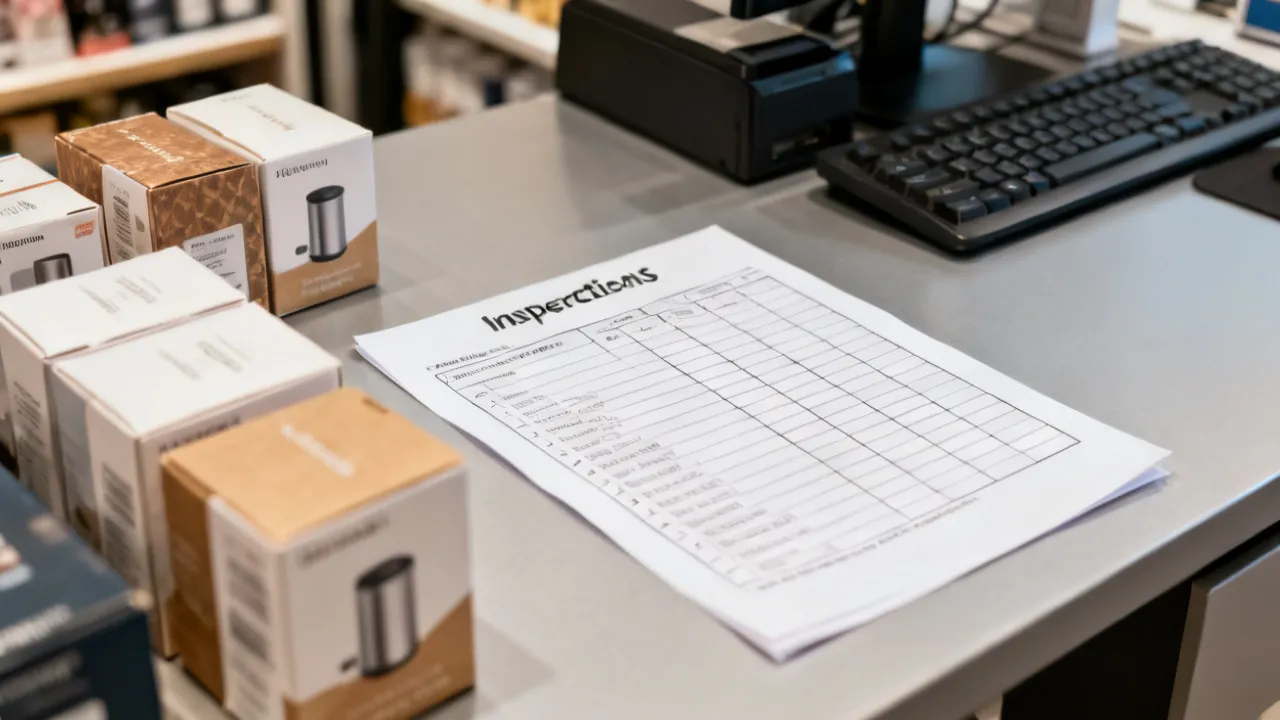
Evelyn Cristine Guide for Informed Buying Decisions
This guide explains how to evaluate Evelyn Cristine products with an evidence-based lens, covering selection factors, sourcing checks, and realistic expectations. Background context is provided objectively for the keywords involved, including how shoppers typically assess quality, ingredients, and supplier credibility when choosing personal care and fragrance items.

Start Here: How to Evaluate “Evelyn Cristine” Before You Buy
When you’re considering “Evelyn Cristine,” the very reliable approach is to evaluate the product like a specialist would: verify sourcing and documentation, compare ingredient and formulation cues, and confirm pricing against credible supplier information. Instead of relying on hype, focus on what can be substantiated—such as batch or lot details, labeling clarity, and whether the supplier can provide transparent product specifications. This is especially important because “Evelyn Cristine” is often searched by shoppers looking for a particular style of personal care or fragrance experience, and that means quality signals must be grounded in observable facts.
From an industry perspective, buyers tend to succeed when they treat the decision as a quality-control workflow: confirm what the product claims, check whether the claims align with labeling and technical information, and only then decide based on preferences (scent profile, finish, skin or hair compatibility, and intended use). The goal is simple—make a choice you can stand behind after the first use, not just after the first impression. When you do this consistently, you reduce the “unknown unknowns,” like receiving the wrong size, receiving a different concentration, or discovering—too late—that the listing description doesn’t match the actual packaging.
Because online discovery is often driven by keyword searches and storefront listings, shoppers can easily lose important context. For example, two listings may both say “Evelyn Cristine,” but one may represent a different formulation type, packaging version, or distribution channel. A “name-only” search also makes it tempting to buy quickly. But if you buy quickly without verifying variant and traceability, you are effectively transferring risk to yourself. A better method is to “buy with evidence”—starting with the physical label and supplier documentation that should exist for a legitimate product.
In practical terms, “evidence” includes things like: a clear product title that includes the specific variant, the size (in milliliters/grams), batch or lot identifiers, manufacturing dates or period-after-opening instructions (where relevant), readable ingredient lists, and consistent descriptions across the retailer page and the product packaging. Evidence also includes the supplier’s willingness and ability to answer product questions. If the supplier cannot clarify basic details (variant differences, ingredient disclosure, storage recommendations, or usage instructions), then your ability to evaluate the product becomes severely limited.
What the Keyword “Evelyn Cristine” Typically Refers To
“Evelyn Cristine” appears in consumer searches as a brand name associated with personal care and fragrance-related products. In practice, shoppers often look for guidance on how to identify the right variant, what differentiates one option from another, and how to avoid mismatches between expectations and the delivered product experience.
Objectively, brand-name searches usually reflect one or more of the following buyer intents:
- Variant matching: finding the correct concentration, size, or formulation type.
- Quality verification: ensuring the item is legitimate and properly labeled.
- Value assessment: comparing price to comparable products in the same category.
- Compatibility planning: anticipating how the scent or formula may behave on skin, hair, or in daily routines.
Because the name itself is not a technical specification, the purchase decision should be anchored to the product details printed on packaging and provided by the supplier. That is the very defensible way to make a confident selection. Think of the name like a “container”—helpful for identifying the general item family, but not sufficient for guaranteeing what you will actually receive.
It’s also worth noting that brand-name searches can sometimes pull up results that are not the exact item you want. Search engines may group similarly spelled names, promotional bundles, or even reseller listings that use the brand name loosely. That’s why your evaluation should always start by confirming the exact product title and variant: the size, the formulation category, and any listed concentration or performance profile. If a listing is unclear about variant or size, treat it as a sign that you may not be shopping a stable, well-documented product entry.
Critical Buying Factors: The Checklist That Reduces Regret
Even when a product is well-known among consumers, the “right” choice depends on how it fits your intended use. Industry professionals often evaluate products with a framework that prioritizes verifiability first and preference second. Use the following factors as your decision spine:
1) Label clarity and traceability
Look for unambiguous labeling: full product name, size, manufacturing or batch information, and clear usage notes. If the supplier cannot provide basic traceability information, treat that as a risk signal. Traceability matters because it links a specific physical product to quality controls and regulatory expectations. Without traceability, you have less certainty that you are getting the same formulation the listing describes.
When you receive (or plan to buy) personal care or fragrance items, traceability may show up as batch/lot codes, manufacturing dates, or other identifiers printed on the carton, bottle, tube, or underside. Some suppliers also provide a “period after opening” symbol (common in some regulated personal care contexts), which can be important for sensitive users concerned about performance and safety over time.
Traceability also matters for batch-to-batch consistency. Even if a product is “the same,” formulation nuances can happen between production runs. A supplier who provides coherent documentation makes it more likely that you can expect consistent performance and quality.
2) Ingredient and formulation cues (where applicable)
For personal care and fragrance-related items, transparent ingredient disclosure is a major quality indicator. While not every product category shares the same level of detail, a legitimate supplier typically presents ingredients or compositional information in a readable format. Ingredient information helps you assess compatibility with your skin, your hair, and your overall sensitivities.
If you have known allergies or sensitivities, ingredient review is not optional—it is a risk-reduction step. Even if you are not highly sensitive, understanding the ingredient base can help you anticipate how the product may behave: for example, whether it is likely to feel dry or oily, whether it contains potential irritants for certain skin types, or whether it’s formulated to be fragrance-forward or neutral.
For fragrance items, “ingredients” may be presented differently (some listings show allergen disclosures or notes; others show complete ingredient breakdown). Your goal is to confirm that the supplier’s information is consistent and sufficiently complete to make an informed decision. If the ingredient section is missing, blurred, or inconsistent with what appears on packaging, pause and investigate.
3) Consistency across descriptions
Compare what the supplier describes (scent notes, intended experience, finish, performance claims) with what the packaging communicates. When descriptions are vague or inconsistent, you’ll have less certainty about what you’ll actually receive.
Consistency is one of the most underappreciated quality signals. A listing might say “long-lasting” but not specify concentration type or provide any supporting details. Or the listing might describe a specific variant (e.g., “eau de parfum”) while the packaging might show a different concentration family (or omit it). In those cases, you’re not dealing with a small typo—you’re dealing with a mismatch in how the product is categorized.
Also compare the listed size: sometimes listings differ between “bottle volume” and “product net weight.” That mismatch can be subtle but important. For personal care products packaged as creams, oils, or serums, “grams” may matter more than “milliliters.” For fragrance liquids, “milliliters” or “fluid ounces” matter. If you do not compare like-for-like, value assessments become unreliable.
4) Price realism and category comparison
Price can be useful, but only when compared with comparable goods in the same category (size, concentration, intended use). If pricing appears dramatically out of line without a clear explanation, investigate further. Rely on multiple points of reference—such as standard retail ranges or reputable wholesalers—rather than a single storefront.
Many shoppers fall into the trap of thinking that the lowest price is the best bargain. But low price can reflect differences you might not notice: smaller bottle size, different concentration, older stock, missing accessories, or even a different variant under the same brand name. Sometimes sellers discount due to distribution changes; other times it’s a sign of poor documentation or questionable sourcing. Your job is to distinguish these scenarios.
To do that, compare the price against like-for-like equivalents. If one listing is lower by a margin that seems unusual, look for explanations such as: tester vs. full retail, travel size, bundle packaging, reduced labeling or incomplete packaging, or clearance due to formulation changes. If no explanation is offered and documentation is weak, treat the price advantage as suspicious rather than automatically beneficial.
5) Supplier credibility
“Supplier details” matter because they connect the product to accountability. A credible supplier can typically explain sourcing, provide clear product documentation, and respond consistently to product questions.
Supplier credibility is not just about whether the storefront looks professional. It’s about how the supplier behaves when you ask specific questions. For example: can they confirm the exact product variant and size? Can they confirm whether the product is new and current production (not outdated)? Can they provide or link ingredient information if applicable? Can they provide batch/lot traceability or at least explain how they ensure it?
If the supplier cannot provide consistent answers, you’re forced to guess. And guessing is exactly what a careful buyer should avoid. A credible supplier makes it easy to verify the details that matter for confidence.
Note: You mentioned price information and supplier details in the prompt instructions, but no specific numeric values or named suppliers were provided in the keyword text you shared. To keep this article objective and non-speculative, the guidance below describes evaluation methods rather than quoting unverified prices.
In other words, this article focuses on how to evaluate the product reliably, even if you are shopping across different markets, retailers, or regions.
Where Shoppers Commonly Go Wrong
Industry experts frequently observe predictable failure points that lead to dissatisfaction:
- Choosing by name only: the brand label is not enough; the variant and formulation matter.
- Ignoring labeling: shoppers skip packaging details, missing batch/lot identifiers or usage constraints.
- Over-trusting marketing language: terms like “signature,” “long-lasting,” or “enhanced” may be used without measurable support.
- Not verifying supplier responsiveness: when questions are met with vague answers, the risk rises.
- Under-comparing price: a bargain might reflect smaller size, different concentration, or a different variant.
To avoid these issues, keep your process structured: verify → compare → confirm compatibility → decide.
It also helps to recognize the emotional triggers that lead to bad decisions. For example, limited-time discounts can pressure you into buying before you’ve checked label traceability. Or a beautiful product photo can create an illusion of authenticity. Or a friend’s recommendation can be valuable—but if that friend purchased a different variant or concentration than you are buying, the recommendation may not apply.
If you keep those mental traps in mind, you’ll naturally slow down and focus on evidence. A little extra diligence at the purchase stage prevents much more frustration later—especially with fragrance and personal care items where you may not be able to “fix” an incompatible scent or formula.
Comparison Table: Evaluation Approaches and Requirements
The table below compares common buyer approaches to the more reliable, supplier-verified method. It also outlines conditions and requirements you can apply before purchasing “Evelyn Cristine.”
| Evaluation Aspect | Quick/Surface Approach (Higher Uncertainty) | Supplier-Verified Approach (Lower Uncertainty) | Conditions / Requirements |
|---|---|---|---|
| Product identification | Relying on brand name in search results | Confirming exact product name, size, and variant | Packaging and listing should match in wording and volume |
| Authenticity signals | Assuming legitimacy based on storefront appearance | Checking traceability cues (batch/lot, manufacturing info) | Batch/lot or production info must be visible or verifiable |
| Formulation transparency | Accepting general descriptions of scent or “quality” | Reviewing ingredient lists or compositional disclosures | Ingredient info should be readable and consistently presented |
| Pricing confidence | Choosing the lowest price seen online | Comparing against category benchmarks and equivalent sizes | Compare like-for-like: same variant, size, and intended use |
| Supplier accountability | Purchasing without checking how questions are handled | Confirming supplier can explain sourcing and documentation | Supplier should respond with consistent, specific information |
| Expectation management | Assuming claims without context | Interpreting claims against usage instructions and labeling | Claims should align with how the product is intended to be used |
As you use the table, ask yourself: which column am I actually in? If you notice that your current behavior resembles the “Quick/Surface” column, that’s a sign you should spend a few more minutes verifying the details. With fragrance and personal care items, those minutes save you from returns, exchanges, and the cost of uncertainty.
Step-by-Step Guide: A Practical Workflow for Buying “Evelyn Cristine”
Below is a step-by-step guide you can follow before finalizing a purchase. The structure mirrors how procurement and quality teams reduce risk: gather evidence, verify details, then decide.
-
Define your intended use.
Ask: Is this for everyday wear, special occasions, or a specific personal care need? Your purpose changes what “good fit” means. -
Confirm the exact product variant.
“Evelyn Cristine” may be associated with multiple offerings. Ensure you’re not mixing variant names, bottle sizes, or formulation types. -
Check labeling for traceability.
Look for manufacturing or batch/lot information. If it’s missing or unclear, request confirmation from the supplier before buying. -
Review ingredients or formulation cues.
If the product category provides ingredient information, review it for readability and consistency with the listing. For sensitive users, this step is essential. -
Compare price with like-for-like equivalents.
Evaluate pricing based on equivalent size and concentration. Avoid conclusions from mismatched product formats. -
Assess supplier credibility.
Confirm that the supplier provides clear product documentation, consistent descriptions, and responsive communication. -
Evaluate risk: return policy and support.
If you cannot verify legitimacy or compatibility, prioritize suppliers with clear support and return options. -
Make the final decision based on evidence plus preference.
Once verified, select based on scent character (where relevant), personal preference, and your routine.
To make this workflow even more useful, consider creating a quick checklist you can copy into your notes. For example:
- Variant: does the listing explicitly name it (not just “Evelyn Cristine”)?
- Size: does it list volume/weight clearly?
- Traceability: does it mention batch/lot or show clear labeling photos?
- Ingredients: is the list provided and readable?
- Consistency: does the description match expected packaging text?
- Price comparison: does it match like-for-like items?
- Supplier: can they answer questions quickly and specifically?
- Support: is there a reasonable return policy and warranty/support language?
Even if you don’t have time for a full evaluation, hitting the top three items (variant, size, and traceability) can drastically reduce the chance that you buy the wrong product. Then you can decide whether you want to invest more time in ingredient review or deeper supplier verification.
Industry Context: Why Verification Matters in Fragrance and Personal Care
Fragrance and personal care products operate at the intersection of consumer preference and supply-chain accountability. While many brands offer consistent experiences, variations can occur due to manufacturing batches, storage conditions, and product concentration differences. That’s why verification—labeling, supplier transparency, and accurate variant identification—reduces the chance of mismatched expectations.
From a standards-and-quality viewpoint, reputable suppliers generally align packaging with listing details. They maintain traceability controls and provide documentation that supports consumer safety and informed choice. For shoppers, the practical outcome is fewer surprises and a more predictable first-use experience.
Verification matters because “performance” in fragrance and many personal care items is not purely theoretical. It is influenced by how the product was made and how it has been stored. Even a legitimate product can behave differently if stored at inappropriate temperatures or exposed to sunlight over time. This is one reason batch and distribution clarity can matter: it helps you infer whether the product has likely been handled properly.
There is also a consumer-protection dimension. When ingredient lists, usage instructions, and labeling details are missing or inconsistent, the buyer’s ability to evaluate safety and fit is reduced. Verification supports compliance and responsible marketing. It also makes it easier for consumers to make decisions aligned with their needs rather than relying on advertising language.
Another important point is that “fragrance experience” is deeply personal. Even if two people buy the same listed product, they may perceive it differently because of skin chemistry, application method, and environmental factors. This is not a reason to skip verification—rather, it highlights why you should verify the details you can control: variant identification, concentration type, and correct product form. Then you can better interpret why the experience may differ across users.
About Localization (“nearby”) and Location-Specific Guidance
You requested that any occurrence of a city or country placeholder in keywords be replaced with “nearby.” In this prompt, no explicit location strings were provided within the keywords beyond the instruction itself; therefore, this article does not assume a specific city or country. If you share your target region, I can adapt the guide to local purchasing patterns (for example, typical storefront types, seasonal buying behavior, and common labeling formats used in that market).
Even without a specific region, you can still apply location-aware thinking in a general way. For instance, some regions may have stricter labeling expectations, or ingredient disclosure may be presented differently due to regulatory structures. Retailers may also differ in how they handle returns, shipping, and product storage. So while you don’t need city-specific details to follow the verification workflow, understanding your local shopping environment can help you interpret the evidence you’re seeing.
If you are shopping in multiple marketplaces (for example, local online stores plus larger global platforms), pay attention to how product pages differ. One marketplace might show a full ingredient list and clear batch references, while another might provide only marketing descriptions. That difference is important. In general, the more complete the product documentation, the easier it is for you to verify that you’re buying what you think you’re buying.
Reliable Sources for Product Evaluation Principles
For consumers seeking authoritative guidance on fragrance and labeling expectations, it is helpful to consult well-established regulatory and industry references. Examples include:
- OECD (Organisation for Economic Co-operation and Development): background materials on chemical safety and risk assessment frameworks that influence how ingredients are discussed and managed globally.
- European Commission / EU consumer product and labeling guidance: general principles around product information transparency and consumer protection.
- IFRA (International Fragrance Association): standards and guidance around fragrance ingredient safety and responsible use practices.
These sources do not validate any specific “Evelyn Cristine” listing, but they help explain the general compliance and safety context in which fragrance and personal care products are evaluated.
When you use principles from regulatory and industry guidance, you can turn them into practical buyer behaviors. For example, regulatory frameworks often emphasize that consumers should have access to relevant product information, such as ingredient disclosure where applicable, usage directions, and safety-related labeling. Industry guidance often emphasizes responsible fragrance formulation and safe use practices. If a listing lacks basic information that would normally be expected in legitimate supply chains, you have a reason to question the listing.
You can also use industry logic to interpret what “acceptable” looks like. “Acceptable” typically means: information is legible, consistent, and provided by a supplier who can stand behind the product. “Not acceptable” often means: missing ingredient lists without explanation, inconsistent variant naming, or claims that are not backed by any technical or labeling context.
FAQs About Evelyn Cristine (Evidence-Based Answers)
1) What should I verify first when buying “Evelyn Cristine”?
Start by confirming the exact product variant and size, then verify traceability information on the label (such as batch/lot or manufacturing details). Next, compare ingredients or formulation cues (when provided) with the supplier’s description.
If you want a minimal “fast verification” approach, you can prioritize: (1) exact variant name as listed on the product page, (2) size/volume as printed, and (3) the presence of traceability cues on the label. Those three factors already eliminate many common purchase errors.
2) How do I judge whether the price is reasonable?
Compare like-for-like options: same variant name and same size or concentration. If the price differs widely, look for explanations tied to the product format, distribution channel, or documented sourcing—not only promotional messaging.
Also look for “price traps” such as: bundles where one listing includes multiple items but the other lists only one; travel sizes packaged as full-size; or older stock sold at a discount. The goal isn’t to avoid discounts—it’s to understand what the discount represents. If a supplier can explain the lower price in a way that aligns with verifiable product details, the deal may be legitimate. If they cannot explain it, your risk remains unaddressed.
3) What “supplier details” matter very for fragrance or personal care?
Look for supplier accountability: clarity in product documentation, consistency in listing information, traceability support, and a responsive policy for questions. A credible supplier should be able to explain what you’re buying without vague language.
Supplier details that are especially helpful include: business identity (legitimate contact information), an understandable return/refund policy, product documentation access (ingredient lists, usage instructions, or product specs), and the ability to respond to questions with specificity. When you’re communicating with customer support, pay attention to whether answers are consistent and whether they reference the exact variant you asked about.
4) Can two buyers have different experiences with the same “Evelyn Cristine” product?
Yes. Fragrance performance and perceived character can vary with skin chemistry, application method, storage conditions, and concentration or formulation differences between variants. That’s why correct variant identification and compatible usage instructions are important.
Even “same product” misunderstandings can cause differences. One buyer might apply more sprays than another, or apply it to different skin areas, or apply on freshly moisturized vs. dry skin. Those factors influence how the fragrance unfolds. Similarly, personal care products may behave differently depending on skin type, hair texture, and routine compatibility. Verification helps ensure you’re at least comparing the same intended variant—then personal variability explains the rest.
5) Are marketing claims like “long-lasting” reliable?
Marketing claims can be directional, but they are not always measurable in a way that transfers perfectly to every consumer context. Use labeling, ingredients, and instructions as your main evidence, and treat performance claims as expectations rather than guarantees.
To evaluate marketing claims more responsibly, look for context: does the label indicate concentration type? For fragrance, concentration type is often linked with intensity and longevity expectations. For personal care products, performance claims should align with the usage instructions and intended outcome described by the product category. When a claim is made without any contextual support (no ingredient list, no concentration, no usage guidance), treat it as advertising until proven by better evidence.
6) What if I can’t find ingredient information?
If ingredient disclosure is missing or unclear, request it from the supplier or consider an alternative listing that provides readable, consistent information—especially if you have sensitivity concerns.
If the supplier cannot provide ingredients, you can decide based on your risk tolerance. If you have sensitive skin, you should likely choose an alternative listing. If you don’t have known sensitivities, you can still evaluate other evidence (traceability, variant clarity, reputable supplier behavior), but ingredient absence reduces your ability to predict compatibility.
7) How can I reduce the risk of buying the wrong variant?
Match the product name and size precisely between the listing and the packaging information. Also confirm whether the product is a different concentration or formulation type before completing the purchase.
A practical technique is to copy the exact variant wording from the listing and compare it to the packaging photos (if available) or to the expected label information described by the supplier. Small differences—like “concentrated,” “aftershave,” “eau de toilette vs. eau de parfum,” or “serum vs. cream”—can matter. If the listing uses generic phrasing and doesn’t specify these differences, request clarification.
8) Do I need to be concerned about authenticity?
Any popular brand can attract counterfeit risks in online marketplaces. The top defense is traceability checks, transparent supplier information, and avoidance of listings that cannot substantiate basic label details.
You don’t have to assume counterfeits are common to be cautious. You just need to apply consistent verification. Counterfeit or misrepresented products often show up with missing batch/lot codes, unclear manufacturing information, absent ingredient lists (where normally expected), or inconsistencies between listing photos and packaging text. If you see multiple red flags at once, it’s reasonable to avoid the listing.
Conclusion: Make “Evelyn Cristine” a Confident Choice
Choosing “Evelyn Cristine” comes down to disciplined evaluation: verify the variant, confirm labeling and traceability, compare price with like-for-like equivalents, and assess supplier credibility through consistent documentation and support. When you follow a structured workflow, you shift the decision from assumption to evidence—resulting in a purchase experience that’s more predictable and aligned with your expectations.
If you’d like, share the specific “Evelyn Cristine” variant(s) you’re considering (product name, size, and any listed supplier/pricing details). I can then help you apply the same checklist to your exact options—without guessing or relying on unverifiable claims.
To make that next step easier, you can provide: the exact product title as shown on the retailer page, the size, any batch/lot or manufacturing information visible on the product photos, and the ingredient list (or a screenshot if it’s long). With that information, you can identify variant mismatches, spot missing traceability cues, and compare like-for-like values more accurately—turning your purchase decision into a confident, evidence-based choice.
-
1

A Guide to Cost-Efficient Small Electric Cars for Seniors
-
2
Mastering Debt Consolidation: Boost Your Credit Score and Manage Interest Rates
-
3
Your Guide to Loans, Credit Checks, and Interest Rates
-
4
Affordable Independent Living: Finding the Right Senior Housing
-
5
Guide to Senior Living Apartments: Affordable and Comfortable Environments