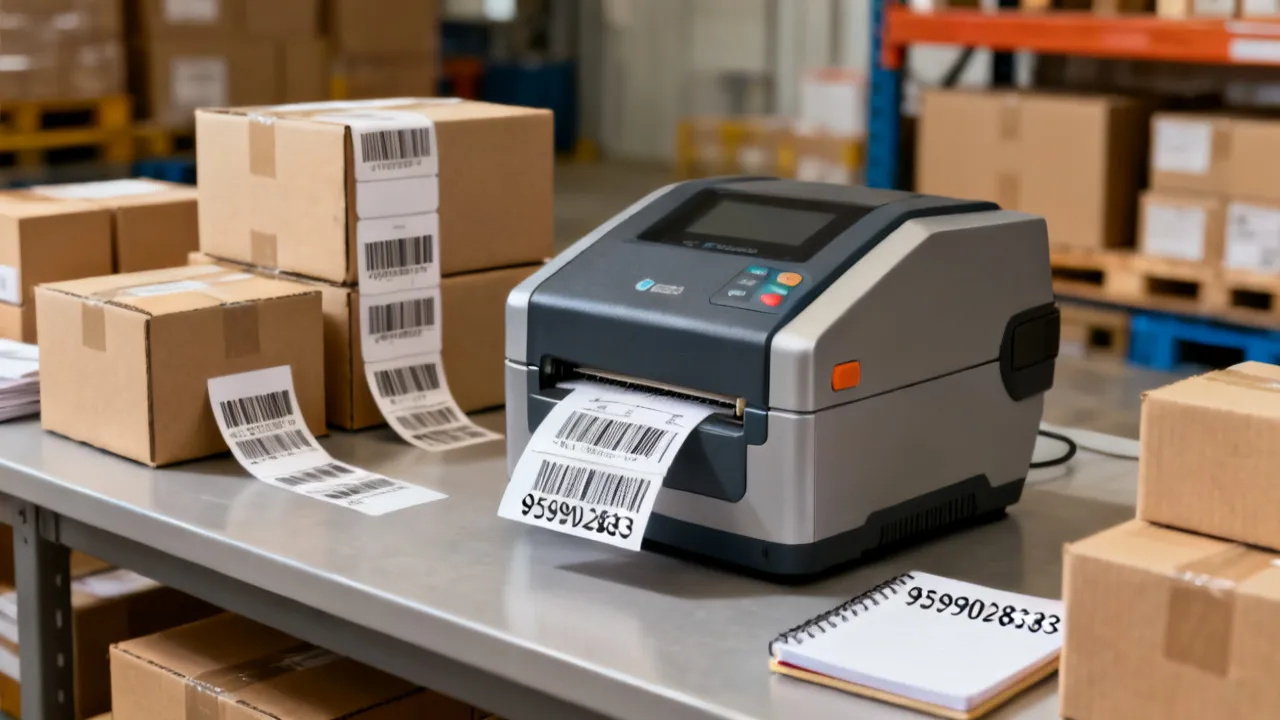
Understanding 95999028383 Supply Options and Pricing
This guide explains how to evaluate 95999028383-related supply options, pricing, and supplier reliability using a structured, objective approach. The keywords point to a specific sourcing context, where quotation accuracy, documentation quality, and fulfillment capability matter. Background details below outline typical procurement considerations, risk checks, and how to compare offers without relying on assumptions.

1) Key takeaway: Evaluate 95999028383 supply offers by verification first
When you encounter 95999028383 alongside sourcing references such as '' '' '' and '' '' '', treat it as a procurement identifier that must be validated through documentation, lot/serial traceability, and a clear quotation breakdown. The very critical step is to confirm that the product or service being quoted matches the identifier exactly, then compare pricing only after you understand scope, lead time, packaging/specs, and payment terms.
From an industry perspective, buyers often feel the strongest pressure around price, but price without verification creates costly rework—especially in industrial, logistics, or component procurement where a small mismatch can trigger returns, line stoppage, or compliance failures. A low headline price can be offset quickly by freight reshipment, expediting fees, inspection delays, requalification costs, or the administrative burden of correcting nonconforming receipts.
Below is a structured way to evaluate offers tied to 95999028383 while remaining objective and audit-friendly—meaning that if someone reviews your purchasing decision later (an internal audit, quality manager, or compliance reviewer), the reasoning is traceable to verifiable evidence rather than assumption.
2) Why “identifier + supplier” contexts require structured diligence
Identifiers like 95999028383 commonly appear in internal catalogs, part-number systems, invoice references, or warehouse SKU mappings. Meanwhile, fragments such as '' '' '' and '' '' '' can represent category labels, brand-neutral descriptors, procurement notes, or processing constraints (for example, “standard packaging,” “certified documentation,” or “customer-specified configuration”).
Even when the identifier is consistent, supply quality depends on multiple layers. Think of procurement due diligence like assembling a “chain of custody” for what you intend to receive:
- Scope clarity: Is the quote for a specific item, a bundle, or a service package? If 95999028383 appears in a header, it might be tied to multiple line items, each with different inclusions.
- Specification alignment: Do the datasheet, dimensions, materials, and compatibility requirements match your need? A supplier can quote the “right” identifier while shipping a variant that differs in specification subfields.
- Traceability: Are batch/lot records available when required? In regulated or quality-sensitive environments, traceability is not merely paperwork—it is your ability to contain risk.
- Fulfillment reliability: Can the supplier meet your required timeline consistently? A quote might reflect theoretical production capacity rather than actual dispatch capability.
- Commercial terms: What is included in the stated pricing—shipping, handling, documentation, warranty? Sometimes cheaper offers exclude certificates or freight, resulting in a higher all-in cost.
- Regulatory/compliance considerations: Does the item require SDS, RoHS/REACH statements, import/export documentation, or specific quality certifications? These needs can be implied by descriptors like '' '' '' and '' '' ''.
In procurement operations, these checks reduce “silent risk.” They also improve negotiation outcomes because you are comparing like-for-like rather than apples versus assumptions. When buyers do structured diligence, they tend to negotiate from a position of clarity: “Your quote is not equivalent because shipping and lot traceability documentation are missing,” or “Your item description conflicts with the spec sheet we require.” That transforms negotiations from subjective haggling into measurable alignment.
3) Interpreting pricing: what to ask before you compare numbers
Because no explicit price value is provided in the prompt, this guide focuses on how to interpret pricing when offers reference 95999028383 and related keywords '' '' '', '' '' ''. An effective pricing review typically answers these questions before you compare supplier A and supplier B:
- Is the quote line-item complete? Look for clearly stated unit price, quantity, currency, and whether totals include taxes, duties, freight, and any handling charges. A quote that shows only “unit price” without freight and documentation cost can mislead decision-makers.
- Are there price drivers? Some costs shift based on packaging requirements, inspection certificates, conformance documentation, special labeling, or expedited shipping. If descriptors like '' '' '' imply “certified” or “inspected,” ask whether the certification type is included and whether it is batch-specific.
- What is the payment schedule? Terms like net-30 vs. net-60 can affect total cost of ownership through cash-flow impact and internal working capital costs. If you have supplier financing constraints, the “cheaper” price might be more expensive overall.
- What warranty or acceptance criteria apply? For many supplies, the “real cost” depends on how returns and defects are handled. If the supplier offers only a limited warranty or excludes certain defect categories, your cost exposure rises.
- What lead time is quoted—and what is the historical reliability? A supplier may quote one timeline but experience delays due to inbound constraints, factory scheduling, or customs processing. Delays may force you into expediting or alternative sourcing.
- Are there hidden administrative fees? Some suppliers charge separate fees for custom documentation, special packaging, re-labeling, or split shipment processing.
To keep comparisons objective, ask suppliers to provide a quote breakdown with consistent headers and definitions. If two suppliers use different category labels, convert them into a common framework before deciding. For example, treat “handling,” “packing,” and “freight processing” as separate line items, and confirm whether those costs cover documentation printing, labeling, and carrier fees.
It helps to request a “quote normalization template” from suppliers (even if the supplier doesn’t use your exact form). The goal is to ensure you can compute an apples-to-apples “landed cost” or “received cost” that includes shipping method, packaging, documentation, and any required certificates.
4) Supplier evaluation framework for offers tied to 95999028383
When you see 95999028383 paired with procurement descriptors such as '' '' '' and '' '' '', the supplier’s operational maturity often becomes the differentiator. Price alone rarely explains performance outcomes in quality-sensitive procurement. Consider these evaluation angles:
- Documentation readiness
Does the supplier provide item specifications, compliance/quality documentation (where applicable), and traceability evidence? For regulated or safety-relevant materials, documentation quality is not optional—it is foundational. Ask for evidence that documentation is tied to the specific lot/serial range expected for shipment, not generic certificates.
Good practice includes: certificate number, issuing body (if applicable), date of issue, reference to the exact product, batch/lot number(s), and whether the certificate supports your acceptance criteria.
- Quality system alignment
Look for evidence of systematic processes: incoming inspection steps, nonconformance handling, and standardized packing/labeling. Even without formal certifications, operational consistency matters. Ask how they handle deviations—do they quarantine suspect items, retrace the batch, and reissue corrective documentation?
If you are in a regulated environment, ask about their processes for document control, change management, and lot traceability when sourcing the same identifier over time.
- Packaging and handling integrity
Small handling differences can create large downstream issues. Ask how they pack, label, and protect the item associated with 95999028383. Consider storage conditions: moisture sensitivity, temperature exposure, electrostatic discharge requirements, and physical shock protection.
Packaging questions should be specific: Are items individually bagged? Are they protected with desiccants? Are labels durable for your warehouse environment? Is the outer carton strength adequate for your distribution route?
- Logistics transparency
Can they share shipping method, estimated dispatch dates, and carrier options? Where possible, verify how they manage split shipments and partial fulfillment. If 95999028383 is part of a larger kit, confirm whether shortages trigger backorder or partial shipment.
Additionally, ask how they communicate delays. Do they provide pro-active updates, or do they wait until your receiving team contacts them?
- Communication and escalation
Test responsiveness: the top suppliers clearly explain uncertainties rather than hiding them. Ask who owns escalation if there’s a mismatch between quote, order, and shipped item. Make sure the escalation path is practical—named roles or clear contact procedures.
In practice, escalation clarity is often the difference between a 2-day fix and a 2-week delay.
- Change control and substitution policy
Especially when an identifier like 95999028383 appears in multiple contexts across time, you should ask whether substitutions are allowed if stock is constrained. A credible supplier clarifies substitution rules and requires your approval if an alternate part or revision is needed.
Ask if the supplier maintains revision control (revision numbers, change notices, and how they prevent mismatched revisions from shipping under the same identifier).
- Performance history (where available)
Request evidence of on-time delivery and issue resolution relevant to similar items. This can include delivery performance summaries, complaint rates, or references to prior shipments.
Be mindful: suppliers might not share everything. However, they should be able to describe general performance and provide references where feasible.
This is how professional procurement teams avoid “buyer regret.” They do not only buy an item—they buy a predictable supply experience. That predictability is especially valuable when 95999028383 is tied to production-critical lines or compliance-controlled processes.
5) Industry background (objective): how procurement risks commonly emerge
Across industrial sourcing, the very frequent cost escalators are not always visible at the first quote stage. Common examples include:
- Specification drift: A supplier interprets your requirements differently, leading to incompatible items. This can happen even when the identifier matches if the spec’s sub-attributes are not clearly communicated.
- Packaging variability: Items arrive without the protective measures needed for your storage environment. The result might be corrosion, labeling damage, or ESD issues—problems that show up after receiving.
- Certificate mismatch: Documentation is provided but does not match the specific lot or unit range. Sometimes a supplier can provide a certificate that “covers the product family,” but not the specific shipment—creating acceptance issues.
- Lead time variance: Promised dates shift due to inbound constraints, customs delays, or manufacturing capacity changes. The “quoted lead time” is not always the “experienced lead time.”
- Acceptance testing gaps: Your team might not share test criteria early, causing disputes during receiving. The supplier may insist that defects are “within tolerance,” while the buyer’s tolerance criteria differ.
- Labeling and traceability breakage: Even if the product is correct, traceability can be broken by missing lot numbers on packaging. This can disrupt warehouse receiving systems.
- Unclear return logistics: If the RMA process lacks clear instructions, shipping nonconforming goods back becomes time-consuming and costly.
- Commercial term ambiguity: Missing definitions for incoterms, shipping responsibility, and responsibility for taxes/duties can create disputes later.
To anchor risk evaluation in credible practices, many organizations rely on widely recognized frameworks and standards. For example, quality management principles are often aligned with ISO 9001, and risk-based approaches are consistent with ISO 31000. These are not “guarantees” of performance, but they provide a shared language for assessing supplier controls.
Sources for standards context: International Organization for Standardization (ISO) publications on quality and risk management: ISO 9001 (quality management systems) and ISO 31000 (risk management guidelines).
When procurement uses these frameworks, it typically asks suppliers to demonstrate:
- How they manage nonconforming outputs
- How they control documentation and traceability
- How they identify and mitigate supply chain risks
- How they ensure consistent packaging and labeling
In a practical sense, this means your procurement team can convert “we feel uncertain” into “we found documentation/traceability gaps that increase our risk profile.” That is more defensible in audits and easier to align with internal quality governance.
6) Comparison table: objective checklist to choose among offers
Use the table below to compare quotations tied to 95999028383 and related descriptors such as '' '' '' and '' '' ''. (No links are included.)
| Evaluation area | What to confirm | Why it matters | What “good” looks like |
|---|---|---|---|
| Identifier match | Does the quoted item/service explicitly map to 95999028383? | Prevents mismatch returns and compliance issues. | Quote includes exact product/service reference and description that aligns with your spec. |
| Scope and inclusions | Are shipping, documentation, inspection, and packaging included or excluded? | Avoids hidden cost escalations. | Clear line items with consistent definitions and totals. |
| Pricing basis | What quantity tiers, currency, taxes, and duties are assumed? | Ensures fair comparison. | Price breakdown can be normalized across suppliers. |
| Lead time and dispatch | What is the promised dispatch date and how is delay handled? | Reduces downtime and schedule risk. | Documented lead time with a clear change/exception policy. |
| Quality documentation | Are certificates/records specific to the lot or units supplied? | Supports traceability and acceptance testing. | Documentation is referenced in the quote and matches the shipment. |
| Acceptance criteria | What tests and acceptance standards apply upon receipt? | Avoids disputes during receiving. | Receiving process is agreed in advance (test method, tolerances, timelines). |
| Warranty and returns | How are defects handled, and what is the return authorization process? | Controls total cost of quality issues. | Clear RMA procedure, timelines, and responsibilities. |
| Supplier reliability signals | What evidence exists of on-time delivery and issue resolution? | Improves forecast accuracy. | Operational history or performance summaries shared under reasonable constraints. |
| Packaging requirements | What packaging/labeling method is used, and does it support your storage needs? | Reduces damage and traceability breaks. | Protective packaging aligned with handling conditions; durable labels with lot/serial where required. |
| Compliance documentation (if applicable) | Are SDS, RoHS/REACH, or other compliance items included and shipment-specific? | Reduces regulatory risk and acceptance delays. | Compliance documents referenced and delivered with the shipment or per agreed schedule. |
| Order control / change handling | Is substitution allowed, and what’s the change control process? | Prevents revision mismatches and requalification. | Substitutions require buyer approval; revisions tracked and documented. |
7) Step-by-step guide: how to process a 95999028383-related procurement inquiry
Below is a practical, step-by-step workflow you can apply when suppliers present offers connected to 95999028383 and associated descriptors such as '' '' '' and '' '' ''. This is written to be usable by procurement teams, operations managers, and technical reviewers.
-
Capture the identifier context
Record exactly where 95999028383 appears (quote header, product line, invoice reference, or catalog field). Ask the supplier to explain the identifier mapping and confirm whether it references a complete product, a component, a kit, or a service package.
If your internal system uses the same identifier across multiple variants, verify the variant selection (revision, configuration, or sub-spec fields).
-
Request a specification pack
Ask for the item/service description, datasheet, any relevant drawings, material declarations, and packaging details. Ensure it aligns with your internal requirement and that your requirement includes all critical characteristics, not just a general name.
For example, if “spec alignment” includes tolerances, coatings, or electrical ratings, require those values explicitly in the response.
-
Normalize the quote
Convert all offers into the same structure: unit price, quantity, total price, shipping terms, and included documentation. If two quotes use different definitions, reconcile before comparing.
Normalization should also account for currency, quantity breaks, and whether pricing includes VAT/sales tax, duties, or import fees. If not included, compute a modeled landed cost based on your shipping route and typical tax handling.
-
Confirm traceability and documentation matching
Ask whether documentation references the same lot/serial range as the shipment. If not, clarify how mismatches are handled and what corrective action you can expect.
Also verify whether lot/serial numbers appear on the packing slip and external carton labels. If your receiving process depends on scanner-based traceability, labeling quality becomes a procurement requirement.
-
Evaluate lead time realism
Request dispatch estimates, carrier options, and what happens if dates shift. If your operation uses staging milestones, align them with the supplier’s schedule.
Ask for lead time components: manufacturing time, inspection time, packaging/labeling time, and dispatch handling. That breakdown helps you identify the most likely cause of delay.
-
Define acceptance testing early
Specify how you will inspect and test upon receipt. Agree on tolerances and the timeframe for reporting nonconformance.
If the supplier expects your acceptance criteria to be “standard,” insist on the exact standards or test methods. If the item is safety-related, define additional checks (visual, dimensional, documentation verification, functional checks where applicable).
-
Run a commercial risk review
Check payment terms, warranty coverage, RMA handling, and cost exposure if the item does not pass acceptance.
Commercial review should explicitly address:
- Who pays return shipping for nonconforming items?
- Does the supplier replace or refund?
- What is the credit process timeline?
- Are there restocking fees?
- Is warranty coverage conditional on installation requirements or usage terms?
-
Make a documented decision
Choose based on verified alignment: identifier match, specification compliance, traceability, schedule reliability, and total cost of quality—rather than only the headline price.
Document the final selection criteria in a purchasing record so that if there is a later issue, you can show that you acted based on evidence you requested and received.
In mature procurement organizations, this step-by-step workflow is often embedded into a purchasing checklist for specific categories of goods. If 95999028383 is used repeatedly, consider building a reusable “identifier due diligence” checklist for that category.
8) Conditions and requirements to avoid common procurement pitfalls
To ensure objective decision-making, apply these conditions when comparing suppliers offering items tied to 95999028383 and descriptors like '' '' '' / '' '' '':
- Condition 1: The quoted item must explicitly correspond to 95999028383 with a consistent description. If the supplier references 95999028383 but the description suggests another variant, stop and clarify.
- Condition 2: Pricing comparisons must normalize shipping, taxes, documentation, and packaging inclusions/exclusions. If one quote includes certificates and another does not, compare “equivalent delivered packages.”
- Condition 3: Acceptance criteria must be agreed before shipment when feasible, including how disputes are handled. If the acceptance criteria are unclear, create a written agreement stating test methods and tolerances.
- Condition 4: Traceability documentation must be specific to the delivered lot/serial or provide a clear mechanism for proof. A “general” certificate that cannot be tied to the shipment increases your risk.
- Condition 5: Lead time quotes require confirmation of dispatch process and delay-change communications. Ensure the supplier has a policy for notifying you when constraints arise.
- Condition 6: Substitution and revision control must be explicit. If a supplier can substitute another revision under the same identifier, you must require prior approval.
- Condition 7: Packaging suitability must match your storage environment. If the item is moisture-sensitive or requires ESD-safe handling, packaging is part of product performance.
If any of these conditions cannot be met, treat the offer as higher risk and request corrective clarity before placing orders. A common procurement mistake is to “accept the risk” mentally but not operationally—meaning the organization fails to request missing evidence. Later, disputes become harder because you cannot point to a specific agreed requirement.
Another pitfall is “implicit equivalence.” For example, a supplier may claim that a particular descriptor (like one represented by '' '' '') is “standard” but fails to provide explicit evidence. If your operation treats that descriptor as mandatory, you should require it in writing, ideally attached to the quote and included in the purchase order.
9) FAQs
Q1: What does 95999028383 typically represent in procurement?
In many sourcing workflows, 95999028383 functions as a catalog identifier, part reference, internal SKU, invoice reference, or traceability label. Its exact meaning depends on the supplier’s system. The safest approach is to ask the supplier to map the identifier to the exact item description and specification.
In practice, you should request:
- The product name and short description tied to 95999028383
- Any revision number or configuration option
- Associated drawing/datasheet references
- The intended packaging type and any labeling rules
Q2: How should I compare offers when the price breakdown is unclear?
Request itemized quotation details: unit price, quantity, currency, tax/duty assumptions, shipping terms, documentation inclusions, and packaging costs. If suppliers won’t provide itemization, compare only after obtaining a normalized cost structure; otherwise, you cannot ensure apples-to-apples evaluation.
If a supplier provides only a lump sum, ask for a “cost component explanation.” Even a high-level breakdown is helpful:
- Base product cost
- Packaging cost
- Documentation/certification cost (and whether lot-specific)
- Freight (and incoterms)
- Handling/processing fees
This allows you to see whether a cheaper offer is actually equivalent, or whether it simply shifts costs into excluded categories.
Q3: Why does documentation matter if the item “looks right”?
For industrial or compliance-relevant supplies, documentation is what enables traceability and defensible acceptance. Without lot/serial-specific records, you may face delays during receiving inspections or difficulties resolving nonconformance claims.
Documentation matters in several ways beyond traceability:
- Acceptance testing support: Certificates can include test results relevant to your acceptance standards.
- Regulatory proof: You may need evidence for audits, inspections, or customer requirements.
- Root-cause analysis: If there is a defect in the field, traceability supports containment and corrective actions.
- Contractual defensibility: If disputes arise, you need a documented basis for acceptance or rejection.
Q4: What acceptance criteria should I define?
Define measurable acceptance elements based on your use case: dimensional/tolerance checks, labeling and packaging condition, required certificates, and reporting timelines for defects. If you share the testing method and acceptance thresholds upfront, disputes are less likely.
When defining acceptance criteria, you can consider categories such as:
- Documentation verification: Certificate existence, completeness, and shipment traceability.
- Visual inspection: Packaging integrity, labeling correctness, damage detection.
- Physical/functional checks: Dimensional verification, performance tests, material conformity checks.
- Process compliance checks: For services, verify scope completion artifacts, checklists, or deliverables.
Also define who performs acceptance, what happens if results fail, and the timeline for notifying the supplier.
Q5: Can lead time quotes be trusted?
Lead time quotes are a forecast, not a guarantee. Validate dispatch timelines and escalation processes. If possible, request evidence of on-time performance relevant to similar items, then align your internal schedule with reasonable buffers.
A practical approach is to ask:
- When will the supplier dispatch the goods?
- What is the earliest and latest dispatch window?
- What events trigger delay notifications?
- How do they handle partial shipments?
For high-impact items, consider holding a contingency plan with alternative suppliers or safety stock, especially if 95999028383 relates to production bottlenecks.
Q6: How do I evaluate a supplier when there’s no single “top” factor?
Use a weighted decision approach: identifier/spec match, specification compliance, traceability, acceptance plan clarity, schedule reliability, and total cost of quality (including warranty/returns). This reduces the chance of selecting a low price that creates higher total cost later.
When weighting factors, consider your business context:
- If uptime is critical, schedule reliability weight increases.
- If compliance matters, documentation accuracy weight increases.
- If the receiving process is strict, acceptance criteria clarity weight increases.
This ensures decisions match organizational priorities rather than just cost minimization.
Q7: Should I proceed if some details tied to the keywords '' '' '' are missing?
If descriptors such as '' '' '' are used to define scope or categories, missing details can signal ambiguity. Ask for clarifications. Proceed only when you can document the exact scope associated with 95999028383 and confirm how inclusions/exclusions affect total cost and performance.
As a rule of thumb, if a descriptor changes what the supplier provides (for example, certified vs. non-certified, inspected vs. standard, special packaging vs. generic), then you should treat missing details as a procurement blocker until resolved.
Q8: Are there official standards I can reference for supplier evaluation?
Yes. Many organizations align supplier evaluation with widely adopted quality and risk management principles such as ISO 9001 (quality management) and ISO 31000 (risk management). While these don’t automatically certify performance, they provide structured expectations for process discipline and risk controls.
When you reference these standards in supplier discussions, you generally focus on outcomes and processes:
- How the supplier controls quality
- How they handle nonconformances
- How they manage risk across the supply chain
- How they ensure traceability and documentation integrity
10) Concluding perspective: make verification part of your pricing decision
Offers connected to 95999028383 and related descriptors like '' '' '' typically reflect a real sourcing need—but the procurement outcome depends on how rigorously you validate scope, specifications, traceability, and commercial terms. A professional approach treats price as the final result of normalization and verification, not as the starting point.
If you share the actual item/service description tied to 95999028383 (and the currency and whether shipping/taxes are included), the evaluation can be tightened further into a more concrete comparison and recommendation framework. In the meantime, the most important action remains the same: verify the identifier mapping first, request the documentation pack second, normalize pricing third, and confirm acceptance/traceability logistics before committing.
Ultimately, “verification first” is not slow—it is cost prevention. In environments where compliance, traceability, and production uptime matter, this approach is often the difference between a purchase that simply arrives and a purchase that performs reliably through the lifecycle of use.
-
1

A Guide to Cost-Efficient Small Electric Cars for Seniors
-
2
Mastering Debt Consolidation: Boost Your Credit Score and Manage Interest Rates
-
3
Your Guide to Loans, Credit Checks, and Interest Rates
-
4
Affordable Independent Living: Finding the Right Senior Housing
-
5
Guide to Senior Living Apartments: Affordable and Comfortable Environments