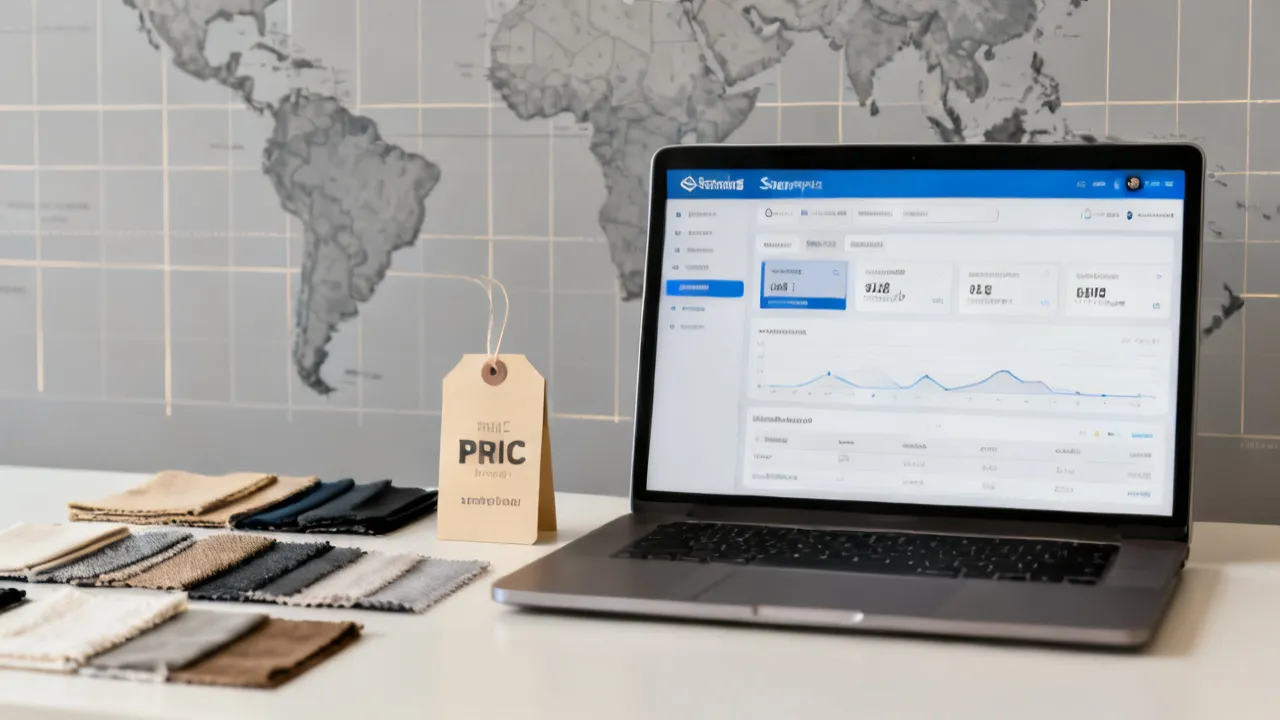
2177 Supplier Price Guide and Product Sourcing Insights
This guide explains how to evaluate supplier pricing and procurement conditions for 2177-related purchasing decisions. It provides objective background on how procurement terms, lead times, quality verification, and documentation affect supplier quotes. You’ll also find a comparison table and a step-by-step decision framework designed for practical, risk-aware sourcing.

Key procurement takeaways for 2177 supplier price decisions
When you are working with 2177 in a purchasing or supplier-evaluation context, the very important question is not the headline quote—it’s what that price actually includes (specifications, inspection level, packaging standards, logistics responsibilities, and documentation). A professional approach treats every supplier price as a bundle of conditions, then verifies those conditions against your requirements. This is the foundation for consistent purchasing outcomes, fewer disputes, and predictable downstream operations.
In most procurement organizations, “supplier price” is rarely a single variable. Instead, it is a negotiated product of commercial terms and technical commitments. Two offers might both mention 2177, but one might implicitly assume your facility will handle incoming inspection, re-packaging, or missing paperwork remediation—while the other might include those elements by default. Without structured verification, you risk buying the right “unit cost” but inheriting the wrong cost drivers later (warehouse delays, compliance holds, rework, returns, production stoppages, or customer penalties).
Therefore, the best practice is to treat any 2177-related supplier quote as a hypothesis that must be tested: What exactly is the supplier guaranteeing? What evidence will you receive? What happens when something goes wrong? And what will it cost you—directly or indirectly—if the delivered performance does not meet expectations?
Why “supplier price” around 2177 requires structured verification
Supplier pricing for an item or category associated with 2177 can look straightforward on a quote sheet, yet still vary significantly once you compare:
- Unit pricing basis (per piece, per carton, per batch, or per weight equivalent)
- Minimum order quantities (MOQs) and tiered pricing behavior
- Delivery terms (who pays transport, who owns risk in transit)
- Quality and compliance scope (test reports, certifications, sampling method)
- Lead time consistency and capacity constraints
- Incoterms-like responsibilities (even if your supplier uses different wording)
Industry practice in procurement organizations is to treat quotes as “commercial drafts” that must be aligned with technical requirements and contractual risk controls—not as final truth. This is particularly true for categories linked to 2177, because “2177” often functions as an internal reference point (a code, classification, commodity family, or line identifier) that is tied to documentation, compliance expectations, and operational rules. When the same code appears across procurement cycles, buyers can build comparability over time—but only if they are rigorous about interpretation and recordkeeping.
To make this concrete: imagine Supplier A quotes 2177 at a lower unit rate but only “standard packaging,” while Supplier B quotes a slightly higher unit rate that includes shock-resistant packaging, lot labels, and a predefined inspection report format. If your receiving team is required to hold shipments without documentation, Supplier A’s “cheaper” unit price can cause downstream delays that cost far more than the nominal difference. Structured verification prevents that kind of hidden cost.
Natural integration of the provided keywords (without assuming missing fields)
The keywords you provided contain fragments that appear to reference a purchasing topic and a supplier price context. However, the exact product name, location, supplier names, and explicit price figures are not fully specified. Because the prompt does not include verified brand or site-level details, this article focuses on how to evaluate supplier pricing in a 2177-anchored procurement scenario, using objective methods rather than guessing product identity or overstating specifics.
As you apply the framework below, you should map your internal meaning of 2177 to your actual procurement line, technical specification, quality expectations, and receiving constraints. The logic stays the same even when “2177” refers to different categories: the evaluation must always determine what the supplier price includes and how the supplier backs that inclusion with enforceable terms and evidence.
What a professional buyer should compare in every 2177-related quote
To make 2177-related sourcing decisions confidently, compare quotes on the same dimensions every time. The goal is comparability, not persuasion.
Professional procurement teams typically begin with a baseline requirement package. Then, for each supplier, they create a structured “quote-to-requirement alignment” checklist. This eliminates common failures such as comparing different packaging assumptions, different acceptance criteria, or different documentation triggers. It also supports negotiation because you can point to gaps precisely: “Your quote does not include X deliverable; adding it changes cost by Y.”
1) Price components and “what’s inside” the number
Ask suppliers to break pricing into components. Even if they do not present it that way, you can request a line-item rationale. For example:
- Base unit price
- Packaging type and labeling inclusion
- Inspection or testing fees (in-line vs. end-of-line)
- Documentation costs (certificate type, language requirements)
- Logistics handling charges
- Any surcharges (seasonal, capacity, regulatory, or material fluctuations)
In practice, two suppliers can both advertise the same unit cost for 2177-related procurement, yet one may include documentation and inspection while the other delivers “as-is.” The buyer’s actual cost then differs due to rework, delays, or compliance risk.
To make this operational, you can standardize a “cost-to-serve” decomposition for suppliers. Even when suppliers resist, you can translate their response into your internal categories: “product,” “quality,” “packaging,” “handling,” “delivery,” “compliance documentation,” “returns handling,” and “change management.” Once you do that consistently across bids, price comparisons become much more reliable year over year.
A practical procurement tactic is to treat documentation and inspection as explicit deliverables, not optional add-ons. In many industries, the supplier’s documentation effort is not just administrative; it is connected to traceability, quality system processes, and evidence packaging. Suppliers that embed these costs in their base pricing generally perform better during audits and receiving checks. Suppliers that offer low headline pricing without documentation usually shift cost to you later.
2) Quality assurance and verification level
For procurement tied to 2177, insist on clarity around:
- Acceptance criteria (what exactly is being checked)
- Sampling approach (how many units per lot)
- Test method references (standards used)
- Traceability (batch/lot numbers, production records)
- Nonconformance handling (replacement vs. credit, timeline)
An expert procurement view is that the top quote is the one that minimizes total cost of ownership (TCO) and operational disruption, not necessarily the lowest unit price.
Quality assurance is also where “buyer confidence” is built. If acceptance criteria are ambiguous, receiving teams may classify shipments as nonconforming more often, leading to greater inspection costs and more return/replacement events. If sampling is too light, you might accept defective product into production, which can create a much larger cost picture.
When you’re comparing 2177 supplier offers, consider whether the quote includes any upstream verification steps. For example:
- Pre-shipment inspection (PSI): does the supplier provide a third-party or internal verification before shipment?
- First Article Inspection (FAI) or initial sample approval: are there defined submission and acceptance rules?
- Lot-based documentation: will each lot include a certificate tying results to batch identifiers?
- Controlled changes: if the supplier changes materials/processes, must they notify you and provide updated evidence?
Even if your organization is not in a heavily regulated sector, these practices reduce your operational uncertainty. In regulated environments, they become essential for compliance readiness.
3) Lead time realism and capacity signals
Even when a supplier provides an estimated lead time for 2177-related orders, buyers should evaluate evidence:
- Have they supplied similar volumes recently?
- Do they state production schedules or capacity constraints?
- What happens if you need a partial reschedule?
Procurement teams often mitigate lead time risk with staggered deliveries, safety stock planning, and milestone-based confirmation.
However, the real test is not the stated lead time; it’s the supplier’s response under change. If you can only learn that lead time is unrealistic when the shipment is already late, you will be forced into expensive expedites, alternative sourcing, or production adjustments.
Therefore, request concrete lead time mechanics:
- When does the supplier consider an order “confirmed”?
- What are the cut-off dates for material procurement and production scheduling?
- Are there constraints that might affect lead time (e.g., tooling, raw materials, plating/finishing slots, testing capacity)?
- Do they provide schedule confirmation in writing with an expected ship date?
Some suppliers will state a lead time range (e.g., 6–8 weeks). If they do, require them to include a plan for variance: under what conditions do they deliver at the low end vs. high end? A buyer-friendly supplier will treat uncertainty as an explainable process rather than a vague promise.
4) Compliance and documentation completeness
Quote comparison should treat documentation as part of the deliverable. Depending on the industry, missing documentation can cause regulatory delays, warehouse holds, or customer-facing issues. Buyers commonly request:
- Certificates of conformity or compliance statements
- Test reports (as applicable)
- Material declarations (where required)
- Batch/lot tracking information
- Warranty or guarantee terms (if relevant)
Where documentation requirements are unclear, buyers should request a “document list” for each quote submission.
To strengthen enforceability, you should define:
- Delivery trigger: documents with shipment, within X days after shipment, or before delivery for certain regulated goods.
- Format: PDF, signed physical copies, online portal upload, or language requirements.
- Scope: whether documentation applies to each lot or to a single master certificate.
- Responsibility: who provides the documentation (supplier vs. subcontractor vs. third-party lab).
Documentation completeness is particularly important for 2177 because internal codes often link to specific documentation rules. If your ERP or receiving system expects certain document types, then the supplier must align to those expectations. Otherwise, the operational team will spend time chasing missing paperwork—an avoidable cost.
5) Packaging standards and damage responsibility
Packaging can be one of the most underestimated “hidden cost” areas. For 2177-related procurement, clarify:
- Packaging type (unit packaging, cartons, pallets, protective materials)
- Labeling requirements (lot labels, barcodes, handling icons)
- Temperature/moisture protection if relevant
- Shipping marks and warehouse handling instructions
- Damage responsibility and claims procedure
A quote that is cheaper because it uses minimal packaging may pass damage risk to you. If you have strict receiving criteria or limited claims acceptance, the supplier’s packaging design becomes part of quality governance, not just logistics.
When comparing offers, ask for a packaging statement that includes both design intent (what it protects against) and execution detail (what the supplier will actually pack). If your supply chain includes cross-docking, long transit times, or nonstandard storage conditions, the packaging discussion should be more than a generic “standard packaging” phrase.
6) Logistics responsibilities and delivery terms
Even when suppliers use Incoterms-like wording, you should normalize responsibilities and costs:
- Freight paid vs. freight collected
- Who arranges shipping and booking
- Who bears risk during transit
- Insurance requirements and coverage scope
- Delivery appointment requirements and time windows
Buyers sometimes confuse “delivery date” with “delivery responsibility.” A supplier might meet a ship date but still delay delivery due to carrier booking mishandling. If your production schedule depends on receiving by a specific day, you need to account for delivery planning accuracy.
To control this, require suppliers to confirm:
- Ship date, estimated arrival date, and carrier name (if available)
- Booking process and the documentation required for pickup
- What happens if the shipment is missed due to carrier or weather delays
This is also where “landing cost” analysis begins. Your “unit price” might exclude freight, warehousing, or handling fees that are essential to your total cost of inventory movement.
7) MOQs, tiering, and the true cost of volume uncertainty
Minimum order quantities (MOQs) and tiered pricing interact with demand variability. When 2177 is associated with a category that has forecast uncertainty—seasonality, project-based consumption, or variable customer orders—MOQs can cause expensive overbuy or forced volume commitments.
Compare:
- MOQs per order and per delivery schedule
- Tier thresholds and whether tier pricing depends on committed quantities or shipped quantities
- Whether price holds for a time period (e.g., 30/60/90 days)
- Whether partial deliveries retain tiered unit rates
Example of a common problem: Supplier A offers a cheaper tier at higher quantity, but only applies the tier rate if the full quantity is shipped in one delivery. If your schedule requires split deliveries, you may never reach the discount as applied. Supplier B might offer more flexible tiering that your operational plan can actually use. Without analyzing MOQs and tier logic, you risk selecting a quote that cannot be economically realized.
8) Commercial terms that affect operational cost
Supplier price evaluation is incomplete without assessing commercial terms that influence cost or risk. Even if not explicitly priced, these terms can create cost outcomes:
- Payment terms (net days) and impact on working capital
- Price validity duration and conditions for re-pricing
- Change control: how updates to specification impact cost
- Cancellation or rescheduling fees
- Expediting fees for late delivery remediation
Buyers who focus only on unit price may inadvertently accept terms that create expensive operational penalties. For example, a supplier might allow no rescheduling without a fee, turning routine forecast adjustments into cost events.
Supplier evaluation beyond price: risk, reliability, and operational fit
Supplier selection for a 2177-linked procurement category should consider operational compatibility. An expert lens looks at reliability and governance:
Commercial governance
- How clearly are terms written (no ambiguous “subject to” clauses)?
- Do they define escalation or change-control processes?
- Are payment terms aligned with your organization’s procurement policy?
- Do they specify response times for commercial clarifications (e.g., within 2 business days)?
- Is there a clearly defined point of contact for order management and technical questions?
Commercial governance matters because it reduces friction. Even if the product itself is acceptable, weak governance can create delays in approvals, invoice disputes, and rescheduling negotiations.
Quality governance
- Do they allow pre-shipment inspection or provide inspection reports?
- Do they maintain traceability and respond quickly to nonconformances?
- Are there documented corrective actions (CAPA-like processes)?
- Do they provide evidence of process control (e.g., calibration records, internal audit summaries where appropriate)?
- How do they handle recurring nonconformances—do they prevent recurrence or only remediate incidents?
Quality governance is also about learning. A mature supplier uses incidents to improve the system. Buyers should evaluate not only how the supplier responds once, but how they prevent repetition. That perspective helps justify spending slightly more when the supplier demonstrates a consistent capability to deliver stable quality.
Logistics governance
- Are packaging standards appropriate for your transport and storage conditions?
- Is damage responsibility specified?
- Are delivery schedules realistic relative to shipping lanes?
- Do they provide shipment notification and tracking details early enough for your receiving planning?
- Do they communicate changes proactively if the carrier plan or route changes?
Logistics governance ensures your inbound supply chain remains predictable. With inbound logistics, “predictability” becomes a performance metric just like “quality.”
Comparison table: structured quote alignment for 2177 procurement
The table below reframes additional information as a comparison tool—focused on how to evaluate supplier offers consistently. It avoids assumptions about specific brands or exact price values because the prompt does not provide verified supplier identities or numeric pricing data.
| Evaluation Dimension | What to Request | What “Good Alignment” Looks Like | Common Red Flags |
|---|---|---|---|
| Unit Price Basis | Breakdown per unit/carton/batch; include quantity tiers tied to 2177 | Transparent basis with consistent packaging/count logic | Unit cost changes after you confirm packaging assumptions |
| MOQs and Tiering | MOQs, tier thresholds, and conditions for each price tier | Tier rules are explicit and match forecasted demand | Tier changes “at dispatch” or only after payment |
| Delivery Terms | Incoterms-like description; delivery timeline and responsibility allocation | Clear risk transfer and schedule milestones | Vague delivery promises without responsibility definition |
| Quality & Inspection Scope | Acceptance criteria, sampling method, and test/report deliverables | Document list and measurable acceptance criteria provided | “Standard quality” language with no references |
| Documentation | Certificates/test reports format, language, and delivery timing | Docs provided with shipment or within a defined window | Documentation delayed until after payment or absent for some lots |
| Lead Time & Capacity | Lead time range, schedule confirmation process, and rescheduling terms | Predictable lead times supported by process clarity | Long variability without change-control conditions |
| Returns & Nonconformance Handling | Replacement/credit terms and response timeline | Clear remediation path and defined responsibilities | Only “case-by-case” with no response SLAs |
| Packaging & Labeling | Packaging type, labeling/marking requirements, and damage handling responsibilities | Pack spec matches your transport/storage and receiving system | Standard packaging with no lot traceability labels |
| Regulatory/Compliance Triggers | Any additional compliance documentation required for 2177 scope | Defined documentation and responsibilities aligned to your compliance needs | Compliance assumed or “available upon request” only |
Step-by-step sourcing guide for 2177 supplier price comparisons
Use the following process to compare supplier offers in a way that an internal audit—or a cross-functional review—can support. This is aligned with how professional procurement teams structure evaluations.
-
Define the requirement baseline for 2177
Confirm specifications, acceptable tolerances, documentation needs, packaging requirements, and delivery milestones. If requirements are incomplete, quotes will be incomparable.To strengthen this step, make sure you capture: the “must-have” requirements and the “nice-to-have” requirements separately. Must-haves will define the minimum comparability across suppliers. Nice-to-haves can become selection differentiators. If you blur these categories, suppliers may quote lower cost by excluding nice-to-haves—or worse, by excluding requirements you considered implicit.
-
Standardize the RFQ template
Request suppliers to quote against the same format: unit basis, MOQs, lead time, inspection/document list, and incoterms-like responsibilities.A standardized RFQ should also include: order quantity ranges or example order schedules, required documentation list structure, requested packaging detail level, and a requirement for suppliers to state assumptions explicitly. When suppliers add assumptions, capture them in your quote normalization notes so your comparison remains fair.
-
Normalize price into comparable TCO views
Translate quotes into total landed cost where applicable (including handling, inspection, and documentation deliverables). Avoid decisions based purely on the lowest unit price.Typical TCO components you might model include: inbound freight and handling, inspection and sampling effort, warehousing impact due to documentation/receiving constraints, administrative time for paperwork disputes, and expected quality-related rework/returns. Even if you cannot estimate every cost precisely, you can still assign a risk-weighted adjustment based on evidence from past deliveries.
-
Validate quality evidence before placing large orders
If feasible, request samples, a pre-shipment inspection plan, or verification documents tied to production lots.For 2177-linked categories, you might require: first-article approval, pilot lots, or an inspection plan for initial purchase orders. This reduces the chance that “successful pricing” becomes “expensive corrections.”
-
Stress-test lead time assumptions
Ask for schedule confirmation rules, cut-off dates, and mitigation steps if materials or production are delayed.Stress-testing means you should simulate a schedule change. For example: “If we shift delivery by 2 weeks, what is your expected impact on price, documentation timeline, and production availability?” A supplier’s answer reveals operational maturity and readiness.
-
Write decision criteria into the purchase approval
Define scoring weights: quality compliance, delivery reliability, documentation completeness, and commercial terms—then compare all suppliers against those criteria.Ensure your scoring rubric is anchored to evidence: contract terms, document lists, past performance metrics, and inspection outcomes. Avoid subjective scoring that can appear inconsistent across reviewers. A good rubric allows you to defend decisions during internal or external audits.
-
Contract the “if-then” scenarios
Include clear terms for nonconformance, returns, and replacement timelines. Ensure governance is not left ambiguous.“If-then” contracting means you do not wait for problems to define actions. For example: “If documentation is missing, then shipment will be placed on hold, and supplier must provide documents within X days; if not, then credit applies.” This prevents invoice disputes and reduces receiver frustration.
-
Monitor performance after the first shipment
Track delivery adherence, documentation on-time rate, defect/nonconformance frequency, and resolution speed. Feed results back into future sourcing rounds.Performance monitoring should be continuous, but your first shipment is especially important. The initial delivery sets expectations for how the supplier manages scheduling, documents, and quality control. If the first shipment fails in documentation or quality, treat it as a sign of system-level issues—not a one-time anomaly.
Conditions and requirements to reduce procurement disputes
- Specification clarity: Any change request to the 2177-related requirement should have a documented impact on cost and lead time.
- Documentation list: Suppliers must confirm which certificates and test reports will be delivered, by whom, and when.
- Inspection plan: Define sampling and acceptance criteria upfront so inspection outcomes are actionable.
- Nonconformance procedure: Include timelines, responsibilities, and outcomes (replace, repair, credit) before the first PO.
- Payment alignment: Payment terms should correspond to delivery milestones and documentation timing.
Disputes usually arise when one party believes an assumption was made: “You said it would include X,” “We assumed you would accept based on Y,” “We believed documentation would arrive with shipment,” etc. To reduce disputes, procurement should convert assumptions into written contract terms, and contract terms into receiving procedures.
Additionally, disputes often cluster around the “edges” of the quote: partial deliveries, split shipments, substitutions, re-packaging due to carrier damage, and changes to materials. Include edge-case definitions in the contract:
- Are substitutions allowed? If yes, under what approval process?
- Does the supplier notify you before any material or process changes?
- If a shipment is split, do unit price and documentation requirements stay consistent?
- If packaging is damaged in transit, what is the procedure for claims and replacement?
Industry context: how procurement teams typically justify supplier price choices
Procurement organizations increasingly emphasize risk-aware decision-making, because price alone does not fully predict performance. While specific numbers vary by sector, credible procurement research consistently highlights the importance of supplier reliability, quality management, and supply assurance. For example, the Institute for Supply Management (ISM) and related supply management reporting emphasize that supply disruptions and lead-time variability impact operational outcomes, which can outweigh small price differences. Additionally, quality management frameworks (widely used across manufacturing and regulated industries) focus on traceability, process control, and nonconformance handling—elements that are directly tied to how supplier quotes should be interpreted.
To operationalize this justification, many procurement organizations use a structured decision rationale called “best value” rather than “lowest price.” Best value typically incorporates:
- Cost (unit price plus estimated total landed cost)
- Quality (spec compliance probability, acceptance criteria rigor, evidence quality)
- Delivery (lead time reliability, change control responsiveness, delivery schedule accuracy)
- Risk (frequency and severity of nonconformances; documentation failure likelihood)
- Supplier maturity (governance processes, audit posture, corrective action capability)
Within this approach, a supplier that quotes a slightly higher unit price can still be the best value if they provide stronger documentation, clearer inspection scope, faster nonconformance response, and more reliable lead time execution. Buyers typically justify this in their internal approval package by referencing contract terms and past performance evidence.
Source notes (for readers seeking independent verification): ISM publishes operational insights via its business surveys and supply chain reporting; quality and supplier assurance concepts align with widely used quality management standards such as ISO 9001 (institutional focus on process control, corrective actions, and documented evidence). For authoritative details, consult the official ISM website and ISO resources.
Deepening the analysis: turning supplier quotes into measurable controls
Once you have the baseline framework, the most valuable improvement is to connect quote content to operational controls you can measure. For 2177, that typically means converting documentation and inspection scope into measurable receiving behaviors and contract enforcement mechanisms. This section expands how to do that in practice.
Define what “acceptance” means at receiving
Procurement often assumes that “acceptance criteria” are understood, but receiving teams need explicit definitions. Acceptance should include both what you test and what decisions you make. For example:
- Conformance decision: accept, conditional accept, hold, reject
- Evidence requirement: what documents are needed before releasing to production or inventory
- Test method: what test method is used and by whom
- Lot traceability: how lot numbers link to documentation
If Supplier A’s quote assumes “accept as-is” but your receiving policy requires documented traceability checks, then Supplier A’s quoted price is not comparable. You should require the supplier to deliver documentation in a way that allows your acceptance process to proceed without exception.
Set documentation “SLAs” aligned to your receiving workflow
Documentation timing matters almost as much as documentation content. A supplier might provide all correct certificates, but if they arrive after the shipment, your receiving warehouse might place the shipment on hold. That hold consumes time and sometimes requires escalation.
To reduce those operational impacts, you can establish documentation expectations as SLAs:
- Documents must be shipped with the shipment (or uploaded) before arrival
- If documents are not received by the time of arrival, shipment remains on hold
- Supplier response time for document resubmission (e.g., within 24–48 hours)
- Consequences for repeated documentation failures (credit or remediation plan)
These mechanisms reduce disputes because both parties understand what happens when documentation is late.
Define how sampling affects risk and cost
Sampling method determines the probability that defective units reach production. Two suppliers may quote similar quality claims, but differ in sampling intensity. Buyers should ask:
- What is the sampling size per lot?
- What are the acceptance and rejection criteria?
- Is sampling based on internal risk scoring or a standardized method?
- How does the supplier handle borderline results?
From a TCO perspective, insufficient sampling increases your risk of incurring production downtime or customer claims. Therefore, sampling policy should be a component of the cost model, not just an operational detail.
Normalize inspection scope: who inspects, and how often
Some supplier offers include a level of inspection by default (in-line checks, end-of-line tests, documented acceptance). Others push inspection responsibility onto the buyer. When you compare 2177 supplier price decisions, normalize inspection scope so you can attribute costs correctly.
Practical steps include:
- Require the supplier to list what tests they perform and what evidence they provide
- Clarify what tests you will still perform (if any)
- Define when you use supplier test results vs. your own verification
This avoids misunderstandings such as “we assumed your inspection would catch it.” If you are relying on supplier test results, then the supplier must provide verifiable and traceable evidence.
Map nonconformance handling into operational action plans
Nonconformance handling should be procedural, measurable, and aligned to your operations. A good supplier quote defines:
- Response time to nonconformance notice
- Containment actions required upon notification
- Replacement or credit timelines
- Who pays for return shipping and inspection costs
- How to handle quarantined inventory
For 2177-related procurement, you should also consider whether nonconformance handling triggers require you to document for internal audits. A supplier who responds quickly and provides root-cause analysis reduces the risk of repeated incidents.
Supplier price decisions under real-world constraints
Even with perfect comparison frameworks, real-world procurement is constrained by timelines, approvals, and internal capacity. This section expands how to apply the framework when you have limited time or limited negotiation leverage.
When you have limited negotiation time
Sometimes procurement must decide quickly due to production schedule pressure. In such cases, buyers can still apply structure:
- Prioritize comparability of the “what’s included” elements: documentation, inspection scope, packaging, and delivery terms
- Use a fast scoring rubric focusing on evidence quality rather than technical promises
- Require suppliers to confirm assumptions in writing, even if you cannot fully renegotiate pricing
- Place conditional purchase orders with clearly defined acceptance and documentation requirements
That approach converts urgency into controlled risk rather than uncontrolled risk.
When you have multiple internal stakeholders
For 2177-related procurement, different stakeholders may include:
- Purchasing (commercial and contract)
- Quality assurance (inspection plan, evidence, acceptance criteria)
- Warehouse/logistics (packaging, receiving workflow, scheduling)
- Engineering/technical (spec compliance, tolerances, performance expectations)
Disputes often occur when only one stakeholder reviews supplier quotes. The improved approach is to establish a cross-functional review where each team confirms the “included” scope relevant to them. The buyer consolidates these confirmations into the purchase approval rationale.
When the supplier is new or unverified
If a supplier has no performance history, you may need extra verification. A professional approach can include:
- Requiring samples or pilot lots before placing bulk orders
- Requesting an inspection plan and evidence templates
- Conducting a remote audit or using third-party verification where feasible
- Limiting initial order size to reduce risk
This is particularly important when 2177 relates to documentation-heavy or quality-critical categories.
When forecasts are uncertain and MOQs can distort economics
Uncertain demand can turn a “good price” into a bad deal if MOQs force overbuy. Buyers should incorporate forecast scenarios:
- Best-case and worst-case demand volumes
- Price tier applicability under split delivery assumptions
- Inventory holding and obsolescence risk if goods sit in warehouse
- Whether returns/cancellations are permitted and under what terms
If a supplier’s MOQs are inflexible, you may need to model the cost of carrying inventory. Sometimes a slightly higher unit price from a supplier with flexible MOQ and tier rules yields a better outcome overall.
Practical guidance for creating a decision matrix for 2177 supplier price
A decision matrix turns procurement judgment into a structured outcome. Below is a practical approach you can adapt to your 2177 category.
Step 1: Choose score categories and weights
Common categories:
- Commercial terms (e.g., delivery obligations, pricing structure, validity)
- Quality compliance likelihood (evidence, acceptance criteria clarity, traceability)
- Delivery reliability (lead time consistency, schedule confirmation process)
- Documentation completeness (document list clarity, delivery timing)
- Nonconformance responsiveness (remediation timelines, replacement/credit terms)
- Operational fit (packaging, labeling, receiving compatibility)
Weights depend on your business priorities. For example, if you operate with tight manufacturing schedules, delivery reliability might receive a higher weight than nominal unit price.
Step 2: Define scoring guidance tied to evidence
Instead of “high/medium/low,” define what earns each score level. For instance:
- Quality score: “Provides test reports per lot with traceability” vs. “provides generic certificate upon request”
- Documentation score: “documents with shipment” vs. “documents within 14 days” vs. “documents delayed by invoice processing”
- Delivery score: “schedule confirmation within 48 hours with specific ship date” vs. “estimated lead time only”
This reduces subjective interpretation and increases audit defensibility.
Step 3: Normalize pricing into a comparable number
Even with scoring, you need a comparable price. Normalize unit price by:
- Freight and logistics costs included/excluded clearly
- Inspection and documentation fees included/excluded clearly
- MOQs and tier rules mapped to your intended purchase plan
Then compute an “effective cost” estimate for the planned volume and delivery schedule.
Step 4: Make the decision with a defensible narrative
In the final approval rationale, procurement often needs to connect the selected supplier to your risk posture. For 2177 categories, a defensible narrative usually includes:
- Evidence that packaging and labeling will support receiving and storage
- Evidence that documentation and inspection scope align with compliance needs
- Evidence that lead time confirmation and change-control processes mitigate schedule risk
- Evidence that nonconformance handling is timely and predictable
This approach turns supplier selection from “a best guess” into a structured procurement result.
Common pitfalls in 2177 supplier price comparisons (and how to avoid them)
Even experienced teams can fall into repeat mistakes. Identifying them helps you prevent errors in 2177-linked purchasing decisions.
Pitfall 1: Comparing unit price without verifying the unit basis
Suppliers may quote per piece, per weight, per carton, or per batch. If the unit basis is not normalized, you will produce incorrect comparisons. Fix it by forcing suppliers to state the unit basis and the packaging/count relationship.
Pitfall 2: Ignoring documentation timing
A supplier may offer all correct documents but only after invoice processing. Receiving holds can cause production disruption. Fix it by adding documentation delivery timing requirements and SLAs.
Pitfall 3: Treating “standard quality” as equivalent
Without explicit acceptance criteria, “standard quality” is not comparable. Fix it by requesting test method references and acceptance/sampling details.
Pitfall 4: Overlooking packaging impact on damages and claims
Damage and claims create administrative and operational cost. Fix it by requesting packaging spec details and clarifying damage responsibility.
Pitfall 5: Assuming lead time equals delivery performance
Ship date is not necessarily arrival date. Fix it by requesting schedule confirmation rules, milestone definitions, and proactive shipment notifications.
Pitfall 6: Selecting lowest price without modeling MOQs and tier applicability
Suppose the supplier’s tier applies only if you order and ship full quantities in one delivery. Your operational plan may require split shipments. Fix it by mapping your procurement plan to the supplier’s tier rules.
Extended guidance: request language and clarification questions you can use
Sometimes procurement decisions fail because they ask suppliers the wrong questions. Below are clarification prompts that align with the earlier framework and help you obtain the information needed for 2177 supplier price decisions.
Questions on “what’s included”
- Please list all cost components included in your quoted unit price for 2177 (product, packaging, documentation, inspection, handling, logistics).
- Does the quote include any pre-shipment inspection? If yes, what evidence is provided and in what format?
- What packaging materials and labeling will be used for each lot, and does the quote include lot traceability labels/barcodes?
Questions on quality and acceptance
- What are the acceptance criteria for the 2177 scope? Please reference the test methods/standards used.
- What sampling method will you use per lot? What are the acceptance and rejection thresholds?
- Is traceability ensured to production batch/lot identifiers? How is this documented?
Questions on documentation
- Please provide a document list associated with shipment (certificates, test reports, declarations). For each document: who issues it, when it’s delivered, and the required format.
- Will documents be delivered with shipment or within a specified window after delivery? What happens if documents are delayed?
Questions on delivery and lead time
- What is the lead time for 2177 items including production, testing, and documentation? Can you confirm a ship date after order placement?
- What is your rescheduling process if we change delivery quantities or dates? Does it affect price?
- Please describe your schedule confirmation and cut-off dates for production planning.
Questions on nonconformance handling
- When nonconformities occur, what are the steps for containment, root-cause investigation, and corrective actions?
- What are the replacement or credit timelines? Who pays for returns and inspections?
- Do you provide response SLAs for nonconformance notifications?
Questions on commercials
- Please state your price validity period and under what conditions you would re-price (material costs, compliance requirements, schedule changes).
- What are the MOQ and tiering rules? Are tier prices based on ordered quantity, confirmed quantity, or shipped quantity?
- What are your cancellation/rescheduling terms for 2177 orders?
FAQs
1) What does “2177 supplier price” mean in procurement practice?
In a procurement context, 2177 often functions as a reference to a product category, internal classification, or a specific procurement line. “Supplier price” then means the cost quoted by a vendor for that line under stated conditions. The critical point is that quotes must be interpreted alongside specifications, MOQs, documentation deliverables, lead time, and delivery terms.
2) How can I compare two supplier quotes if they use different packaging or MOQ rules?
Normalize each quote to a common basis (e.g., per unit count, per carton, or per approved lot). Then adjust for differences in MOQs, documentation inclusions, and inspection scope. A quote that looks cheaper may be more expensive after normalization and TCO adjustments.
3) Should I choose the lowest unit price for 2177-related orders?
Not automatically. Professional procurement decisions focus on total cost and risk. If the lower price comes with reduced inspection, weaker documentation, longer lead times, or unclear nonconformance handling, it may increase costs through delays, returns, or rework.
4) What documents should I request with a supplier quote?
Request the document list applicable to your industry and compliance needs. Common examples include certificates of conformity, test reports, batch/lot traceability information, and any required declarations. Ensure delivery timing is specified (with shipment or within a defined window).
5) How do I reduce the chance of disputes after delivery?
Define measurable acceptance criteria, sampling method, and inspection procedures in advance. Also contract nonconformance actions with timelines (replacement, repair, credit) and clarify who is responsible for transport damage and documentation delays.
6) What should I do if a supplier’s lead time changes after confirmation?
Use a change-control approach: require written confirmation of the revised schedule, confirm whether cost adjustments apply, and document mitigation steps (e.g., partial shipments, revised delivery milestones, or corrective actions).
7) Can supplier price evaluation be done without site visits?
Yes, but with caution. You can rely on documented evidence such as prior performance, audit reports (where available), sample testing, and inspection plans. For higher-risk categories, consider remote audits or third-party verification.
Conclusion: turning 2177 supplier price quotes into reliable sourcing outcomes
For 2177-related purchasing decisions, the disciplined buyer treats each supplier price as a contract component, not just a number. By comparing quotes across standardized dimensions—price basis, MOQs, documentation scope, inspection and acceptance criteria, lead time reliability, packaging and receiving compatibility, and nonconformance handling—you can move from “top headline price” toward a defensible, operationally sound sourcing decision.
When procurement teams combine structured quote normalization with measurable receiving controls and enforceable “if-then” contract language, they reduce disputes and improve supply stability. That is how 2177 supplier price decisions become predictable outcomes rather than recurring negotiation cycles.
If you share the missing specifics (e.g., the exact product/category name for 2177, the currency, target quantities, intended delivery terms, and any known supplier options), the same evaluation framework can be adapted into a more customized decision matrix.
-
1

A Guide to Cost-Efficient Small Electric Cars for Seniors
-
2
Mastering Debt Consolidation: Boost Your Credit Score and Manage Interest Rates
-
3
Your Guide to Loans, Credit Checks, and Interest Rates
-
4
Affordable Independent Living: Finding the Right Senior Housing
-
5
Guide to Senior Living Apartments: Affordable and Comfortable Environments