Understanding Supplier Quoting for Code 21979368133
This guide explains how to evaluate supplier quotes and technical sourcing decisions tied to code 21979368133. Objectively, the number-like keyword typically functions as a part identifier used in procurement workflows, aiding traceability, compatibility checks, and audit readiness. You’ll learn how to request clearer pricing, confirm specifications, and document requirements before purchase.
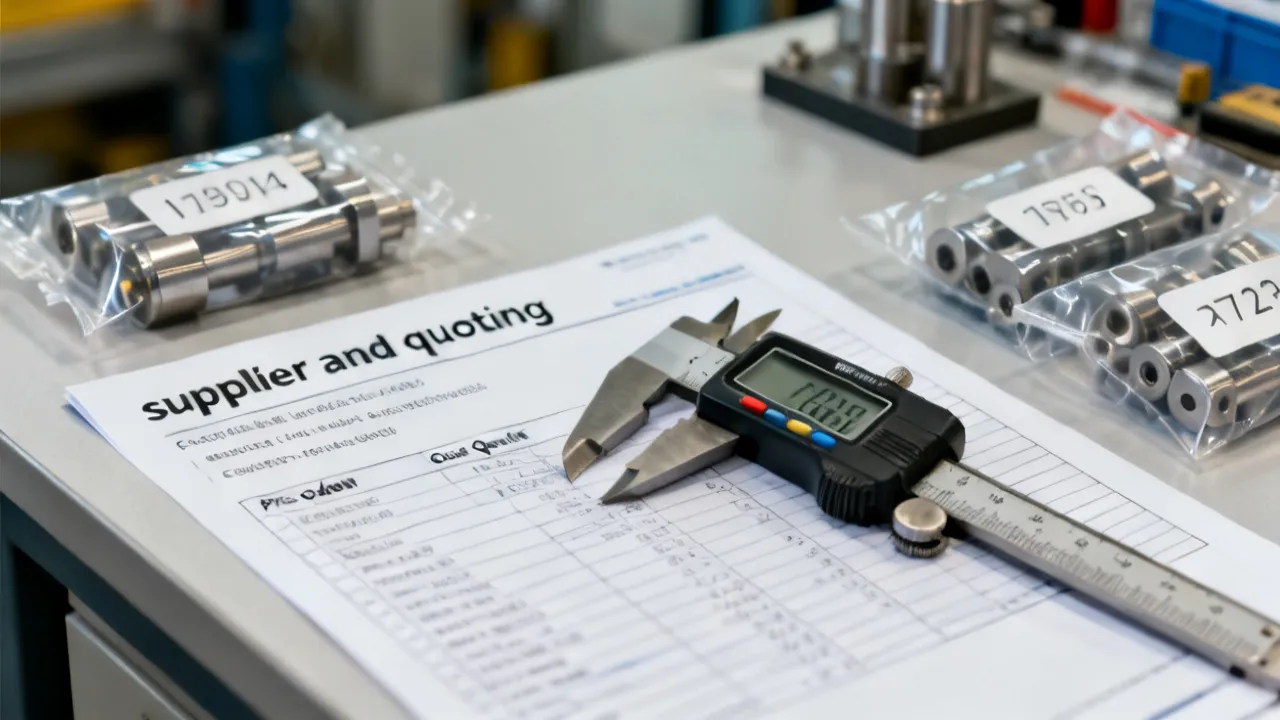
1) Key Takeaway: Treat “21979368133” as a procurement identifier, not just a number
When you encounter the keyword 21979368133 alongside supplier-related wording, the practical takeaway is straightforward: you’re likely looking at a part, SKU, or internal item code that should anchor every technical and commercial step. In other words, “21979368133” should guide which specifications are confirmed, which documents are requested, and how pricing is validated—so the quote you receive matches the exact item you intend to buy.
From an industry perspective, many procurement delays and costly rework cycles happen when a code is treated like a casual reference instead of a traceability key. A robust sourcing workflow uses that identifier to align: (1) the correct product variant, (2) the correct manufacturing revision, and (3) the correct commercial terms (unit price, lead time, Incoterms, and warranty/returns).
To be clear, treating it as an identifier is not about being pedantic; it’s about controlling uncertainty. In real supply chains, “almost the same” can still be wrong. Slight changes in material grade, dimensional tolerance bands, surface treatments, compliance labeling, or manufacturing revisions can cause downstream failure—ranging from simple receiving rejections to severe integration or regulatory problems. Therefore, 21979368133 should act as the “source of truth” connecting the technical definition to the commercial commitment.
Practically, this means your procurement process should ensure that every communication, every line item on the quotation, and every purchase order field references 21979368133 in a consistent manner. That includes: quotation line item descriptions, part number fields, drawings referenced, revision letters/numbers, packaging labels, and shipping documents (packing list, bill of lading/air waybill). When you do this, the supplier and your internal stakeholders (engineering, QA, warehouse, logistics, finance) share a single reference point rather than relying on ambiguous narratives.
2) What the “supplier/price/quote” keywords usually imply in procurement
The provided keywords include fragments that read like they belong to a sourcing and pricing context (for example, '' '' '' and other placeholder-style elements), plus 21979368133. Even without explicit product naming, this pattern is common:
- Supplier: the vendor or manufacturer responsible for production, documentation, and fulfillment.
- Price (or quote context): unit cost, possible tier pricing, and any conditions that affect total cost.
- Identifier code: 21979368133 as the “source of truth” for matching technical requirements.
Objectively, numeric identifiers in procurement documentation are widely used to reduce ambiguity. They help buyers and suppliers communicate unambiguously about the exact configuration being quoted, especially when multiple variants exist (dimensions, material, revision levels, or compliance attributes).
In many organizations, item codes carry embedded semantics—sometimes structured and sometimes arbitrary. They might reflect: customer-specific part numbers, supplier internal part families, catalog numbers, or code mappings used in ERP systems. Even if 21979368133 appears “just a number,” in a procurement workflow it usually behaves like a key in a relational system: it links what engineering specifies to what purchasing orders and what quality inspects.
Procurement teams often see the following real-world behaviors when quotes are tied to part numbers:
- Suppliers list multiple line items that share common words but differ by part number; 21979368133 tells you which one is intended.
- Suppliers provide “equivalent” items when they cannot supply the exact revision; 21979368133 helps your team detect whether an equivalent substitution was approved.
- Suppliers provide separate quotes for “documentation included” vs “documentation not included.” The line item description referencing 21979368133 should indicate whether the quoted scope includes certificates, test reports, inspection levels, or traceability packaging.
Because the keywords you provided suggest quotation language, your most important diligence step is to ensure that the supplier quote is not merely mentioning 21979368133 once somewhere, but actually uses it consistently across the quote line item, the associated documentation references, and the shipping/receiving artifacts.
3) The very critical step: align code, specification, and revision before you compare prices
Even if the quote appears competitive, price comparisons only make sense when the underlying item is truly the same. Industry teams typically confirm:
- Correct part identity linked to 21979368133.
- Revision level (manufacturing changes can affect form/fit/function).
- Material and tolerances (especially for precision components).
- Packaging and labeling (important for receiving inspection and traceability).
- Compliance documents when relevant (e.g., certifications or test reports).
Practically, you want your supplier to quote the same “thing” you intend to receive. When that alignment fails, even a small mismatch can create rejection risk, customs delays, and additional testing costs.
Revision mismatches are a frequent root cause of procurement problems. Consider scenarios such as:
- A drawing revision changed a tolerance on a critical dimension. The supplier might have older inventory; the quote might still reference the same “name” but the wrong revision.
- A material spec changed from one alloy grade to another due to availability. Function may be affected; certification documents might not match.
- A packaging standard changed (for example, unit vs bulk packing) affecting warehouse handling, count verification, and batch/lot traceability.
When 21979368133 is present, you should treat it as a link that must carry the revision information too. If the quote does not clearly state revision (or does not state it at all), that’s a red flag. In many procurement policies, the absence of revision and specification references is treated as “insufficient quote definition,” meaning purchasing cannot responsibly place the order without clarification.
One effective approach is to request a “specification package” tied to 21979368133: the supplier should provide or confirm the drawing number and revision they are building to, plus any quality documents that accompany that build. This converts a vague procurement conversation into an auditable mapping.
Another important nuance: different organizations may interpret “part identity” differently. For some, identity is the part number only; for others, identity includes the revision and the compliance evidence. In risk-sensitive sectors (medical, aerospace, energy, industrial controls, automotive tiered supply, and any heavily regulated environment), procurement and QA often require that revision and compliance artifacts match before acceptance.
4) How to evaluate quotes when the only firm anchor is “21979368133”
When sourcing is driven primarily by a numeric code such as 21979368133, the quote review should focus on clarity and completeness—not just the headline number. Consider these evaluation dimensions:
- Scope: What exactly is included? (services, inspections, documentation, packaging, installation accessories)
- Unit definition: per piece, per set, per meter, or per bulk pack?
- Lead time: production vs. off-the-shelf availability.
- Quality controls: acceptance criteria and test methodology.
- Warranty/returns: what happens if the delivered item fails inspection?
- Traceability support: batch/lot information, certificates, and serial labeling (where applicable).
From a procurement governance standpoint, the goal is to minimize “quote ambiguity.” A good supplier quote will allow an internal reviewer to verify that the delivered goods can meet your receiving and audit requirements.
If your internal team has access to an approved product record—like a standard bill of materials (BOM), a drawing library, or an ERP item master—then 21979368133 should match a record there. When it does, your evaluation is faster and more reliable because the “expected specs” are known.
If it doesn’t match, procurement should not “guess.” Instead, ask the supplier for cross-references: “What is your description for 21979368133? What revision are you quoting? Which drawing/datasheet revision corresponds to it?” Without this, you end up comparing apples to oranges while believing you are comparing like-for-like.
In many procurement workflows, the evaluation also includes assessing the quote’s internal consistency. For example:
- Does the line item description match the technical attributes in the attachment or datasheet?
- Does the quoted quantity align with packaging assumptions (e.g., cartons vs bags vs reels)?
- Do the delivery terms match the lead time language?
- Are there hidden conditions (e.g., “subject to availability” without dates, “documentation available upon request” without fees defined)?
Because 21979368133 is your anchor, you can use it to force the supplier to be explicit. If the quote includes general language without tying specifics to the coded item, ask follow-up questions referencing the code: “For item code 21979368133, confirm…” This reduces back-and-forth because it’s clear which line item the question affects.
5) Pricing considerations: what “price” can hide in real-world supply chains
Price is rarely just a number. Even in routine procurement, the final cost can depend on terms and practical constraints. Common factors include:
- Minimum order quantity (MOQ): may affect effective unit price.
- Shipping terms: costs shift depending on Incoterms.
- Documentation fees: certain certifications or inspection reports may add cost.
- Expedite charges: if you need faster delivery.
- Payment terms: net terms vs. upfront can affect operational cash flow.
Because you did not provide explicit prices or a named supplier, this guide focuses on the process used by procurement professionals to interpret pricing correctly. If you later provide specific unit costs or supplier identities, you can map them to these evaluation categories.
To make this actionable, it helps to think in terms of total cost of procurement, not just unit price. Even if 21979368133 is the exact same item, two suppliers may quote different scopes:
- Supplier A may include certificates and special packaging; Supplier B may quote a cheaper unit price but “documentation not included” and “standard packaging only.”
- Supplier A may have a higher unit cost but shorter lead time; Supplier B may be cheaper but require production slots with a longer schedule, potentially causing line stoppage costs downstream.
- Supplier A may provide inspection reports per your required standard; Supplier B may provide only a basic packing list.
So when you evaluate price tied to 21979368133, you should ask for a breakdown aligned with your internal cost accounting model. At minimum, try to separate:
- Material/production cost (what the supplier builds)
- Documentation/quality cost (what evidence they provide)
- Packaging cost (how they pack and label)
- Logistics cost (how they ship, where title passes, and who pays what)
- Risk cost (warranty coverage and remedies)
In well-run procurement organizations, these categories inform “best value” decisions. Sometimes the supplier with the lowest unit price is not the best value once you account for the cost of receiving inspection failures, rework, or additional compliance testing required due to insufficient documentation.
Another pricing nuance is currency and exchange risk. If you are comparing supplier quotes, ensure you know the currency and the exchange date basis. Also check whether pricing is locked or “subject to index changes” (common for commodities, logistics, or regulated materials). The presence of 21979368133 helps you ensure you’re comparing the same line item, but you still must compare economic assumptions.
6) Localization and “nearby” handling
No city or country placeholder appears in the keywords you provided in a usable way. If you later supply location-specific text, this guide is designed to substitute any occurrence of “{city}” or “{country}” with “nearby.” In practice, local sourcing language often correlates with expectations about faster lead times, easier returns, and regional documentation norms—but those assumptions should still be validated through the supplier’s quote terms and delivery commitments.
Even when the supplier claims “local” supply, your evaluation should still demand a concrete delivery timeline and documentation list. Localization can matter for:
- Customs and import time: local sourcing may reduce or eliminate customs delays.
- Return logistics: returns might be easier if the supplier is nearby.
- Communication speed: quicker responses can reduce procurement cycle time.
- Compliance documentation norms: documentation may be more familiar for your internal receiving and QA staff.
However, “nearby” does not automatically equal “better.” If the supplier is local but supplies different revisions, weaker acceptance remedies, or insufficient traceability documentation, the business risk can still be higher than a more distant but more disciplined supplier. Therefore, localization should be treated as a factor that can reduce operational friction, not as a substitute for technical and commercial alignment tied to 21979368133.
In practice, you might find that the supplier’s lead time statement is optimistic or conditional. For example, “ships within 3–5 days” may mean: “subject to inventory availability.” If 21979368133 is the item code, you should insist on: (1) a committed ship date, (2) a committed delivery date (or a clearly defined shipping schedule), and (3) a written remedy if dates slip (expedite options, cancellation terms, or credit/penalty structures—where applicable).
7) Comparison table: quote qualification checklist (no links)
| Category | What to verify for 21979368133 | Why it matters |
|---|---|---|
| Product identity | Exact match to the item code and revision connected to 21979368133. | Prevents receiving of an incompatible variant. |
| Specifications | Dimensions, materials, tolerances, and any required interfaces. | Ensures the part will pass inspection and function as intended. |
| Commercial terms | Unit price basis, MOQ, payment terms, Incoterms, and any added fees. | Determines the true landed cost. |
| Lead time & availability | Whether the item is stocked, made-to-order, or requires production slots. | Avoids missed schedules and expediting expenses. |
| Quality documentation | Test reports, certificates, inspection standards, and batch/lot labeling. | Improves audit readiness and traceability. |
| Acceptance & remedies | Return/replace policy, warranty scope, and failure criteria. | Reduces financial exposure from defects or nonconformance. |
To strengthen this table in practical use, consider adding a “verification evidence” requirement into your internal workflow. For each category, your team can define what counts as evidence. For example:
- Product identity evidence: supplier confirmation letter, quote line item fields showing 21979368133 plus revision, and alignment to your drawing revision.
- Specifications evidence: datasheet/drawing attachment with revision number, or a declared standard reference number.
- Commercial terms evidence: Incoterms and currency stated explicitly, plus MOQ and payment terms in the same quote.
- Lead time evidence: committed ship date and estimated delivery date (or an explicit shipping method with transit time).
- Quality documentation evidence: certificate types listed (e.g., CoC, CoA, test report categories) and whether they are included in price.
- Acceptance & remedies evidence: written return policy, warranty period duration, inspection failure handling process.
When this evidence is lacking, procurement can either (a) request clarifications before issuing a purchase order, or (b) incorporate terms into the purchase contract that protect your organization if the supplier fails to deliver according to 21979368133.
8) Step-by-step sourcing guide for supplier quotes tied to a code
Below is a practical workflow procurement teams use when a quote is linked to a code like 21979368133. Adjust the level of documentation depending on regulatory requirements and risk profile.
Step 1: Require the supplier to confirm item identity
- Ask the supplier to explicitly state that the quote corresponds to 21979368133.
- Request the part’s description, revision level, and any alternate references.
In practice, you want the supplier to answer in a structured way rather than a narrative. A strong response might include: “We are quoting item 21979368133, revision X. The description is … The drawing standard is …” If the supplier provides a response like “It’s the same part we quoted before,” that’s not sufficient—especially if you’re comparing multiple suppliers or if this is a new sourcing cycle.
Step 2: Request the specification package
- Obtain datasheets/drawings/specifications that correspond to that revision.
- If applicable, request tolerance charts, material composition, and surface treatment details.
Specification “package” means more than one PDF attachment. Depending on the item, you may need drawings, material declarations, manufacturing process notes (for special treatments), and any quality plans that define what tests are run. For precision components, even the manufacturing process can matter because it impacts consistency. If the item is controlled under an engineering change process, the drawing revision number should align with 21979368133.
If your internal organization uses engineering change orders (ECOs), procurement should ensure that the purchase order points to the correct ECO-approved revision. Otherwise, you can end up paying for a technical configuration that is out of date.
Step 3: Clarify pricing structure
- Confirm what the quoted unit price covers (parts only vs. parts + documentation + packaging).
- Ask whether MOQ or quantity tiers apply.
- Request a line-item quote where possible to understand cost drivers.
Line-item pricing can be especially useful when you suspect that lower-cost quotes omit documentation or include weaker acceptance terms. For example, a supplier might quote the same part number 21979368133 but with different scope of CoC/test reports. If the quote scope changes the true “delivered compliance,” then unit price alone is not a fair comparison.
Also verify whether pricing is fixed or subject to conditions like exchange rate changes, raw material price indexes, or logistics surcharges. If those conditions exist, ask for how they will be calculated and when the adjustment triggers.
Step 4: Validate lead time assumptions
- Ask for a date commitment: production lead time or shipment lead time.
- Confirm what happens if production schedules slip (notice requirements, penalties, or replacement options).
Lead time ambiguity often causes procurement exceptions. For example, “estimated lead time” is not the same as “committed lead time.” A good quote should specify the manufacturing status: in-stock, ready to ship, or made-to-order with a production schedule. When the item is tied to 21979368133, you should also confirm whether the revision is already built or whether the supplier needs to run a new production lot.
If your operation cannot tolerate schedule risk, ask about the possibility of: (1) partial shipments, (2) component substitution under formal change control, or (3) expediting. Ensure any expedite costs and conditions are written into the agreement.
Step 5: Confirm quality control and acceptance criteria
- Request inspection plans or acceptance standards.
- Define how you will inspect on receipt and what evidence the supplier will provide.
This step is where procurement and quality assurance align. It’s not enough to ask “do you have quality documents?” You want to specify acceptance criteria: what dimensions must be within tolerance, what test reports are required, and what test methods are used. If your organization performs receiving inspection, align the supplier’s declared evidence with your inspection checklist so you’re not duplicating or failing due to missing documentation.
For items with regulated compliance, acceptance criteria might include conformity to standards, pass/fail limits, and evidence that the evidence corresponds to the correct lot or batch. In that case, traceability documents must reference 21979368133 and the batch/lot identifiers.
Step 6: Ensure documentation and traceability
- Confirm batch/lot labeling practices.
- Ask for the certificates or test reports that match the quoted items.
- Ensure the documentation identifiers align with 21979368133.
Traceability is often the difference between an easy receiving process and a painful quarantine. A robust traceability setup includes: lot numbers on labels, documents that map to the lot, and packaging that supports receiving verification. When 21979368133 is involved, you should ensure the documentation references the same item code and revision.
Ask whether certificates are issued per lot, per shipment, or per batch run. If a certificate is issued per production run but the shipment contains multiple lots, your receiving process needs to handle that correctly. The goal is to prevent the situation where you have documents that don’t correspond to what you received.
Step 7: Negotiate terms based on risk
- For higher-risk items, prioritize stronger acceptance remedies and clearer return conditions.
- For lower-risk categories, focus on lead time certainty and documentation sufficiency.
Risk-based negotiation means you don’t apply a single generic template to every procurement. If 21979368133 corresponds to an item that can affect safety, reliability, or compliance, negotiate stronger remedies. This can include: replacement at no cost, return with full credit, warranty extension terms, or explicit nonconformance processes (including who pays for inspections and shipping).
For lower-risk items, you might accept lighter remedies as long as documentation sufficiency is adequate and lead time is reliable. The key is: choose the contract intensity based on the real consequences of nonconformance.
Step 8: Record the decision rationale
- Document why the supplier was selected and how 21979368133 was verified.
- Store the quote, specifications, and acceptance criteria as part of your procurement record.
Decision rationale matters for audits and for future troubleshooting. If later there is a complaint, a quality issue, or a supply dispute, your organization needs to know why it selected that supplier and what assumptions were accepted. Recording how 21979368133 was verified helps you avoid blaming the wrong process later.
From a governance standpoint, procurement records often serve multiple stakeholders: internal audit teams, quality management, legal/compliance, and finance. The more consistent and evidence-based your documentation is, the easier it becomes to defend the procurement decision.
9) Conditions and requirements to include before ordering
To prevent misalignment, procurement teams typically include the following conditions/requirements when placing an order for a coded item like 21979368133:
- Specification lock: confirm the drawing/revision or the exact documented standard referenced by the supplier.
- Quality evidence: specify what documents accompany shipment.
- Acceptance criteria: define inspection outcomes that trigger replacement or returns.
- Packaging and labeling: require batch/lot traceability labels when relevant.
- Delivery commitment: clarify shipment date vs. delivery date and the responsibilities for delays.
- Commercial clarity: prevent hidden fees by requiring a transparent quote breakdown where possible.
To make these conditions operational, you should translate them into purchase order fields and contract language. For example:
- Specification lock: include drawing number and revision in the PO line item text for the 21979368133 code.
- Quality evidence: list required documents (CoC, CoA, test report types, inspection certificate) and indicate whether they are included at no additional cost.
- Acceptance criteria: reference your internal inspection plan or define pass/fail thresholds.
- Packaging and labeling: specify labeling format (lot number format, label placement rules) and packaging units.
- Delivery commitment: define “ship by” date and “deliver by” date (if needed), plus responsibilities for delays.
- Commercial clarity: ensure incoterms and shipping method are specified, and clarify surcharge policies.
Also consider the “change control” clause. If the supplier is permitted to make substitutions (material changes, manufacturing process changes, or revision changes), you should require that they notify you and obtain approval before shipping. For a coded item like 21979368133, it is especially important to prevent silent substitutions that still “fit” superficially but break spec requirements.
Finally, include a clause about “document traceability alignment.” If certificates do not reference the correct lot or 21979368133 revision, your receiving process should treat the documentation as nonconforming. That protects you from receiving paperwork that doesn’t actually support what you received.
10) Industry perspective: why this approach is considered “top practice”
In professional procurement environments, the discipline is not about buying “the low price quote,” but about controlling uncertainty. Treating a code like 21979368133 as an enforceable link between product identity and commercial terms reduces the chance that different revisions or similar-but-not-identical parts get conflated.
From a quality management perspective, many organizations adopt documented supplier qualification and receiving inspection routines precisely because it is difficult to catch every defect at the last minute. By requesting specifications and evidence early—before purchase order issuance—you shift risk upstream to where it is easier to verify.
For reference on general quality and supplier management concepts, ISO 9001-style quality management principles are widely used as a baseline framework in industry. For broader supply chain risk concepts, frameworks from organizations such as the World Economic Forum and industry bodies often stress visibility, documentation, and governance in sourcing decisions (see: ISO 9001 and supply-chain risk guidance from recognized institutions). Your specific documentation requirements should follow your internal quality system and any regulatory obligations relevant to your sector.
What “top practice” really means operationally is that the procurement team builds a process that is repeatable and auditable:
- Repeatable: every quote request follows the same code-based structure—confirm identity, request spec package, clarify scope, define acceptance, and document traceability.
- Auditable: internal records show how 21979368133 was validated, what revision was expected, and what evidence the supplier promised.
- Risk-aware: the level of documentation and contract strictness scales with the criticality of the item.
This approach helps both buyers and suppliers. Suppliers benefit because they receive clearer requirements, which reduces misunderstandings and rework. Buyers benefit because it becomes harder for ambiguous quotes to pass through as “good enough.” In many organizations, this ultimately reduces cost of quality and accelerates the time-to-receipt because receiving is less likely to trigger holds or re-inspections.
It’s also worth addressing a common misconception: that procurement’s role is primarily financial. In reality, procurement is a boundary function between money and engineering/quality. When the code 21979368133 is present, procurement’s job includes ensuring that engineering requirements become enforceable purchase order constraints and that QA requirements become contractual deliverables.
11) FAQs
Q1: What does “21979368133” likely represent?
In very procurement contexts, a numeric code like 21979368133 functions as a part identifier—often a SKU, internal item code, or procurement reference—used to ensure traceability and correct configuration matching.
Because codes can represent different things depending on the organization, the best way to confirm is to ask the supplier (and/or check your internal item master) for the description and revision associated with 21979368133. The goal is to confirm whether it’s a manufacturing part number, a buyer’s part number, or a catalog SKU that maps to a specific technical configuration.
Q2: How can I compare two supplier quotes accurately if descriptions are vague?
Ask both suppliers to confirm: (1) product description tied to 21979368133, (2) revision level, and (3) specification package. If the suppliers cannot provide this alignment, the quotes cannot be reliably compared beyond superficial pricing.
When descriptions are vague, do not rely on “close enough” language. Instead, require evidence such as drawings/datasheets with revision numbers, and request the scope of documentation included. If Supplier A and Supplier B both quote 21979368133 but include different documentation scope (e.g., certificates vs. inspection reports), then the correct comparison includes the cost and time implications of that difference.
Additionally, compare lead times and delivery terms. If both quotes include the same technical specification but Supplier A has a longer lead time or different Incoterms, the “cheaper” quote may still be more expensive once you calculate landed cost and schedule risk.
Q3: Should I focus on unit price or total landed cost?
Industry practice favors total landed cost and total procurement cost of quality. Unit price matters, but documentation fees, shipping terms, MOQ impacts, and rework/inspection outcomes can change the true economic result.
A helpful procurement rule is: compare delivered value, not only quoted value. For an item tied to 21979368133, “delivered value” includes: correct revision, documentation that supports receiving, packaging suitable for count/traceability, and acceptance remedies if the item fails your inspection.
Q4: What documents should I request for traceability?
Common examples include certificates of conformity, test/inspection reports, and batch/lot identification information. The exact set depends on your quality requirements and the nature of the item referenced by 21979368133.
Think of documentation in two categories: (1) evidence of conformity (what the item meets), and (2) evidence of identity (what the item is, including revision and lot). Traceability relies on both categories. If you only receive evidence of conformity but it doesn’t map to the batch or to 21979368133 revision, your traceability is incomplete and may still trigger receiving holds.
Q5: What if the supplier offers a “nearby” equivalent instead of the exact code?
Equivalents can be acceptable only if they meet your specified form/fit/function requirements and your quality system approval criteria. Ask for a formal substitution rationale and evidence that the revision and specification differences do not affect your intended application.
In many procurement and quality systems, substitutions require formal approval (sometimes called change control or waiver). A supplier offering an equivalent without providing a structured substitution justification is a risk. You should also clarify whether the supplier expects you to accept it as a deviation, and what evidence they provide to demonstrate equivalence.
Even if the supplier claims equivalence, you should still align documentation to the correct coded item. If you order using 21979368133 but receive a different configuration, your receiving inspection should catch it—provided your inspection checklist includes revision and document mapping checks.
Q6: How do I reduce the risk of receiving the wrong revision?
Require a revision level in writing, request the specification package tied to that revision, and ensure delivery documentation references the same identifier associated with 21979368133. Then align your receiving inspection checklist to those documents.
Concretely, you can reduce risk by including revision numbers in the PO line item text and by requiring the supplier’s packing list and certificate documents to reference the same revision. During receiving, staff should compare the delivered labeling and the documentation revision to what was ordered. If they do not match, treat it as a nonconformance and follow your defined procedure.
Another method is to use pre-shipment verification (PSV) or a final inspection certificate before shipment. While not always required, PSV can significantly reduce the probability of receiving a wrong revision for critical items.
Q7: Can a lower quote be correct?
Yes, but only if it corresponds to the same item identity and scope. A lower price can reflect different lead times, less documentation, different packaging requirements, or weaker acceptance remedies—so you must verify alignment first.
Procurement teams often apply a structured scoring method when multiple suppliers quote the same code 21979368133. In that model, the lowest unit price only “wins” if the scope and terms are comparable. Otherwise, the quote with a slightly higher price but complete scope and stronger remedies may represent better value when you consider inspection and compliance costs.
12) Conclusion: Use code-first governance to make quotes actionable
When your sourcing process centers on 21979368133 and supplier/price quote context, the strongest professional approach is “code-first governance”: confirm identity and revision, verify specifications, clarify commercial terms, and document acceptance requirements. This method turns a supplier quote from a marketing document into a measurable commitment that your team can evaluate, order against, and inspect upon receipt.
If you share the missing elements (for example, the product category, any stated price, and the supplier’s location or “nearby” context), I can tailor the checklist and comparison criteria to your scenario while keeping the evaluation objective and evidence-based.
Ultimately, the goal is not simply to buy. The goal is to buy correctly, on time, with the right evidence, and with enforceable remedies if the item fails. Treating 21979368133 as an identifier that must remain consistent across technical specifications, commercial terms, and traceability documentation is one of the most reliable ways to achieve that outcome.
And when you do it consistently, you create a virtuous cycle: fewer purchasing exceptions, fewer receiving holds, fewer supplier disputes, and faster resolution when something goes wrong. In supply chain terms, the best procurement systems reduce waste—whether that waste shows up as expediting costs, rework, scrap, audit findings, or delayed production. Code-first governance is a practical lever for reducing that waste because it forces clarity upfront.
-
1

A Guide to Cost-Efficient Small Electric Cars for Seniors
-
2
Mastering Debt Consolidation: Boost Your Credit Score and Manage Interest Rates
-
3
Your Guide to Loans, Credit Checks, and Interest Rates
-
4
Affordable Independent Living: Finding the Right Senior Housing
-
5
Guide to Senior Living Apartments: Affordable and Comfortable Environments