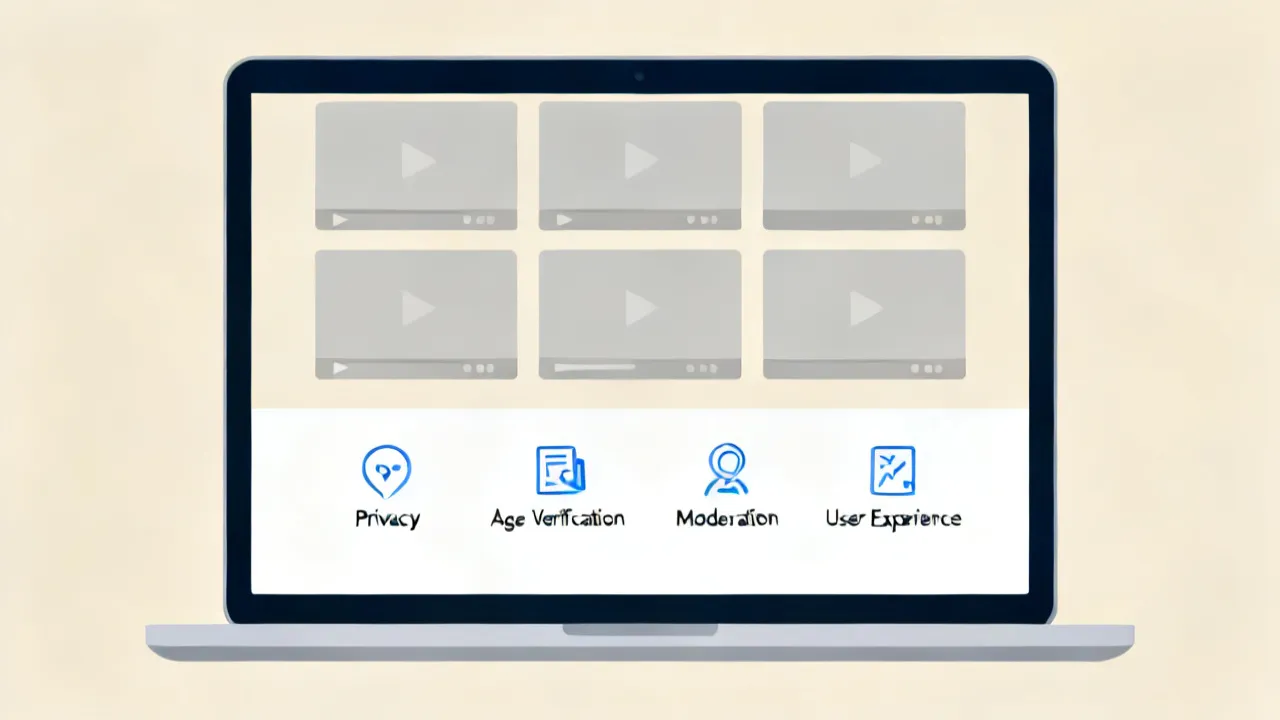
Understanding X.videos and Modern Video Distribution
This guide explains how X.videos fits into today’s online video distribution ecosystem, focusing on sourcing, compliance, and audience-safe workflows. Objectively, it reviews how platforms typically handle hosting, playback, and rights management, then outlines practical criteria for selecting suppliers and maintaining quality, safety, and legal alignment across the content lifecycle.

Why X.videos Matters in Modern Online Video Distribution
X.videos is frequently discussed in the context of online video hosting, indexing, and distribution workflows—where technical delivery, content governance, and supplier reliability all influence what viewers actually experience. For organizations and creators evaluating how video reaches audiences, the very important considerations are: (1) how the video is served and protected, (2) how rights and access rules are enforced, and (3) whether the supplier and delivery chain support consistent playback quality.
From an industry perspective, “video distribution” is not a single activity. It is an end-to-end system that spans encoding, storage, delivery (often via CDNs), metadata, analytics, and policy enforcement. When these elements are handled well, platforms and partners can reduce playback failures, avoid avoidable moderation incidents, and improve operational predictability. When they’re handled poorly, issues show up as buffering, inconsistent availability, unstable thumbnails, or compliance risk.
In modern online video distribution, “it plays on my machine” is not an acceptance criterion. Playback success depends on codecs and container formats, streaming packaging, bitrate ladders, segment availability, player compatibility, tokenization for protected assets, and regional CDN behavior. It also depends on whether governance actions (e.g., takedowns or access revocations) propagate quickly enough to prevent unauthorized views and to minimize user-visible errors. This is why discussions around X.videos-style services often focus less on hype and more on operational reality: reliability under load, correctness under policy constraints, and clarity during incidents.
Even for organizations that do not brand themselves around a single tool called “X.videos,” the concerns commonly addressed by such services are universal. A creator wants stable delivery across devices. A publisher wants catalog discoverability and consistent thumbnails. A legal or compliance team wants rights records, audit trails, and a workflow that can produce evidence. An engineering team wants predictable integration, observability, and clear failure modes. All of those needs converge in the distribution layer.
Key Concepts: What “X.videos” Usually Signals
Although specific implementations vary by provider, X.videos commonly relates to one or more of the following operational areas:
- Video hosting and playback delivery: How files are stored and served to users, including the role of caching and adaptive bitrate streaming.
- Cataloging and discoverability: How video titles, descriptions, thumbnails, tags, and categories are processed for browsing and search.
- Workflow integration: How creators, editors, or content teams submit assets through APIs or upload pipelines.
- Policy and rights handling: How access restrictions, takedown processes, and permissions are managed through rules and records.
- Measurement and governance: How viewing metrics and content status logs are tracked for operations and compliance.
In practice, these elements form a chain: if the supplier’s ingestion process is inconsistent, the distribution layer can inherit quality and rights problems downstream. For example, if the ingest pipeline does not reliably extract metadata, the indexing layer may produce incorrect titles and tags, leading to poor discoverability. If the rights workflow is decoupled from the asset lifecycle, a takedown might revoke access to the original file but not to derived thumbnails or preview clips. If the delivery layer uses an encoding strategy that lacks robust fallback bitrates, users on different networks could experience frequent buffering or playback errors, leading to churn and brand damage.
It also matters how each stage communicates. A robust distribution platform typically exposes signals such as job status (upload complete, encoding finished, packaging done), health metrics (segment retrieval errors, startup time distribution), and governance states (active, restricted, removed, pending review). When those signals are missing or ambiguous, teams must rely on manual checks—an approach that does not scale.
Price Considerations: What Usually Drives Cost (Without Guesswork)
When teams ask about price in relation to video distribution or X.videos-style services, costs are typically influenced by variables such as:
- Storage duration and media size: Larger files or longer retention increases storage and operational handling.
- Delivery volume: Costs may scale with bandwidth, number of streams, or peak usage patterns.
- Encoding and transformation: Premium encoding presets, multi-bitrate ladders, or specialized processing increase compute requirements.
- Support and SLA scope: Higher-tier operational support and service-level guarantees can raise fees.
- Governance features: Rights workflow tooling, moderation support, audit logs, compliance automation can add to the price.
Because pricing depends on contract scope and usage patterns, the very reliable approach is to request a formal quote that breaks down assumptions (e.g., average monthly streams, target geographies, and retention requirements). That keeps budgeting aligned with actual workload rather than marketing expectations.
To reduce budget risk, teams should ask vendors to model at least three scenarios—often called conservative, expected, and peak—because video usage is rarely linear. A viral clip can multiply concurrent streams within hours. A rights dispute can increase operational workload regardless of view count because takedown actions, audit queries, and re-encoding requests can happen after the fact. A regional rollout can alter delivery cost if the CDN needs different caching behavior. A pricing plan should explain how these events affect cost, not just “normal traffic.”
Cost estimation is also shaped by engineering decisions. If you require a larger set of renditions (e.g., more bitrates or higher resolutions), you will increase both storage and processing cost. If you use longer segment durations for streaming efficiency, you may impact seek behavior. If you require DRM integration, tokenization, or watermarking, you may increase operational complexity and potentially add fees. These are normal trade-offs, but they must be surfaced in the quote.
Finally, pricing should be considered alongside operational risk. A cheaper supplier that lacks reliable governance tooling might force your internal team to perform manual checks or accept higher compliance exposure. A slightly higher fee for better audit trails and faster incident response can be cheaper overall when measured in reduced legal risk and fewer engineering hours spent on firefighting.
Supplier Evaluation: How to Assess Reliability and Risk
The supplier side of any X.videos-related arrangement is where many operational risks appear. A supplier should be evaluated on practical, verifiable criteria—especially if you handle user-generated content, paid access tiers, or licensed material.
Reliability is more than uptime. A platform can be “up” while still failing at the user-experience layer: thumbnails not matching the correct timestamp, metadata indexing delayed and causing search inconsistencies, or playback working for some geographies but failing for others due to CDN configuration. Risk includes governance failure modes such as delayed takedown propagation, inability to produce audit evidence, or missing retention controls for deletion requests. When the supplier’s process is unclear, these risks materialize at the worst time—during content disputes or high-traffic events.
Because these issues are technical and procedural, your evaluation should combine documentation review, test-based validation, and operational scenario walkthroughs. A vendor might claim their system supports DRM and audit logs, but you need to see how those features are delivered in practice: what data is recorded, where it’s stored, how quickly it becomes available, and what the workflow looks like for a real takedown event.
If your organization has specific compliance requirements (e.g., public takedown notices, retention of proof for claims, or stricter deletion obligations for user content), ask how the supplier aligns with them. Even if the supplier does not guarantee legal outcomes (because legal standards are complex), a well-prepared vendor can describe how their systems support compliance operations with clear evidence and controllable workflows.
Industry Expert Checklist: Supplier Due Diligence
- Delivery architecture transparency: Ask how the system handles streaming formats, transcoding, and CDN distribution. Clarify whether they use adaptive streaming (and which packaging) and how they handle segment availability during cache invalidation.
- Content governance: Confirm how takedowns are processed, what metadata is retained, and how audit trails are preserved. Also ask whether governance actions affect derived assets such as thumbnails, preview files, and transcodes.
- Rights documentation: Determine whether the workflow supports license records, attribution rules, and access constraints. Ask how they model rights at the asset level vs. the channel or user level, and how changes propagate.
- Quality controls: Verify pre-publish validation (e.g., codec compliance, audio loudness checks, thumbnail checks). Discuss how they handle failure: do they block publish automatically, quarantine the asset, or allow partial ingestion?
- Operational responsiveness: Review incident handling and escalation paths; ensure there is a defined support window. Ask what happens when you need urgent takedown or emergency access revocation—are there priority workflows?
- Security baseline: Require statements on encryption in transit and at rest, access control, and logging. Also ask about key management, token lifespan, and whether access logs are accessible for audits.
- Observability and reporting: Confirm what metrics are available to your team (playback errors, startup time, rebuffer events, segment fetch errors, job failure rates). Ask whether dashboards and exports exist.
- Integration ergonomics: Evaluate API quality, webhook reliability, idempotency behavior, rate limiting, and support for retries. Integration pain often shows up only after you process hundreds or thousands of uploads.
- Backward compatibility: If you rely on specific upload formats or metadata fields, ask how the supplier handles deprecations. Sudden breaking changes can impact your pipelines.
- Data ownership and portability: Confirm what data you own, what you can export, and how you retrieve it if you end the contract. For governance, audit and rights records need a clear retention approach you control.
This is less about “trust me” assurances and more about how the supplier proves capabilities through documentation and testable behaviors. Your evaluation should prioritize supplier answers that include evidence: sample reports, example audit logs, API documentation, and results from test campaigns.
When vendors do not provide adequate documentation, it can still be workable for small projects, but it should be treated as elevated risk for any platform that handles licensed content or UGC at scale. In these cases, the cost of a governance mistake can exceed the savings of a cheaper vendor.
Localization and Audience Context (“nearby”)
In markets where viewing behavior is influenced by regional connectivity and consumer habits, localization matters. Even if you are not tied to a specific country, teams often operate with assumptions about “nearby” audiences—what devices they use, typical network conditions, and common expectations for playback reliability. For example, audiences with mobile-first habits often prefer stable adaptive streaming and quick start times. For “nearby” communities, providing consistent language metadata and clear content categorization can reduce friction in discovery.
Localization in video distribution goes beyond translating titles and descriptions. It includes:
- Encoding and performance targets: Certain regions may have more variable network conditions; you may need a different bitrate ladder or startup behavior tuning.
- Subtitle and caption handling: If you support multiple languages, you need workflows for caption file validation, synchronization, and rights alignment for caption content.
- Thumbnails and cultural context: The thumbnail strategy may differ (e.g., safe-area framing, aspect ratio preferences, or avoiding text overlays that are hard to localize).
- Metadata language: Search indexing can be language-specific; wrong encoding of characters or inconsistent language tagging reduces discoverability.
Operationally, localization also affects policy workflows: what moderation rules apply, how consent and attribution are documented, and how user communication is handled in local language. These factors should be defined during vendor selection and reflected in the supplier’s process documentation.
“Nearby” audiences can also create regional variations in CDN caching effectiveness. If a supplier’s CDN strategy does not cache properly in the region you care about, users could experience repeated segment re-fetching from origin, increasing latency. This can cause playback startup delays and buffering, which may not be obvious during a small pilot. You should test with representative network and device profiles, ideally during a time window that resembles real usage.
In addition, localized operations sometimes involve local regulations or content category labeling differences. A supplier should support flexible metadata schemas and policy triggers so you can maintain consistent classification and reporting across markets.
What to Expect in a Typical X.videos-Style Workflow
Very modern video distribution systems follow a pattern similar to the one below. While implementations differ, the logic remains stable across providers.
- Ingest: Video files are uploaded or ingested via a pipeline. This step should include acceptance checks for file integrity, size limits, and allowed formats.
- Validate: The system checks codec integrity, duration limits, and metadata completeness. Ideally, validation results are explicit and machine-readable so the pipeline can respond automatically.
- Transcode / Prepare: Assets are encoded into streaming-friendly formats and sizes. The system may generate multiple renditions, package segments, and ensure consistent keyframe spacing for smooth seeking.
- Thumbnail and metadata processing: Thumbnail generation and metadata indexing occur. Thumbnail selection logic (e.g., time offset selection, safe frame cropping) should be deterministic or configurable.
- Publish and serve: The video becomes available through a player and is served via the delivery network. Playback should support adaptive bitrate and fallback mechanisms.
- Monitor: Playback health and operational metrics are logged to detect failures and quality drift. This includes error rates, job failure rates, and segment retrieval issues.
- Govern and update: If rights or policy changes occur, the content status is updated and actions are recorded. This includes access revocation, takedown propagation, and re-enablement workflows where relevant.
The strongest supplier relationships are the ones where each step has documented ownership: what the supplier does, what the customer does, and what happens when issues occur. For instance, if encoding fails, does the supplier re-try automatically, does it require a new upload from your side, and how is failure reported?
Also consider “hidden” steps that can matter operationally:
- Normalization of metadata: Ensuring titles, tags, and descriptions follow format constraints (length, character sets, profanity filtering policies).
- Provenance tracking: Recording who uploaded the asset, from where, and under which rights context.
- Versioning and reprocessing: If you update rights information or re-encode with new settings, does the supplier track versions cleanly?
- Cache invalidation and propagation timing: When governance actions occur, how quickly do you expect user-visible changes?
Workflow maturity is visible in how these details are handled. A system that “works” in a simple case might not handle re-encoding or rights changes without manual intervention.
Comparison Table: Choosing a Supplier for Video Distribution
The following comparison table focuses on decision criteria you can apply when evaluating suppliers for X.videos-style video distribution. It is written as a neutral framework rather than an endorsement of any single provider.
| Evaluation Area | What to Look For | Why It Matters |
|---|---|---|
| Delivery Performance | Adaptive streaming support, clear encoding settings, and documented caching strategy | Reduces buffering and playback variability for “nearby” audiences |
| Governance & Rights | Takedown workflow, audit logs, and retention of rights metadata | Supports safer compliance operations |
| Operational Support | Defined incident response process, escalation paths, and SLA scope | Improves predictability during outages or content disputes |
| Quality Assurance | Pre-publish validation and post-upload playback checks | Limits broken uploads and inconsistent viewer experiences |
| Security & Access | Encryption, role-based access controls, and access logging | Protects content assets and reduces unauthorized exposure risk |
| Pricing Transparency | Clear assumptions about storage, delivery volume, and support tier | Prevents budget surprises and improves forecasting accuracy |
When you use this table in practice, do not treat each row as a checkbox. Instead, score vendors on how well they document each area and how easily you can test it. For example, delivery performance is not just “supports adaptive streaming,” but also how they validate rendition correctness, how they monitor playback health, and how they handle regional spikes.
Similarly, governance is not just “has takedown,” but also how fast takedown propagates, what evidence is retained, and whether takedowns cover all derived assets. Security is not only encryption, but also key management, token lifespan, audit log accessibility, and access revocation behavior.
Source Orientation: Where Industry Guidance Commonly Comes From
For objective framing, video distribution and governance practices are often aligned with widely used standards and industry guidance. For example:
- Streaming and packaging practices: Guidance commonly draws on established multimedia standards and CDN streaming top practices.
- Privacy and compliance expectations: Many governance patterns map to privacy and platform policy obligations discussed by recognized regulators and standards bodies.
- Security expectations: Security baselines are typically aligned with common cloud security controls and enterprise access management patterns.
When you evaluate a supplier, ask them to state which standards or frameworks their implementation aligns with. If they cannot provide clear documentation, that gap is itself a risk signal.
It also helps to ask how the supplier handles evidence for compliance. For instance, if a regulator or rights holder requests documentation, you may need timestamped audit logs showing when an item was restricted and why. The supplier should clarify whether logs are exportable, immutable (or tamper-evident), and how long they are retained. Even if your legal team ultimately determines compliance, you need the operational capability to produce the requested evidence.
In video distribution, evidence matters because disputes can be technical as well as legal. A rights claim may depend on showing the exact asset version served, at what time, to which region or audience segment. If your system cannot correlate served renditions with rights metadata, you may face long investigation cycles.
Step-by-Step Guide: Selecting the Right Approach for X.videos
Use the following step-by-step guide to structure your evaluation. The goal is to avoid guesswork and ensure the chosen workflow supports your quality and governance requirements.
- Define your content type: Determine whether your catalog includes licensed material, user-generated uploads, internal media, or special categories like live events. This changes rights and moderation requirements.
- Set viewer experience targets: Identify your primary devices and typical network conditions in your “nearby” market. Translate this into encoding and delivery requirements, such as bitrate ladder coverage and expected startup time.
- Clarify access rules: Specify whether content is public, restricted by account, region-limited (if applicable), or available by subscription tier. Also specify how quickly changes should take effect for blocked content.
- Request a pricing model with assumptions: Ask for a quote that explicitly states how storage, delivery, support, and governance features affect total cost. Request modeling for expected and peak traffic, not only average usage.
- Evaluate supplier governance capabilities: Confirm audit trails, takedown workflow, metadata retention, and escalation handling. Ask to see example audit log entries and example policy events with timestamps.
- Run a controlled pilot: Upload a small set of representative videos and test playback stability, thumbnail behavior, metadata accuracy, and policy actions. Include edge cases: unusual aspect ratios, high motion, short clips, long-form content, and unusual audio loudness.
- Review incident response: Conduct tabletop scenarios (e.g., a video needs removal, an encoding job fails, or playback degrades in a region). Confirm which team resolves what, what tools they use, and what communications occur.
- Finalize operational ownership: Document responsibilities for ingestion, moderation triggers, rights updates, and customer communications. Define an escalation tree and response times.
A strong selection process also includes integration testing with realistic failure modes. For example, verify what happens if an upload request times out, whether your pipeline can safely retry, and whether the supplier can prevent duplicate ingestion. Verify that webhooks or status callbacks are reliable and idempotent, because a single duplicate publish could create policy exposure.
In addition, consider end-to-end performance. It’s possible for encoding to succeed while playback fails due to packaging errors, missing segments, or incorrect manifest generation. Your pilot should include playback on multiple browsers and devices, and it should validate that the player you use works correctly with the supplier’s manifests.
Conditions and Requirements to Confirm Before Signing
To reduce operational surprises, confirm these requirements with your supplier:
- Minimum metadata fields: Ensure titles, descriptions, categories, and tags meet your platform standards. Confirm the character encoding behavior and length limits, and ask whether the supplier validates metadata at ingest time or publish time.
- Rights workflow definitions: Confirm who records rights, who executes enforcement actions, and what evidence is retained. Clarify whether rights are stored as references to external license systems or as embedded metadata.
- Retention and deletion policy: Clarify how long assets and logs are kept and how deletion requests are handled. Ask about deletion timelines and how derived assets (thumbnails, previews) are treated.
- Quality reporting: Confirm what playback health indicators are available to your team. Define success criteria (e.g., error rate thresholds, startup time distribution, job failure rate limits).
- Security controls: Verify encryption, access controls, and logging policies in plain language. Ask how token revocation works and how quickly blocked access is enforced.
- Support escalation: Ensure the escalation path exists for both technical and governance incidents. Ask for examples of past incidents and post-incident reports if available.
- API and webhook behavior: Confirm rate limits, retry guidance, idempotency rules, and how the supplier avoids duplicate processing during network interruptions.
When requirements are expressed clearly, you can build internal runbooks and reduce uncertainty. Many issues come from mismatch between what your team assumes and what the supplier actually does by default.
It’s also helpful to include these requirements in a pilot success criteria document. If a vendor cannot meet agreed thresholds during the pilot, it is easier to renegotiate or stop than if problems are discovered after a broader rollout.
Common Challenges When Teams Use Video Distribution Services
In real deployments, teams commonly encounter the following challenges. Knowing them upfront helps you ask better questions.
- Inconsistent playback across devices: Usually caused by encoding mismatches, incomplete transcoding, incorrect player configuration, or unsupported manifest variations. It can also stem from differences in how players handle codecs or audio tracks.
- Metadata drift: When tags and categories are not validated, search and discovery performance can degrade. Metadata drift can be caused by inconsistent ingestion mapping, inconsistent language handling, or delayed indexing.
- Ambiguous rights records: If the rights workflow is not tied to assets and metadata, takedown processes become slow and uncertain. Another issue is when derived assets are not included in the rights enforcement model.
- Operational bottlenecks: If supplier SLAs are unclear, teams experience delays during urgent content disputes. Bottlenecks also occur when governance actions require manual steps.
- Unclear cost forecasting: Without explicit pricing assumptions, delivery volume can distort budgets. Costs can also rise if your pipeline generates too many renditions or retains assets and logs longer than needed.
Beyond these common challenges, additional real-world issues often appear once teams scale:
- Queue backlogs during spikes: When uploads increase suddenly, encoding jobs can queue and create delays in publish availability. Without clear job status reporting and retry policies, teams cannot manage user expectations.
- Quality regressions after updates: Changes to encoding presets, segment duration, or packaging logic can inadvertently affect playback performance. A good supplier communicates changes and supports controlled rollouts.
- Discrepancies between what’s indexed and what’s served: The catalog might show one thumbnail or title version while the served video corresponds to another. This is especially problematic when rights or content versioning changes occur.
- Localization mismatches: Titles and captions might be translated differently than metadata fields used for search, leading to poor discovery.
- Audit log gaps: Teams might not be able to prove what happened during a takedown. This typically happens when logs are not retained, not exportable, or not linked to content identifiers.
Addressing these issues early requires structured pilot testing and clear governance and integration documentation.
Expanded Industry Considerations: Adaptive Streaming, Packaging, and Player Compatibility
To understand why X.videos-style systems are emphasized in modern video distribution, it helps to look deeper into the technical layer that makes playback stable for “nearby” audiences. While the earlier sections cover the high-level workflow, playback reliability depends on adaptive streaming behavior, packaging correctness, and player compatibility. Even small differences can produce large user-visible effects.
Adaptive streaming typically involves generating multiple renditions (different bitrates and often resolutions), packaging them into segment sequences, and providing a manifest that instructs the player how to select renditions. The player monitors network conditions and switches between renditions. If the bitrates ladder is poorly chosen—too aggressive, too limited, or mismatched to the region’s typical network throughput—users may suffer from either frequent quality drops or prolonged rebuffering. A robust distribution platform considers these factors and provides guidance on how to tune ladders.
Packaging and manifest generation must also be correct. If segment durations vary too much across renditions, or if keyframe alignment is inconsistent, seeking can behave poorly or cause playback interruptions. Additionally, different players sometimes interpret manifests with slightly different assumptions. A supplier that provides post-packaging validation and player compatibility testing reduces the likelihood of issues that appear only on certain device families.
When evaluating a vendor, ask what specific checks they perform:
- Do they validate manifest integrity and segment completeness?
- Do they verify audio/video synchronization across renditions?
- Do they test playback using common player libraries or reference players?
- How do they handle encoding anomalies such as variable frame rate content, odd audio track layouts, or unusual rotation metadata?
For “nearby” markets, these technical details matter because mobile networks can be unstable. Users may begin playback on Wi-Fi and then move to cellular, or they might experience intermittent packet loss. A strong adaptive streaming setup is more resilient under such conditions. Governance and security layers also interact with playback: if access tokens expire prematurely, users may see playback failures mid-stream, which can be mistaken for delivery problems.
Therefore, your evaluation should treat delivery performance as a whole system, not a single component. Confirm how the supplier handles tokenized playback for protected assets, what token lifetimes are recommended for your player, and whether manifests and segments are accessible with the right authentication mechanism.
Expanded Governance Considerations: Rights Metadata, Audit Trails, and Propagation Timing
Governance is often the least understood part of video distribution because it’s not always visible during normal operations. However, it becomes critical when content disputes, takedown requests, or policy enforcement events occur. X.videos-style services that advertise governance features must support not only the action (e.g., removal) but also the auditability and propagation correctness of that action.
Rights metadata and audit trails need to be linked to content identifiers and maintained across the asset lifecycle. A common failure mode occurs when rights are recorded only for the original uploaded file, but not for derived transcodes, thumbnails, and preview clips. Viewers might still access the derived assets if enforcement is not applied consistently. Another failure mode occurs when a takedown revokes access but does not fully invalidate caches; the content might remain accessible for a short time via existing CDN responses.
Ask vendors how they handle propagation timing and cache invalidation. Define expectations for how quickly content should become inaccessible after a takedown. For regulated contexts, a “best effort” delay is often not enough—you may need measurable time windows.
Audit trails should also be complete. At minimum, you need timestamped records indicating:
- Who initiated a rights change or takedown decision (user or system identifier).
- Which content item(s) were affected (asset identifiers, versions, derived assets).
- What rule or claim triggered the action (if applicable).
- What enforcement result occurred (success, failure, partial success) and how failure is communicated.
In some organizations, audit logs must be exportable and retained for a defined period. Confirm whether the supplier can export logs in a machine-readable format and whether logs are immutable or tamper-evident. If logs are only accessible through a UI and not exportable, operational teams may struggle during audits or legal discovery.
Rights workflows also benefit from clear status modeling. A well-designed governance system can model states such as “pending review,” “restricted,” “removed,” and “reinstated.” Each state transition should have associated evidence and should be reflected both in your application and in the supplier’s access enforcement layer.
Finally, governance must be considered in localization and policy contexts. If you operate in multiple markets, rights enforcement might vary by region or language. Ensure the supplier supports region-specific policy enforcement and that governance logs capture the relevant region context.
Expanded Operational Considerations: Observability, Webhooks, and Incident Response
Many video distribution failures are operational rather than technical. For example, uploads might succeed but publish might fail because a webhook was not received. Or encoding might fail silently, leaving content stuck in an intermediate state. Or during an incident, teams might lack the observability needed to diagnose quickly.
X.videos-style services typically include operational tooling such as job status callbacks, webhooks, dashboards, and logs. You should assess how these signals behave under real-world conditions: network retries, duplicate requests, delayed webhooks, and partial processing outcomes.
Observability should include:
- Ingest and encoding metrics: Upload success/failure rates, encoding queue times, job failure reasons, and per-rendition statuses.
- Playback metrics: Playback error codes, startup time distributions, rebuffer events, and region-level segment fetch failures.
- Governance metrics: Takedown propagation timing, success rates, and evidence availability.
During incident response, these signals allow engineers and governance teams to coordinate. The supplier should provide a defined process for incidents, including escalation paths and communication templates. A vendor might be technically capable but operationally slow; conversely, an operationally responsive supplier without clear technical transparency can also frustrate diagnosis.
Ask the vendor for examples of:
- How they handle a mass encoding failure (e.g., a new codec release broke a stage).
- How they handle a CDN misconfiguration affecting a region.
- How they handle a rights enforcement failure (e.g., enforcement did not apply to derived assets).
These examples help you see whether the vendor has mature incident playbooks and whether they treat governance as a first-class operational priority.
Also evaluate whether your integration supports safe retries. Upload pipelines must be idempotent when possible. If a request is repeated due to a timeout, the system should not publish duplicate copies or create conflicting rights states. Without idempotency, your internal logic can become complex and error-prone.
Expanded Integration Considerations: APIs, Idempotency, and Metadata Schemas
For many teams, the biggest hidden cost of adopting a video distribution platform is not the storage or streaming fee—it’s integration complexity. A well-designed platform makes integration straightforward, while a poorly designed one can create long-term maintenance costs.
Integration should cover:
- Upload workflow: Whether you upload directly, via pre-signed URLs, or through an API. Also how the vendor handles content-type validation and file checksum verification.
- Metadata submission: Whether you send metadata at upload time or after processing. How the system validates metadata and rejects malformed fields.
- Webhook or callback behavior: Whether events are delivered exactly once or at least once, how duplicates are handled, and how you can correlate events to content items.
- Authentication and authorization: API authentication method, token expiration, scopes/permissions, and support for least privilege access.
Idempotency is especially important for content ingestion and publishing. Consider scenarios like:
- A client request times out, and the client retries. The supplier must not create a new content item in a way that duplicates governance actions.
- A metadata update is sent twice; the system should apply changes consistently without causing inconsistent versions.
- A webhook is delivered late; your application should handle out-of-order events gracefully.
Metadata schemas should be flexible and documented. If your platform includes custom tags, content ratings, or programmatic rights fields, confirm that the supplier can store and return them. At a minimum, confirm how your metadata is preserved across the encoding pipeline and whether it remains consistent with the served video.
For localization, confirm how the supplier handles multilingual metadata. Does it support Unicode consistently? Does it preserve language tags? How does it store captions across languages? If you rely on accurate metadata for search indexing, these details matter.
Expanded Security Considerations: Tokenization, Encryption, and Access Revocation
Security in video distribution is not merely about encrypting data at rest and in transit. It also includes access control correctness and rapid revocation when rights change. A viewer should not be able to keep watching content after access is revoked, and unauthorized parties should not be able to use manifests or segments to reconstruct video URLs.
In tokenized playback, the player requests manifests and segments using authentication tokens. Evaluate:
- Token lifespan: If tokens expire mid-playback, users may encounter failures. Determine recommended token lifetimes aligned to expected viewing durations.
- Revocation behavior: When access is revoked, can tokens still be used? Ideally, revocation should invalidate access promptly. Confirm how the supplier handles this and what time windows apply.
- Segment-level authorization: Are segment requests protected such that cached CDN content does not become accessible without authorization?
- Key management: For DRM or encryption-at-segment workflows, confirm how keys are managed and rotated.
Access logs and audit logs should support investigations. If a rights holder disputes distribution, you may need evidence about who accessed content and when. Confirm what logs exist and whether you can export them.
Security also intersects with governance operations. When takedowns occur, access enforcement must apply to all derived content. If thumbnails or previews remain accessible, the organization might still face compliance issues even if the main video is blocked. Ask explicitly whether governance actions revoke all relevant assets.
Expanded Cost Modeling: Understanding the Trade-offs Behind Delivery and Encoding
Because pricing depends on variables like storage, delivery volume, and encoding complexity, cost modeling is not a one-time activity. As your catalog grows and usage patterns change, your cost profile can shift.
Common cost drivers include:
- Rendition count: More bitrates/resolutions mean more encoded outputs and more storage. If your audience has strong connections, you might not need as many low-bitrate renditions.
- Segment duration and bitrate ladder: Segment duration affects overhead and caching efficiency. Bitrate ladder selection affects average data usage.
- Retention policies: Keeping multiple versions increases storage. Retaining logs increases storage and storage for audit evidence.
- Peak concurrency and CDN behavior: During spikes, delivery volume increases. Some pricing models also incorporate peak patterns and geography-based delivery.
To manage cost, teams should align encoding strategy with audience network conditions. If “nearby” audiences have stable broadband, you might prioritize higher resolution renditions and reduce low-end renditions. If mobile networks are variable, you might retain a broader ladder to prevent buffering. A supplier can often provide guidance on mapping audience conditions to encoding profiles.
Cost is also affected by operational workload. If governance actions require manual workflows or reprocessing, this can add engineering time. Operational maturity has a cost—but it can reduce both direct supplier costs and indirect internal costs.
When you request pricing, ask for a breakdown of which components are metered. For example:
- Is storage metered per byte per day?
- Is delivery metered per stream, per gigabyte, or both?
- Are encoding jobs metered per minute of source video, per rendition count, or per processing complexity?
- Are governance/audit features included or additive?
Clear metering helps you build a cost model you can update as your catalog expands.
Expanded Localization and Moderation: Aligning Policy Operations with Market Reality
Localization is often treated as an interface layer, but moderation and policy operations also depend on market context. If your governance workflow involves humans—moderators, compliance reviewers, or rights agents—then local language and local policy interpretation matter.
Even in automated governance, the underlying policy rules might vary by market. A piece of content might require different labeling or enforcement conditions based on region. For example, certain categories might be restricted in one market but allowed in another, or reporting requirements might differ.
To ensure your X.videos-style system supports these realities, confirm:
- Metadata schema supports region and language fields: So policy triggers can operate on correct context.
- Takedown workflows support region-specific actions: So access can be restricted only where needed.
- Audit logs capture region-specific enforcement: So evidence is coherent.
- Moderation case identifiers: If content is reviewed, ensure you can tie decisions to cases with timestamps and outcomes.
Additionally, user communication must be localized. When content is restricted or removed, your platform likely displays a message to the user or the uploader. While the distribution supplier might not own the UI, the supplier’s governance APIs should provide enough status detail so your product can render localized explanations and comply with operational requirements.
Expanded Pilot Design: What to Test Beyond “Does It Play?”
A pilot is essential even if a supplier is reputable. Reputable providers can still have integration quirks or policy edge cases. The goal of your pilot should be to validate end-to-end behavior across technical, governance, and operational dimensions.
For technical validation, include:
- Multiple encoding edge cases: Variable frame rate, different audio track configurations, unusual aspect ratios, and rotated metadata.
- Seek and playback stability: Test seeking frequently, starting at different timestamps, and verifying continuity during rendition switching.
- Device coverage: Test at least a handful of representative browsers and mobile devices relevant to your “nearby” audience.
- Network variability: Simulate slow networks or packet loss, if possible, to test adaptive streaming behavior.
For governance validation, include:
- Takedown propagation timing: Trigger a takedown and measure how quickly access is blocked across different asset types (video, thumbnails, previews).
- Audit log correctness: Verify that logs include correct identifiers, timestamps, and action outcomes.
- Rights updates: Change access rules after upload and verify the change affects playback as expected.
For operational validation, include:
- Failure injection: Force an encoding job to fail (using a known bad input file) and verify the system reports it cleanly.
- Webhook delays or duplicates: Simulate delayed events and ensure your pipeline handles them without duplicating publish actions.
- Incident tabletop: Run scenarios for delivery degradation and governance disputes, and verify escalation steps.
By designing a pilot this way, you ensure that your decision is grounded in measurable evidence, not vendor claims.
FAQs
1) What does “X.videos” typically refer to in practice?
In practice, X.videos is often used as shorthand for a video hosting or distribution workflow—covering how content is stored, encoded, delivered to viewers, and governed through access and rights handling. The exact capabilities depend on the supplier implementation.
2) How should I think about price for video distribution?
Price is usually driven by storage needs, delivery volume, encoding/transformation complexity, support tier, and governance features. The very reliable approach is to request a quote that lists assumptions (expected views/streams, retention period, and the governance level required).
3) What should I ask a supplier before integrating?
Ask about delivery architecture (adaptive streaming and encoding), metadata processing, rights and takedown workflows, audit logs, security controls, and incident response. Also request a pilot plan and success criteria for playback quality and governance handling.
4) Why does localization matter if I serve “nearby” audiences?
Even within a general geographic region, connectivity patterns, common devices, and language expectations can affect playback stability and discovery behavior. Localization helps ensure metadata accuracy and a governance workflow that aligns with local operational realities.
5) How do I reduce compliance risk in video distribution?
Use a documented governance workflow: clear rights records tied to assets, audit logs, defined takedown procedures, and retention/deletion rules. Run controlled pilots and validate that policy actions occur correctly and quickly.
6) Do I need a pilot if I already know the supplier is reputable?
Yes. Reputation does not remove technical variability. A pilot validates real playback behavior, metadata consistency, and governance performance under your specific content formats and operational procedures.
7) What metrics are very useful to evaluate quality?
Look for indicators tied to playback health (e.g., startup behavior and delivery consistency), metadata accuracy, successful publish rates, and the responsiveness of policy actions. Ask the supplier for a reporting format that your team can operationalize.
8) Can suppliers support region-specific rules?
Many can support access controls and policy actions, but you must confirm how rules are implemented, what logs are available, and how exceptions are handled. Provide clear requirements so governance actions are enforceable and auditable.
9) How long does setup usually take?
Setup duration varies based on integration complexity, governance configuration, and pilot scope. Your top estimate comes from a supplier-provided implementation plan that includes milestones for ingest, encoding validation, and policy workflow testing.
10) Where can I find credible guidance for video distribution and governance?
Credible guidance typically comes from established multimedia standards references, recognized security guidance, and regulatory or policy materials from official bodies. When assessing a supplier, ask which frameworks their design aligns with and request supporting documentation.
Conclusion: A Practical, Governance-First View of X.videos
For organizations considering X.videos-style distribution, the decision should be grounded in measurable capabilities: reliable delivery performance, transparent pricing assumptions, and a governance workflow that can support rights handling and operational accountability. By using the supplier evaluation criteria and step-by-step guide above, you can reduce uncertainty, improve viewer experience for “nearby” audiences, and build a content pipeline designed to withstand both technical and policy challenges.
-
1

A Guide to Cost-Efficient Small Electric Cars for Seniors
-
2
Mastering Debt Consolidation: Boost Your Credit Score and Manage Interest Rates
-
3
Your Guide to Loans, Credit Checks, and Interest Rates
-
4
Affordable Independent Living: Finding the Right Senior Housing
-
5
Guide to Senior Living Apartments: Affordable and Comfortable Environments